Author: Faye Bradley and Sarah Wei

  • Vivarium Director Lorcan Finnegan on Irish Folklore in Film & Dystopian Cities

    Vivarium Director Lorcan Finnegan on Irish Folklore in Film & Dystopian Cities

    Interview by Sarah Wei and Faye Bradley

    Lorcan Finnegan’s exploration into uncanny dystopia settings started way before Vivarium, the highly-praised debut featuring Imogen Poots and Jesse Eisenberg. His career began in creating surreal absurdist content for Zeppotron, one of Charlie Brooker’s early ventures before Black Mirror, where he began shooting sketch comedy and motion graphics. Fast forward through his career, Finnegan started his own company Lovely Productions to pursue independent short films, which followed with Foxes, Without Name and Vivarium. The Irish director has been busy since and is working on several projects on the go including an upcoming film with Eva Green and Mark Strong.

    We spoke with Finnegan on his key themes interwoven in each film, including what makes a dystopia, sociopolitical systems and Irish folklore.

    Faye Bradley: Could you give us a bit of background on yourself and how you got into filmmaking?

    Lorcan Finnegan: I studied graphic design originally – I thought at the time that graphics was more like motion graphics, you know, from watching things like the Channel Four logo coming together and stuff like that. So I was like, oh yeah, that looks cool. Graphic design. And then I studied graphic design and it turned out to be mostly about print. But I started experimenting with animation in college, just sort of teaching myself some motion graphics and animation and I made a couple of short films, like fake trailers for movies, and a stop motion interactive game and stuff like that. When I graduated, I was really into absurdist comedy. So I was watching a lot of American and British surreal and absurdist comedy and was watching a show called Unnovations which was like a fake shopping channel comedy show and I got in touch with the creators of the show at Zeppotron in London. And I asked if I could get a job doing whatever. They were starting to make comedy content for the very first mobile phones with video that came preloaded with content. So I ended up getting a job with them and ended up editing some of this comedy content. They gave me a camera course and I started shooting some sketch comedy on a PD 150, which is a mini DV camera and doing motion graphics and intro sequences to the sketches and stuff like that.

    That company actually ended up making Black Mirror much later – it was Charlie Brooker’s company. Then I started creating sketches myself with my friends in Dublin. I’d borrow equipment from work and fly back and make stuff with my friends. And then I realised that I preferred not working for anybody. So I started a small company, just to make my own stuff and started applying for short script awards and funding to try and get stuff made.

    My first short film that had a budget was called Changes – it’s about two caterpillars in love and when they emerge after metamorphosis, with one of them has turned into an unpleasant butterfly. She’s really mean to the other butterfly and they break up. It did well and won some festivals.

    From there, I got to make more. I got funding for another short film called Defaced. I was putting everything I was doing on the internet. It was at a time when YouTube was really just coming up. Its content was user-generated and they were trying to get more short films and things like that. So a lot of people ended up seeing the shorts that I was making. And then an ad agency got in touch asking if I could direct a TV commercial in this style. So I started doing some TV commercials and music videos and that kind of thing. So it was kind of an organic transition from graphic design to filmmaking. I think once you start making films, there’s definite interest in feature films since it’s a big challenging project to take on, to create an entire movie. So that’s what I’m doing at the moment.

    FB: Your feature film Vivarium came out in 2019 which was actually before the pandemic hit. How do you think the meaning of the film has changed since its launch, with reference to concepts like self-isolation and people’s views of the future?

    LF: So Vivarium was coming out in March and I was in France. It came out in France first and then it was supposed to come in the U.S., in late March, early April. So I was in Paris and a lot of people came to see the film on the day of release but there was already a fear of coronavirus and people were a little bit wary. The next day the government started shutting down the schools and the following day they shut down cinemas. So it was a bit of a bummer. And then I had planned on doing a US promotional thing with Jesse and Imogen and then suddenly everything closed there too.

    I was lucky, first of all, to make the film and I got to travel a lot to festivals and all that kind of thing. But then it took on this other life of its own when people were watching it during lockdown. A couple stuck in a house with a child that was driving them crazy, not being able to go anywhere. You know, Jesse’s character, Tom contracts a mysterious illness and he starts coughing. There’s a book showing some sort of strange virus that seems to be dividing into a man and woman with this child in the middle. So there are all these weird coincidences. In some ways, if you’re interested in collective consciousness, in which humans all share similar ideas and thought patterns, then maybe it was inevitable that we were going to make this film to be released for to watch during quarantine. It’s certainly interesting but I’ve never got to see it from that perspective. When you make a film, you never really get to see it as an audience member would. And even then the experience I’d have wouldn’t be the same as seeing somebody seeing during lockdown as a completely fresh thing. Did you guys see it during lockdown?

    A man and a woman stand in a misty environment, with the woman holding a baby. The man has a concerned expression on his face, while the woman looks intently at the viewer.

    Paradigm Haus: We did yes. I think it was kind of like April or May last year.

    LF: Right. It must have taken on a whole other meaning, but I think maybe it did no harm in a way because it’s quite existential in a lot of regards. So, I imagine people had a lot of time to think about their life and the future and what they would like life to be perhaps, while they were stuck at home.

    FB: You mentioned quite a bit about Irish folklore in your film. How do you think this Irish folklore or these stories have influenced your creative processes?

    LF: It’s interesting. It’s hard to tell what parts are folklore for me. Greek mythology, Roman mythology and those stories because they generally have a dual purpose. Their narratives are there to steer society or give whoever’s listening to the story some sort of moral guidance. And that’s sort of the function of folklore in many ways. There’s a lot of fairy stuff, I guess that could be related to Vivarium and Without Name. But Irish fairies aren’t really, you know, like Tinkerbell or anything. It’s much more of an idea that nature is an entity in itself and it sort of manifests as the faerie rather than a fairy and you know, there are ideas that they live under hills and all that kind of things. So, I’ve seen people draw parallels between Martin and some sort of changeling and that fairies live underground. So, I mean, maybe subconsciously there is an element of that. But it wasn’t put into the film as some sort of Irish folklore, but at the same time, I think our role, Garrett and I work together at creating these stories that could be, considered as modern folklore, because the means of telling stories now is different to when like people sat around the fire, before electricity. Now you can have an audiovisual story being told and it can still be folklore essentially.

    Sarah Wei: Are there any futuristic concepts you’ve integrated into your films to kind of enhance this dystopic theme? Like where did they come from – are they parallel universes?

    LF: Vivarium was influenced a lot by art, architecture and film. The idea of the lifting of the curb, I think came from like a Bansky painting, like lifting a curtain on the side of the street and sweeping stuff underneath, which sort of drew a parallel between what’s underneath, what’s behind, what’s the kind of machinery that’s driving consumer-capitalist society is never something that we really see and it’s sort of behind the curtain. So I think that’s where that idea came from. But yeah, I mean I was influenced by people like Roy Andersson, David Lynch’s films and Todd Haynes’ film Safe.

    It’s also been a while since I’ve made the film – I’m currently making another film. So it’s hard to remember where all the various influences come from. But I don’t think it was so much thinking about this topic, worlds or dystopia, trying to do a film version of that. It’s more that we’re trying to explore themes, and through these themes create dystopic sort of environments for the stories play within. And that version of dystopia, it’s just this world of homogenous, characterless, de-humanised, gigantic housing developments. This was what was inspired by Foxes and what really went on after the crash in 2008 – all these abandoned housing developments with people living there and they were really trying to get out of their predicaments, but they were trapped there because they bought a house that cost way too much money and the banks wanted the mortgage paid back and all of that. So on a kind of parallel, the world we were creating for Vivarium was like an amplification of all of that in order to show how strange and absurd real-life would be if we all decided to that let a capitalist mindset just go for it – that’s what you’d end up with because they would literally strip back all of the natural world and cement you into little boxes that make it very easy to predict your behaviour and bleed you dry in order to just expand and keep growing, a little bit like Yonder itself. So, yeah, I mean, that probably leads to the whole technology thing as well, where like, you know, what the problem is with the future and all of this. Yeah. But it doesn’t look good.

    FB: What is your take on us living through this internet age with all this new technology in a virtual reality-driven future?

    LF: So I saw an article about cows in Japan wearing VR headsets that were showing green pastures that made calmer and produce more milk. It’s a pretty grim concept, but yeah, I mean, it’s strange. It’s strange, but there’s the version of the future where everyone just kind of goes along with it and just keeps on allowing their data out and all of that kind of thing, which is one version of one trajectory, but I wouldn’t be surprised if it became more punk and new wave to reject all of that and start taking privacy more seriously.

    They may start using technology to better society rather than just kind of continuing in this sort of untenable pyramid scheme where people end up quite unhappy because they’re in a pursuit of happiness that is actually not real. It’s something that’s advertised. So I guess that’s the difference between individualism and community and all of that.

    Technology is bringing people together in a lot of ways, but it’s also alienating people and isolating them and giving them sort of a false sense of reality. So, yeah, it’ll be interesting to what happens. I don’t have the answers to how we save ourselves from a horrible world like Yonder in Vivarium, but I think it’s up to the younger generations as well. There’s a responsibility for everybody to leave behind a world to the next generation, but then it’s also up to the next generations to visualise the kind of world that they want to live in and then make that into reality

    SW: Yonder exists as its own community – there were only two people. Did you ever think about adding the other variables of neighborhood – more people and neighbors and stuff – and how does that kind of affect the society?

    LF: Well with Vivarium, the idea is quite abstract. As we were developing the story, we conceptualised that there are other people in the houses, but they can’t see each other, which is sort of mirroring subdivisions and these sort of housing developments on commuter belts where people don’t actually know their neighbours and never see them because everyone is working all the time. We were also interested in string theory while working on this as well, that each home is sort of vibrating at a frequency that the next home is out of sync with. When Gemma goes underneath the curb and experiences the other houses, it’s as if she’s able to pass through these other dimensions and see there are people going through the exact same kind of things. And some people are handling it better than others. The idea was that the place is actually full of people, but nobody can talk to each other. They’re all trapped in their own little worlds.

    SW: What do you think post-modern culture would look like? In the context of Vivarium, there wasn’t much of that community culture that we get in regular neighbourhoods or in this kind of like ghost estates, how they were kind of created from scratch?

    LF: Maybe I’m just optimistic, but I have a feeling that people are starting to feel the absence of community in society. And I think that even during the whole lockdown, people are starting to notice and appreciate the smaller things like that, like knowing the people down the road and your neighbour, spending time locally and shopping locally and all of that kind of thing. Maybe that could be a positive takeaway from the whole pandemic, that there’s more of a veering towards respect and admiration and desire for community rather than pre pandemic when it was everyone was so busy working and trying to reach goals that were impossible and not spending enough time to just enjoy life and see their family and friends.

    I’d like to think that post-modern society is more focused on community and producing local products and supporting the local community and less about giant corporations owning everything. Even like 20 years ago, you know, if you go traveling, each city fell quite different, you know, different shops. I remember people would come back from France with H&M clothes and you’re like, oh, cool you got that in France. Whereas now every high street is pretty much the same, everywhere in the world has the same stuff, which makes it all a bit boring, you know? It would be nice to see less of that and more choice and more local-based business. The film I’m working on now is sort of dealing with fast fashion and exploitation. I think people expect everything to be cheap. Therefore these giant companies do well because they buy up all of the smaller shops and offer people cheaper things. I think that if people appreciate spending money on things that lasted longer the community will do better and everyone would probably be happier.

    FB: Do you have any recurring themes or themes that you would like to explore more in your filmmaking?

    LF: It seems that these films have a cyclical theme to the nature of the narrative. When you’re making a film, you need to care about it – the themes that you’re trying to explore – enough to fuel the duration of development up to pre-production, production, post-production, you know because the whole process takes years. So it needs to be something you’re passionate about. The current film obviously I’m very passionate about. It has interesting themes on folklore and culture and cultural differences from the east and the west. It’s about a Filipino nanny who moves into the home of a fashion designer who is suffering from a mysterious illness and she uses a traditional folk healing to reveal a horrifying truth.

    I’m working on another project with the same writer that’s about war, creating monsters in order to start wars and steal natural resources. So I suppose they’re quite universal themes that explore humanity but in a slightly sci-fi or genre way. The narratives wrapped up in a way that’s engaging I hope, but also it is multilayered and people get to disseminate it afterwards.

    A camera crew is filming a scene in a studio. A director stands beside a table, guiding an actor while holding a script. The setup includes professional lighting and a camera focused on the actor.

    SW: Can you take us through how your creative process starts? Does it start from these themes that you were just talking about, like what’s topical, for example?

    LF: It’s not like we think, oh, what’s topical? It’s more about what are we interested in and the starting point can be different for different projects. For example, the war film was inspired by paintings in the National Gallery here of David and Goliath. David is standing over Goliath and he looks like he’s about 15. Goliath is looking at him with sad eyes, not wanting his head to be chopped off. He looks like a sympathetic character and that image is what inspired the story. And with Vivarium, I suppose it was socio-political events that ended up inspiring the story because we made Foxes based on what was going on. And then that developed into Vivarium

    With Without Name, it’s about a land surveyor who ends up trapped in this forest being protected by an entity. I think that was kind of vaguely inspired by a documentary about the Finnish nuclear waste disposal programme, burying nuclear waste underground and sealing it up because it will be dangerous for the next 2000 years and how they warn future generations not to go down there as it we don’t even know what language people will speak in the distant future. I guess that Garrett and I talk to each other a lot, so we ended up discussing these ideas and themes – talking and watching stuff and talking and watching stuff and then stories start to emerge and then I gather visuals and we watch a lot of films, documentaries, share them with each other and then the writing process starts and that can go for a couple of years. Generally, it takes maybe three or four years from the beginning of an idea to getting it into production.

    SW: Would you say there’s any period in history of artists that you feel most inspired by or nostalgic for? Would you want to explore these even more in the future?

    LF: Hmm, not really a period in time. I mean, in terms of films, I think I’m inspired by the sixties and seventies because they were a little bit more free. They were breaking the mold and experimenting and making really interesting films.

    Now, there are new techniques emerging and new types of filmmaking coming out. But in terms of a time, not really, I mean, I’m interested in doing a prehistory story, set in the bronze age. There’s an amazing museum here in Dublin with preserved bodies which were found in bogs from the bronze age. There’s a guy who you can see who had his hair slicked back and has been preserved – he has his nipples cut off and apparently Kings used to have their nipples sucked and they cut his nipples off so they could never become King. So you know, it was an interesting time.

    SW: What elements do you think make up a dystopian society? How do you integrate that into film?

    LF: Ultimately a dystopia is like the opposite of utopia. And I think a lot of that comes from the feeling of dehumanisation, a lack of control and love, happiness, humanity, all those kind of things. I think with Vivarium, what we’re trying to do is create a very synthetic world that was tangible, but fake. So the boy was only mimicking a human only in order to reproduce like a brood parasite. He was completely devoid of humanity and the place is devoid of nature. The food is vacuum packed, processed and stuff just arrives boxes. So to me, that is a horrible nightmarish dystopia where everything looks the same and everything’s synthetic and there’s no nature anywhere to be found.

    This article is from our interview feature on Lorcan Finnegan available to read in print. Get your limited edition copy here.

    All images courtesy of Lorcan Finnegan.
  • Thomas Nuding of SARAH Sea Rescue Tells of Refugee Missions in the South of Europe

    Thomas Nuding of SARAH Sea Rescue Tells of Refugee Missions in the South of Europe

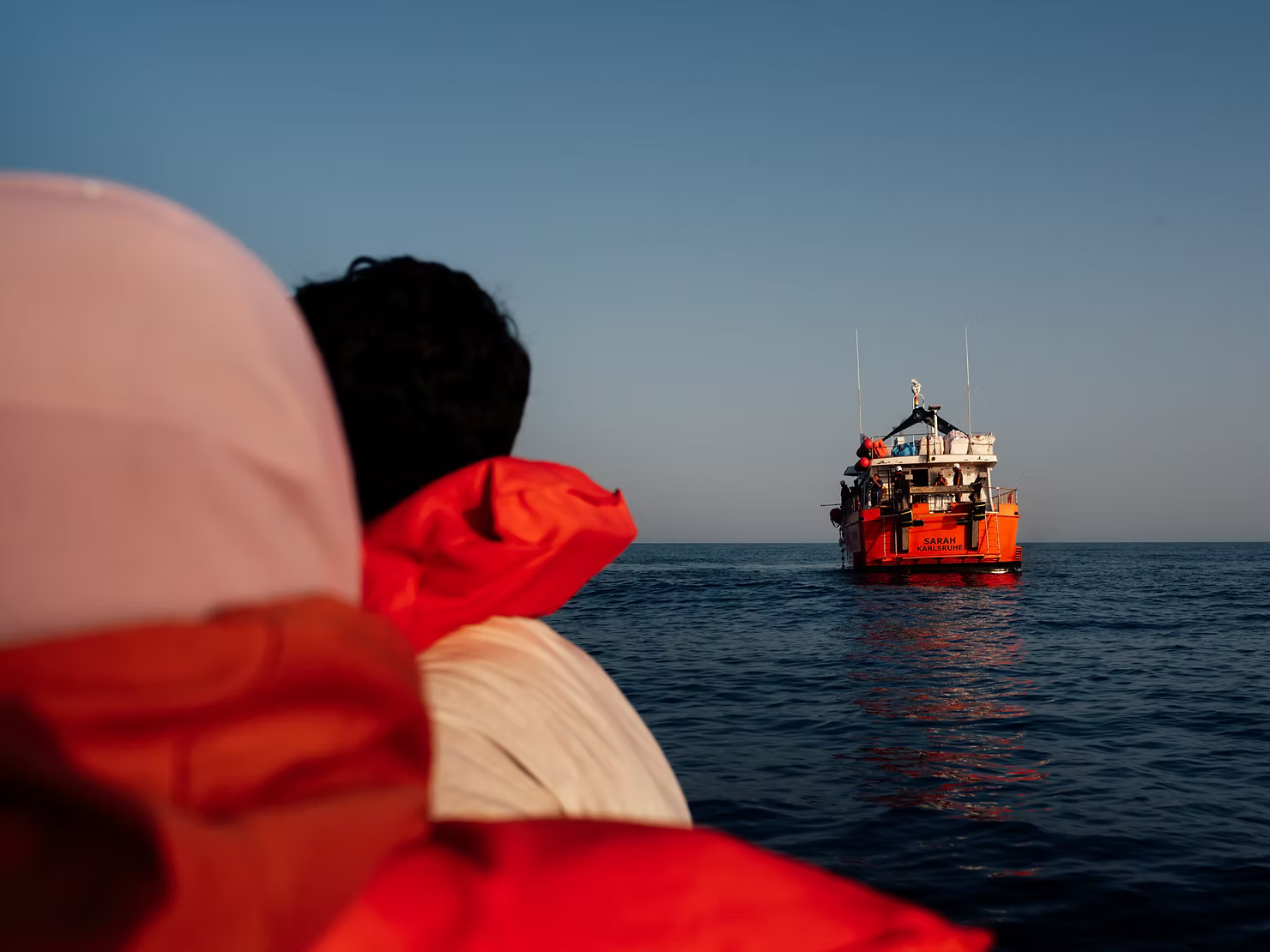
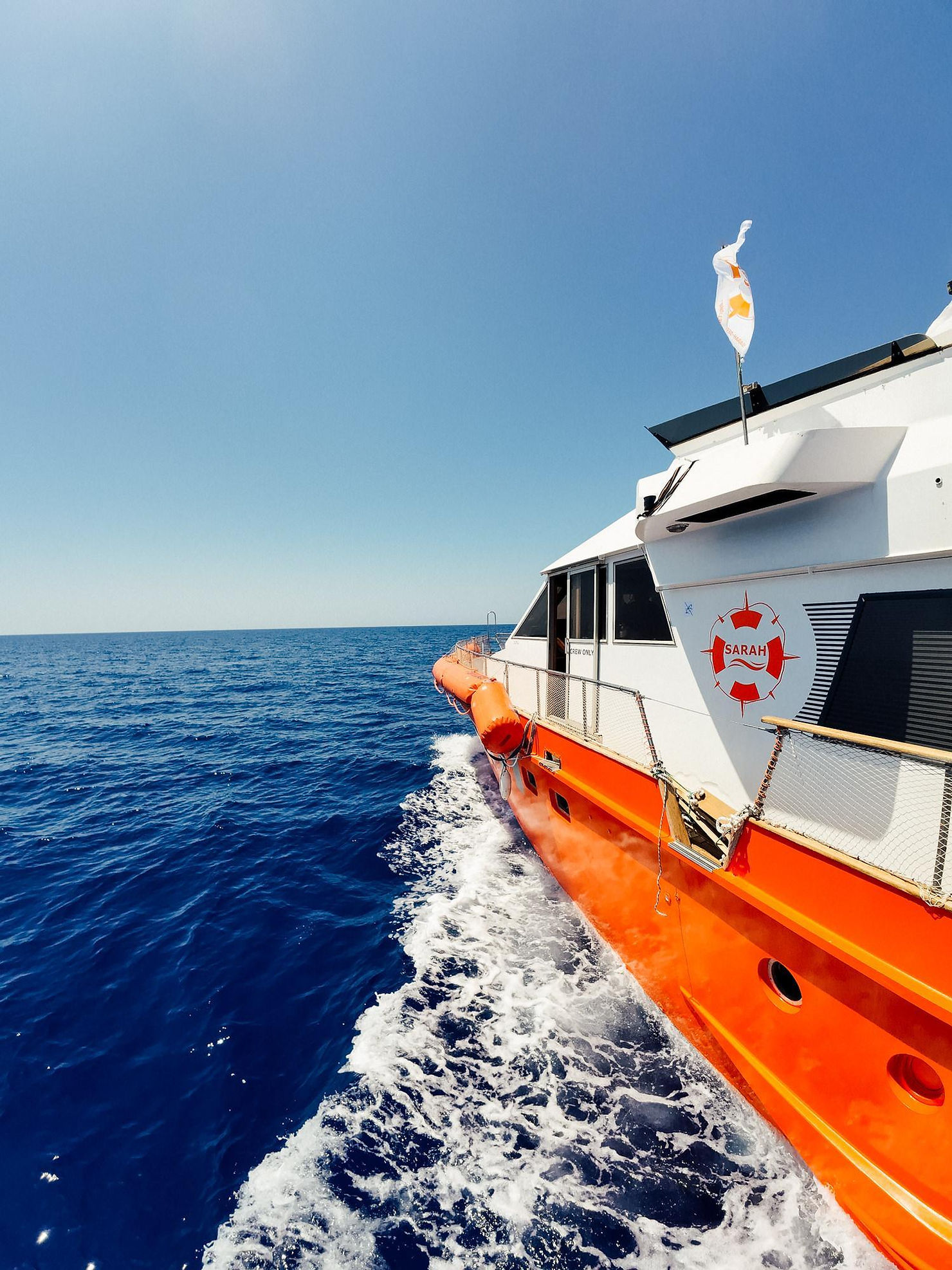
    For the past five years, Thomas Nuding, the Managing Director of Search and Rescue for All Humans (SARAH) has been on an active mission to rescue refugees crossing both the Mediterranean and the Atlantic.

    Interview by Sarah Wei and Faye Bradley

    This is the uncut conversation from our feature on ‘Sea Rescue in the South of Europe’ coming out 2022 in print.

    Paradigm Haus: Can you start by telling us what your experiences have been so far, from reporting and being on missions during the refugee crisis.

    Thomas Nuding: Let me start with my intentions. In the summer of 2016, one of my friends wrote me an email saying that he did a sea rescue for the refugees with Sea-Watch. I thought it was a great adventure, so I joined my first mission in October of that year. I worked as a captain on a sea rescue vessel with a German NGO called Sea-Eye. I can’t forget that there was a pregnant lady on that vessel who asked me to send her to the doctor. I couldn’t imagine how bad the situation of their country was, this vessel was even safer than the land of their country. I think it’s a human necessity to help these people. The upcoming thing was in 2018, a sea rescue vessel was blocked from Malta, and the Italian government intervened for more than one week. I think the European Union Government broke the law of human rights. It’s important to protect human rights. Therefore, the sea rescue changed my mind.

    PH: How would you normally prepare for these missions? Did you expect to see what you saw?

    TN: No, I saw a lot of different things from what I expected. In the very beginning, sea rescue was much easier because of the support of the Italian government. They provided boats, shared information with the sea rescue meeting, and even arranged aircraft to patrol over the sea. They informed the position of the refugees to NGOs and helped with taking people back to Europe after the rescue.

    However, everything changed completely in 2017. In 2017, the European Union, especially Italy, decided to work with the Libyan coast guards. The Libyan coast guards got boats from Italy and money from the EU to bring fleeing people from the sea back to Libya. Libya was not a safe place for them. The Libyan coast guards collaborated with the smugglers, even sometimes they were the smugglers. They brought people back to the detention centers and tortured them again to squeeze money out of them. It was the worst for the fleeing people. They were afraid of losing their lives in Libya, so they chose to escape. However, the Libyan coast guards were informed by the European governments to bring them back to Libya, to the detention centers. At the detention centers, women were raped over and over again. People were sold as slaves. When the people were not useful for the Libyans anymore, they would be put on a rubber boat and sent out to the sea. There were so many smuggling organizations which you can’t imagine. If the people were on a boat escaping from the first organization, the Libyan coast guard could bring them back and sell them to the second or third organization. It was a loop that would never end.

    I met people from Somalia on our rescue vessel. When the Libyans came close to our boat, they held our feet and begged us not to send them back to the Libyans. They said “don’t give me back to the Libyans. If you want to give me back to the Libyans, I will jump into the sea and end my life.”

    There are many reasons why people want to escape from their countries. The civil war and political reasons make the government in those countries treat people badly. Also, the economy is in a bust. If people think staying in their countries would be safer, they won’t travel to Libya and go by boat to Europe, which means the situation in their own countries is awful.

    PH: Have you had a lot of interactions with the smugglers and the job traffickers on the missions?

    TN: Yes, I have contacted the smugglers several times. The first contact we had was with the so-called Engine Fishers. In 2016 and 2017, they had small boats in around six meters. Three people went out with the boats. When they left the Libyan coast and entered international waters, 25 to 30 miles away from the coastline, one of them got a piece of wood and told the migrant people not to come close. Then two others took the engines from the migrant people’s boat. The people were left alone on their boat without any engine drifting on the sea.

    The second contact was the so-called Libyan coast guards. We called it the “so-called Libyan coast guard” because they collaborated with smugglers. However, the European governments thought they were good people and they never worked with smugglers. NGOs knew them better since we got the stories from the people who survived from the Libyan coast guards.

    PH: How long would these missions go for?

    TN: In the early days, these missions were around two weeks. In the past, the harbor that the NGOs used was Valletta in Malta. It was the closest Harbor to the Libyan coastline. You received instructions before getting on the boat, then came back to instruct the next group. But now it changed because we couldn’t get any information from the governments and we didn’t know when or where you could find people. We had to use private aircraft to search for them.

    Last week, Sea-Watch left Palermo, Sicily. They found two boats within 5 days and they had 363 people on board rescued in a period of 48 hours. The boat was droughted, so they started their way back to Italy. However, the Italian government blocked the coast. They need to wait for three days or even three weeks. People on the boat were in a bad situation. Some got injured, while others got sick and needed medical treatment. Compared to the past, it took more time to let them disembark. 360 people needed at least two days to do COVID tests, then they had to stay in the harbor for at least two weeks for quarantine. Also, the Italian government used different reasons to block the ship, such as too many people on board or too many life vests. The ship could be blocked in the harbor for months. Therefore, one mission now could need at least five weeks.

    PH: How many people would you usually have on board as crew?

    TN: It depends if it is the small vessel or the big vessel. The small vessels, like Sea-Eye and Sea Fox from Sea-Eye, have around eight to nine people crew. The best we want for SARAH is the vessel for a 12 person crew. The bigger vessels, like Sea-Watch Four and SEA-EYE 4, have a crew between 22 and 26.

    PH: What percentage of injuries that need medical advice would happen on the boat, and how many would happen during the journey?

    TN: During the journey, different things can happen. In spring, the seawater can be at 13 to 15-celsius degrees, which is very cold. If the people stay in the water for over one hour, they may get hypothermia. Also, if people stay on the boats without drinking water, their bodies would have a massive loss of water. Moreover, some people who get seasick for a very long time, their body will also lose a lot of water. People from the detention centers may also have knife wounds, gun wounds, psychological problems, and infectious diseases, especially COVID for now.

    PH: How do you deal with the psychological after-effects of the journey for your staff and the refugees?

    TN: We have some psychologists on board. Sometimes the medical team has to deal with this situation themselves.

    PH: What has been your experience with the medical groups once you’ve landed at port?

    TN: People may need emergency treatments or normal medical treatment. If the condition of someone turns bad, we can call the Italian government to ask them to make an emergency medevac to a hospital. However, normally the government doesn’t care about the physiological problems or something not severe.

    PH: Do you work with NGOs on land so that once the refugees arrive, there are volunteers to help them integrate into the community?

    TN: We do work with different NGOs. For example, the most common NGO working in Africa is Alarm Phone. Alarm Phone has website pages in different languages. On their pages, people can find phone numbers to dial in an emergency, but when some people lose their phones, those are not useful anymore. Some people may have some cheap satellite phones to contact with the Alarm Phone. Normally, the call will also connect to the government due to the laws, but the government won’t help generally. Only NGOs will come to help them get to the land, normally in Italy and Malta, and assist people to get through the law process of the government. NGOs on the land also help them get food and psychological treatments and also keep in contact with them.

    PH: How do you tackle the different rules in the different regions?

    TN: Because of the Italian government, it was a little bit more difficult to run an NGO in Italy. Valletta, Malta is closer to the Libyan coastline, which is also an easily reachable country from almost every airport in Europe. Also, they can speak English. It’s easy for you to prepare for the boats to go to the Libyan coastline. However, nowadays, Malta is very bad for NGOs. They have arrested the boats from NGOs for years and don’t want to have NGOs anymore.

    However, now there is a new possibility in Sicily. Since the Italian law now doesn’t allow refugees to be brought back to the harbors, some NGOs will have a home base in Sicily. Spanish NGOs will have bases in Spain. SOS Mediterranean will have bases in Marseilles, France. However, these harbors are very far away from Sicily. It takes one week to travel from Spain to Sicily and another week from Sicily to the South.

    PH: Once you’ve picked up these refugees, how do you know which harbors to land in, or would you sometimes have to spend a week with refugees on board going to a different harbor because you weren’t able to land.

    TN: If we bring back people from the South to the North, yes. You get in contact with the Italian government because every country has an MRCC. The MRCC is the maritime rescue coordination center, which is responsible for international sea rescue and will tell you the next safe port. We have to go to the port whichever they tell us, no matter how far it is. We need to wait and ask the government to let them instruct you to a port.

    PH: We heard that the routes are now changing. People used to go through the Mediterranean sea, and now they’re going through the Canary Islands. How do you hear of that and what’s your experience so far?

    TN: I saw the Canary islands on TV and I heard on the radio that the situation there is turning very bad. In 2019, about 2,500 people were crossing the Atlantic in 12 months. In 2020, we decided to go there for a short period at the end of November. From January to October, 12,000 people arrived in the Canary Islands, so we knew the situation there was becoming severe and we decided to help. In November and at the beginning of December, the situation was extremely severe. In 2020, around 25,000 people came to the Canary Islands. The distances they traveled were 1000 kilometers, which was three times longer than the distance people traveled in the central Med, 300 to 350 kilometers. The time they were on board was much longer. Since I am an experienced sailor and I was in the Canary Islands several years ago, I know the weather situation that the wind comes from the Northeast and also the currents come from the Northeast. Therefore, if the engines are broken, the boats will drift to the west, where there is nothing, only the big Atlantic Ocean.

    PH: How would these refugee boats navigate when they’re in the oceans? They don’t have the same equipment as the boats that you’re using.

    TN: It depends. They may navigate with cheap compasses. I saw some compasses which can be bought for $5 from Alibaba. Those are wooden boxes the size of 10 to 10 centimeters. Normally, they are not good enough for navigation, but people use them in the Atlantic. Many of these people have cheap small handheld GPS. We once found a very old handheld GPS, probably five or six years old, on a refugee’s boat. The positions on the GPS were marked by the previous owner, which was on the East coast of the United States, so we thought this GPS was probably sold on eBay. Then, it was sold to Africa and people used them as a navigational aid to get from the South to the Canary Islands, but it only works when they have a running engine. When the engine breaks, they have no chance to navigate.

    PH: In those situations what would they do if they can’t navigate anymore?

    TN: Nothing. They can only hope to be found by an aircraft or by another ship. It’s just a small wooden boat with one engine. Sometimes they have two engines, a bigger one, and a spare engine, but normally they only have one engine. If the engine breaks, they can only pray that they could be found, otherwise, they will die.

    PH: What about the chance of an extreme weather condition? Is that quite frequent on that route to the Canary Islands?

    TN: When you have bad weather conditions, the bow of the boat will be very high. It’s also a very large fishing port. There are tons of boats, which could be found on Google maps even. A lot of fishermen lost their jobs at those piers for months because of the big fishing vessels from all the industrial nations including China. They took out all the fish from the sea while the smaller local vessels couldn’t find any fish anymore. The local people lost their jobs, income, and future. They had nothing to do, so they sold the vessels to the smugglers. Some people will even go further south to Senegal and along the coastline to Nouadhibou. They leave there, turning North and trying to reach Gran Canaria.

    PH: What would be the success rate for the boats going out, getting picked up by NGO groups or the coast guard?

    TN: Normally, the boats can get close to the Canary Islands, around a hundred nautical miles away. The Spanish sea rescue organizations do good jobs with a well-equipped boat, but with very few people. Sometimes they only have five or three people on a big vessel at around 30-meter length. Also, they are only available to go out for less than one and a half weeks, so they can only operate in one area. I think, close to a hundred nautical miles South of the Trenton area. The migrant boats have to reach this area to be rescued. If they miss this area because of a broken engine or stronger winds, they will be in danger.

    The official data say only 12% of all people fleeing have been dying, which is the same in the central Med. Only the dead person can be counted if the bodies are found. If the bodies are not found, then they are not to be counted. So, the rate of people that die is five times more than 12% in my opinion.

    PH: That’s really sad. Is there anything that you think about people within the cities? When the refugees do land, what has been the reception from businesses and from the local communities?

    TN: You have to know something about the Canary Islands. Many people live from the tourists. During the COVID-19, there were almost no tourists. At the beginning of last year, people from the Canary Islands tried to help. For example, people who own hotels give their hotels to the refugees because they can get some money from the government for keeping some fleeing people in the hotels. It’s better to have somebody in the hotels than nobody. At least, they can gain some money. But generally, people in the Canary Islands get more and more afraid of losing tourism, because many European tourists are afraid of refugees. It’s just something in their mind. They want a pretty beach, a comfortable hotel, and a happy holiday, so they think the refugees are disturbing. Then, the local business doesn’t want to lose their income, so they don’t welcome refugees either. The situation is becoming worse and worse.

    PH: Overall, have you seen the situation changing in your experience comparing the earlier days from 2016 to now 2021?

    TN: From 2016 to 2019, the number of migrants was only around 2, 500 each year, so the Spanish government would take them to Mainland Spain from the islands. However, with the increasing number, the government didn’t want to have them anymore, so the migrants had to stay on the islands. The government made some agreements with Morocco, Moda, Tania, and Senegal to bring the people back, but the agreements were completely ended after the COVID.

    The city of Arguineguín is the one that is the southernmost harbor in Gran Canaria with around 3,000 population. The NGOs brought the migrants there and they had to wait until the COVID test was done. Around 2000 people were living there for months. The situation turned very bad in the press and on TV. Now they made some old military camps as refugee camps in every Island area, at least one. I think the situation on Canary Island at the end of this year will be the same as on the Greek islands in Malia.

    PH: I think that was all of our questions so far. Is there anything else you’d like to share?

    TN: Yes. In my mind, it’s completely unacceptable that people die because of drowning undersea. Everybody has to take care in their mind that we need to solve the problems of fleeing people. If you want to change Africa, we need 10 to 30 years. What I want to tell everybody is that from now until the time Africa has changed, we are forced by law to help people to survive. As industrial countries from the Northern hemisphere, we made these situations hundreds of years ago until nowadays. China is even doing the same thing in Africa nowadays. We should help them to survive. It’s humanity and a necessity to help people. That’s why I want to have some donations for a new rescue ship.

    If you check our homepage, you can see our NGO is a little bit different from all the others. Every NGO buys many kinds of ships, such as fishing vessels and patrolling ships, but the size is not appropriate and the speed is too slow. The maximum speed is between 8 to 12 months. If you fly over sea by aircraft, you can see there are few rescue ships on the sea and the distance between rescue ships is really long. They need several hours to go to the place where they need help. Sometimes people are dead because rescue ships need half a day to get there. Sometimes the Libyan coast guards picked them up and brought them back to Libya. Sometimes the boat sank and people drowned. We need a new vessel specially designed for the rescue with 50% faster speed. That needs a lot of money, more than half a million euros. It’s worth it to save people, so please help us to get donations for our project.


    Support Thomas’ mission and SARAH at @sarah.seenotrettung

  • Nathalie Suthor on Her Sea Rescue Journey Through the Mediterranean

    Nathalie Suthor on Her Sea Rescue Journey Through the Mediterranean

    Nathalie Suthor, an investigative journalist from Germany who set off on her first sea rescue mission in 2016, and here is the impact five years later.

    Interview by Sarah Wei and Faye Bradley.

    This is the uncut conversation from our feature on ‘Sea Rescue in the South of Europe’ coming out 2022 in print.


    Paradigm Haus: What has your experience been so far covering the refugee crisis and what have you learned?

    Nathalie Suthor: It was 2016 when a lot of people tried to reach Europe on boats crossing the Mediterranean Sea. The refugee crisis was in every newspaper, which was a big topic. There was also a heated discussion in Germany. Some people were concerned that there were too many refugees, while others said we should help the refugees instead of watching them die. Many NGOs were founded during that time and went into the Mediterranean sea to rescue the people.

    I joined in 2017 on one mission— the NGO was Jugend Rettetand and the boat was called Iuventa. The boat usually started in Malta and traveled close to the Libyan coastline, where they patrolled. We were there all the time to look for refugee boats that were usually small wooden boats or inflated rubber boats. It was traumatic for me, especially as a mother, because after staying there for about a week, we suddenly found some boats carrying mothers and their young children on the Mediterranean sea. It was unbelievable for me when I realized how dangerous the Mediterranean sea could be. I wondered how tough the situation was for people who went on a boat with their children and tried to reach a better life.

    Those NGOs had been working there for one and a half years. Mostly they would go abroad to Italy since most of the refugees came from Turkey to Greece and then crossed the Mediterranean sea to Italy. However, it also caused a European problem that many European countries regarded the problem was only for Italy rather than themselves. There are many refugee camps in Italy now that are a severe problem, but other European countries don’t care or try to find a solution for it.

    Additionally, Europe made a deal with Libya that they paid the coast guard money to let them stop the rescue boats to leave Libya. Right now, the situation on the Libyan coast is in big trouble because the Libyan coast guards try to block NGOs to rescue the refugees’ boats. Italy also gave a pushback. They tried to use some reasons to not allow the boats to leave the harbor, such as too many life vests.

    Many people in Europe also discussed the reasons for the rising refugee crisis, which was in my documentary as well. There were some political and historical reasons about how Europe treated Africa in the past to make them have nothing now, so people tried to search for a better life somewhere else. There were also wars between warlords in their countries. The traffickers made money by bringing the people on the boats to Europe. However, when the refugees arrived in Europe, they would be stuck in camps and have no chance to start a better life. Europe hasn’t released a solution because other countries think Germany and Netherlands took too many refugees. The situation is very bad now.

    Image Courtesy of SARAH Seenotrettung

    Now, some refugees are trying to take the new route to reach the Canary Islands, which started in autumn last year. They also tried to reach Europe through this route in the past, but it was extremely dangerous and difficult. Refugees could use small wooden boats on the Atlantic Ocean to travel to those small islands from Africa, which was time-consuming. Once, we found hundreds of people were stuck on a boat for a week. They wouldn’t know what would happen. Water, food, and fuel might not be enough. Therefore, that was the reason why I joined the second mission, where I met Riley. We tried to find out about the route, who those people were, and where they came from, and so on.

    PH: Where were most of these routes going through in the Mediterranean?

    NS: Yes, the first route was across Turkey to Greece, but Europe agreed with Turkey to stop this route. Then, people tried to cross the Mediterranean. Mostly, they left from Libya, where there were many NGOs that were always crossing the Libyan coast. However, afterwards, a big discussion came up about the push and pull factors in Germany and Europe. The traffickers found the NGO boats and they made refugees know the NGOs would take them to Europe, so more and more people came because they thought it was a safe way to go. That’s one of the reasons why the European countries tried to stop the boats.

    In the first documentary, we were arrested by the Italian government because they said our boat had something wrong. We had to go back to Lampedusa. Then the policemen came on the boat at the Lampedusa port and they thought we made a deal with traffickers, which was quite funny because there was a TV crew on the boat making a documentary for a major public German television like the BBC in the UK. Of course, the police didn’t have the proof, so we could leave. However, after this mission, the police arrested some people from NGOs and kept the boats in Sicily. The boats couldn’t leave anymore. Right now, there’s a trial going on. 10 of the full-time NGO workers are facing 20 years of jail because they were regarded as traffickers. That’s the situation now.

    PH: For smaller NGOs, such as SARAH, how do you face those challenges?

    NS: SARAH is a newly founded one. I met the founder three years ago in my town. People at SARAH work tightly together and always talk to each other because we have the same goal. NGO workers are shocked to see a small wooden boat full of refugees. They have seen people drowning in front of them or suffering from gun wounds. Refugees were in bad situations, especially the women coming from the Libyan camps who were all being raped. When a person who lives in a civilized society knows about all of these problems, we will want to help them. Therefore, the people at SARAH put a lot of effort into this small NGO.

    PH: How would you prepare for these missions in general?

    NS: Normally the big NGOs have support from a trauma expert. They will come to talk to you before you go on the mission. It was quite interesting for me that I thought I could handle those traumas since I made some documentaries about these tough topics, but it did affect me a lot some years later. I made a documentary three years ago. When I watch it at midnight, I feel touched and depressed.

    The documentary shows that we looked for a disappearing boat for the whole night. On the next day, we found it and many corpses were floating on the sea. There were around 200 people on that boat. A couple of months later, I went to Tunisia to visit a fisherman. Because of the currents and the waves, a lot of corpses were taken to the beach. The fisherman buried them and built up a grave, as well as told me the stories about these people. For example, a woman tightly hugged the child to not lose the child.

    Rescue operation at night involving crew members and a lifeboat from the Guardia Costiera.
    Image Courtesy of SARAH Seenotrettung

    PH: How did your missions for the documentary in 2016 and research come about?

    NS: I met Thomas, the founder of SARAH, in my town in 2017. He told me that they founded an NGO and they were going on a mission to the Canary Islands. In Germany, the TV channels were not keen on these topics. After my documentary in 2017 was broadcasted, someone attacked me personally on Facebook saying I created problems in their lives and brought all the refugees to our country. Therefore, when Thomas told me, I decided to join him with my cameramen.

    The documentary will be broadcasted next month. Not so many dramatic things happen in this documentary, but it’s quite interesting to see how the new route is working. We found out refugees were leaving from Morocco. They went from the Spanish coastguard to Gran Canaria. There were refugee camps but some were closed. The government gave the refugees COVID tests and brought them into hotels or military camps. There was a demonstration when we were there, because in Lesbos or Moria, Greece, there were very big refugee camps. Although some people in Greece thought they should have helped the refugees, they still worried tourists wouldn’t come anymore because of the big refugee camps. It was a little weird when people were lying on the beach, a refugee boat arrived. In Gran Canaria, people were afraid that it would be the second Moria or Lesbos and the tourist industry might be affected.

    PH: Do you think documentaries are helping in opening people’s minds?

    NS: It’s what I’m always hoping for, but sometimes people will blame you because they think refugees shouldn’t come and that’s not their problem. I always hope I can change something in the minds of people.

    PH: You talked a lot about more people going to the Canary Islands. How did you find out this information?

    NS: NGOs are well connected in Africa. They know quite well what’s going on in Africa. For example, there’s an NGO called Alarm Phone that spreads its phone numbers in Africa. They told people to contact them when people were in trouble on the boat. There is staff on the phone in Europe 24 hours, seven days a week. When they get a phone call from people who are in danger, they will call the coast guard and the media. They’re well organized and always connected with the whole situation.

    PH: So the major route now would be to the Canary Islands? Is that only recently because of the pandemic?

    NS: No. There is a big fight for all the NGOs to go out on a mission with their boats because the Italian government always finds some reasons to block the boats. A lot of NGO boats got blocked at European harbors and can’t go out. Sometimes there’s no NGO, but only the Libyan coast guard brings the refugees back to Libya to the camps. When we rescued these boats, the refugees always asked where we would bring them to and begged us not to bring them back to Libya, because they thought those camps were the worst place. This route is a big problem now. People want to find a better life, so they will go on another route if one is blocked.

    PH: Do you think fewer people are traveling through the Mediterranean now?

    NS: I don’t know about the Mediterranean, because people can’t travel now due to the coronavirus. I don’t know how the situation will be when people can travel again. If people find all of these hotels are for refugees, they probably don’t want to go in there anymore. We met a manager of a hotel in the Canary Islands. The manager was the nicest person I’ve ever met. He was so shocked about the situation of the refugees, so the manager said his whole family would all work there 24 hours a day.

    However, refugees couldn’t stay there forever. The government had to decide what to do with them. The reason why this route wasn’t that attractive for refugees was that most of them wanted to go to Germany or North European countries, but Gran Canaria was a small Island and far away from Europe. Once you put your foot in Europe, you can try to get some paperwork done to have a chance to stay there. A lot of people from Morocco even have no chance to stay. They have to go to America immediately, but they still try if there is a chance.

    PH: Do you think this hotelier that you met, he’s one of the minority in terms of the hotel groups and the businesses in those cities?

    NS: Well, I can’t say the manager is one of the minority, but I can say we were so impressed by the manager. At the same time, there was a big demonstration in the city, because there’s no other business other than hotel business or tourist business. The protestors said they didn’t want to have refugees anymore.

    PH: What’s been the government’s reaction or response so far?

    NS: Spain is doing quite well so far, especially the Spanish coast guard. Once we found two refugee boats at night. Thomas let us call the Spanish coast guard. Two hours later, they arrived, which wouldn’t happen when you are in the Mediterranean. In the Mediterranean, the refugee boats are usually so big and there are a lot of refugees. If the boats are sinking, you can’t just bring the people on your boat because your boat will sink as well. The situation is so bad there. However, the Spanish coast guard is behaving much better. They’re more cooperative.

    PH: Is that like something to do with historically on why you think the Spanish coastguards are being more cooperative than Italians?

    NS: It’s pretty new for them, so we don’t know how they will be in two years. The situation in most of the countries in Europe, especially countries of South Europe, is quite bad due to the coronavirus. I can imagine that it will be hard for the government. They have no money to rescue all the refugees since they have a lot of Spanish people suffering from coronavirus. They have no money for a proper health care system even. Right now they’re behaving very well and cooperative, but it’s hard to say after the election how the new government sees this refugee crisis.

    PH: What other differences have you found between the government groups? Is it just a matter of time to make the Spanish government more responsible?

    NS: The Italian government is right-wing. They always have something against people. Also, the economy in Italy is not good. People hope the government will help them before helping refugees. Italy and Spain depend a lot on tourism, but the tourist industry is down because of coronavirus. It will be a big problem.

    PH: How do you think people in these cities can help the refugees adjust?

    NS: Well, I haven’t been to Greece, but I’ve heard that lots of people there cook for them, bringing food and clothes. There are always very good people. When people know the situations of refugees, they will want to help refugees.

    PH: In terms of your experience covering the refugee crisis, other than the sea rescue, what other crises have you covered as well? Can you share that experience?

    NS: Only the sea rescue. I am thinking about going to Africa because crossing the Sahara is even more dangerous than crossing the Mediterranean sea. People are coming from everywhere in Africa. We have even met a guy fleeing from Pakistan, trying to go to Europe. So they are from the whole world. People are moving to try to find a place where they can earn enough money to send it back to their family or just to start a better life.

    PH: How do you think common people could get more involved or volunteer their time? If you’re overseas or can’t physically attend.

    NS: I think these NGOs need money. For example, the main goal for SARAH is to collect enough money to build our boats because the European governments block the boats. We want to have a small clinic and enough life vests on the boat. Moreover, we probably will have arguments with governments about our missions. For example, 10 people are facing the trial of jail. They also need to manage. There are a lot of people putting all of their energy and time into these topics helping refugees, so they need support.

    PH: Are there any other rescue groups that you could recommend us to, or that you see are doing very well?

    NS: Yes. The biggest one in Germany is Sea Watch and they already have four boats. One of their boats was blocked three days ago. They were also in big trouble because they had a lot of people on board and the Italian coast guard wasn’t reacting to them. Usually, the Sea Watch calls the Italian coast guard to let them help the refugees, but the Italian government just didn’t answer for days. Could you imagine when you have like a hundred refugees on board and they need water and food, as well as you have to look after them? After two days, the Italian government allowed them to go to Sicily.

    PH: How does that collaboration process work between the different NGOs?

    NS: NGOs can’t go out at one time, since sometimes there will be five boats out but sometimes nobody’s out there. I think Seabridge is the name where they are all together and they are always having meetings, trying to work together.

    PH: Are NGOs based across Europe?

    NS: Yes. They are based across Europe, but I’m not so familiar with the other European NGOs. We met them when we were out there in the Mediterranean for two weeks. We met a Spanish one and an Italian one, but I had no contact. Of course, they worked together for some rescues. When we found four or five refugee boats, we also called the other NGOs to ask them to help us rescue people.

    PH: Are there different times of the year?

    NS: Yes, of course. It depends on the weather situation and the situation on the sea. During the winter times, there are rarely boats coming because the sea is so dangerous.

    PH: Do you find that there’s ever a language barrier between the refugees and the volunteers?

    NS: No, the bigger NGOs have translators as well. They always try to have somebody on board who can speak Arabic. Also, since refugees have been fleeing for some months and even years, most of them can speak some words in English. It isn’t a big problem to communicate.

    PH: How many people would usually be on these missions?

    NS: It depends on how big the boats are. For the mission in 2017, I think there were 12 and we were on the sea for two weeks.

    PH: What’s the media coverage that you get in Germany about these rescues? Is it portrayed in a negative light?

    NS: It changed over the years, which started to be quite positive. Many people in Germany wanted to help them and became more welcomed. But, once a New Year, some young guys from Africa or Arab countries attacked girls and women in Cologne on New Year’s Eve parties. You can know people’s opinions have changed a lot from that. However, you have to keep in mind what they have been through. Although they were so friendly to us on the boat, some of them came from countries where they didn’t receive education about relationships with women, so they need to learn a lot.

    PH: Are there any trauma help centers for the refugees?

    NS: Yes. It’s starting right now, but it’s still rare. In Germany, refugees got stuck in the camps for years. They couldn’t study German or find a job. Of course, they also got frustrated and felt people didn’t welcome them.

    PH: Do you think people are getting more open-minded in terms of cultural differences and experiences?

    NS: Yeah, probably in all countries. But right now due to the coronavirus, it’s getting worse because a lot of people hope to help themselves before helping others. Of course, that’s not right, but that’s what probably a lot of people think right now, so the refugee crisis is not a big topic here anymore.

    PH: Do you think all of the media coverage you have seen in Germany is shifting from the refugee crisis to other topics, especially coronavirus?

    NS: Yes. You can’t make friends when you make a documentary on this topic and bring it to the media. A lot of people will blame you for that. But of course, a lot of colleagues are still reporting that, but it’s not in focus anymore.


    Find Nathalie Suthor on Instagram at @nathaliesuthor and @benstarmedia

    Watch Nathalie Suthor’s documentary ‘37 Grad’ on zdf.de/dokumentation/37-grad