Author: Steven Zhou

  • Asian-American Identity in the Arts, as told by Bernard Chang and Bobby Rubio

    Asian-American Identity in the Arts, as told by Bernard Chang and Bobby Rubio

    NEW YORK AND SAN FRANCISCO BAY. Asian inclusivity is becoming more prominent on the big screen, as artists with East-West backgrounds reflect more on their own culture and identity. We speak with two Asian-American comic book artists, Bernard Chang and Bobby Rubio, on stories of their childhood, heritage, and culture through the arts.

    Grossing over US$29 million at the box office on its first day, Marvel’s Shang-Chi and the Legend of the Ten Rings became an immediate breakthrough for Asian representation in comic movies. The superhero plot showcased Chinese culture through mythology and language in ways that hadn’t yet been interpreted in Hollywood.

    Growing up, Bernard Chang, a comic book artist who works with Marvel Comics and DC, says that when he immigrated to America from Taiwan at age six, “There weren’t a lot of Asian-American characters in television, movies, or books.”

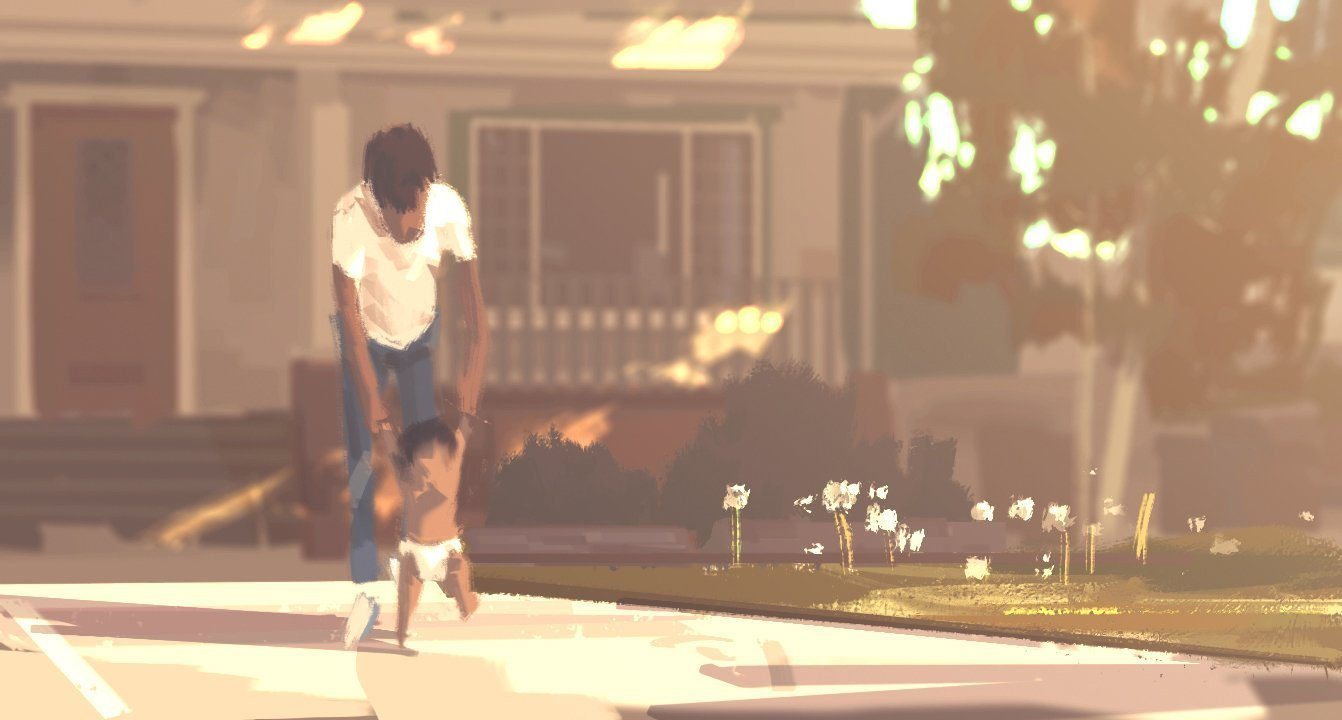
    Bobby Rubio, a Filipino-American artist from San Diego, holds the same opinion. The animator, who now works with Paramount Pictures, made his directorial debut in 2019 during his time at Pixar with SparkShorts’ Float. The short film follows the relationship between a Filipino father and his son, who carries unusual powers, a metaphor for his Autism. The film has garnered over 25 million views on YouTube after its wide release as a signal to the importance of representation.

    Image Courtesy of Bobby Rubio
    Image Courtesy of Bobby Rubio

    The success of Rubio’s Float diversifies Asian characters on screen. When he initially took the project, Rubio designed the main character as Caucasian because he thought it was what the market would want to see. Luckily, Jillian Liebert, the story manager of Float, questioned Rubio on his decision, saying, “How is your son going to feel when he looks up on the screen? And those characters are white?” He changed the characters to reflect his reality. Now, Rubio is keen on creating more Asian characters with his own series of Filipina comic leads in Neighborhood Legend, a superhero who uses the traditions of Eskrima to fight the native Filipino martial arts.

    The journey to becoming successful comic book artists didn’t come easy. For Bernard Chang, who has always been a comic book fan and loved drawing from a young age, went to Pratt Institute in New York but chose to study architecture. He initially had doubts about pursuing a career as an artist, partly due to his traditional parents, explaining, “My parents would understand architecture a little bit more than being an artist.” Rubio adds “Our parents wanted us to be engineers, doctors, lawyers, and nurses – the arts wasn’t what they were pushing for.”

    Nevertheless, Chang didn’t give up pursuing his dream and eventually flourished under New York’s dynamic network of creatives and comics, speaking to as many industry natives as possible from bars to school networks. Chang examples success after his breakthrough 1993 comic series debut with a lead Asian-American male character, in ​​The Second Life of Doctor Mirage. His character breaks the conventional image of Asian males as a “lover not a fighter” outside the kung-fu typecast.

    Image Courtesy of Bernard Chang
    Image Courtesy of Bernard Chang

    This is far from how careers in the arts are now positively perceived, their childhood in the 70s/80s held different taboos. Stemming from traditional Asian ideology, and a need for ‘stable careers’, there were not many famous Asian artists in Western media at that time to take inspiration from. Many Asian diaspora parents who came to the States were often looking for the “American Dream”, and so-called ‘artists’ weren’t the most promising occupation.

    On the lack of recognition for Asian-American talents instead, he met them designing behind the scene, after he “started looking into history.” He discovered, “one of Disney’s earliest animators was an Asian-American, an artist who designed a lot of the characters that we grew up watching in the movies. None of us knew that, right?” To bring more Asian representation into the creative industry, “A lot of times you have to be even better than everyone else by a couple of times to break in.” A drive for the creative doesn’t stop, as hopes for more Asian representation appear on-screen and behind the scenes continue with new releases like Pixar’s Turning Red, Michelle Yeoh in Everything Everywhere All at Once, and Academy Award-winning Parasite from Korea.


    This article is from our interview feature on Bernard Chang and Bobby Rubio available to read in print. Get your limited edition copy here.

  • Eco-Friendly Travel: 6 Sustainable Hotels To Add To Your Bucket List

    Eco-Friendly Travel: 6 Sustainable Hotels To Add To Your Bucket List

    Sustainable hotels are crucial in the future of conscious, eco-friendly travel. Sustainable hotels reduce the environmental impacts through green practices by mitigating waste and saving energy wherever possible. We’ve picked six hotels from Sydney, Bali, Fiji to Singapore and more that are doing their part to stay plastic-free. They also collaborate with local businesses and providers to support their food and beverage services. Without further ado…

    A modern bedroom and living space featuring large windows, a comfortable bed with neutral linens, and a small table with a chair. The room has greenery visible outside and stylish decor elements including a round mirror, soft lighting, and wooden accents.
    Paramount House Hotel Room

    Paramount House Hotel, Sydney

    @paramounthouse

    The heritage building of Paramount Picture Studios in Sydney was recently rebuilt and redesigned to Paramount House Hotel by Breathe Architecture. The hotel is located in the suburb of Surry Hills. The exciting neighborhood is full of good restaurants, boutiques, and cultural events, which provides more fun for the guests. The paramount coffee project offers great coffee and breakfast every day.

    Address: 80 Commonwealth St, Surry Hills NSW 2010, Australia

    Find out more here.

    A collage of three innovative eco-friendly houses set in a lush green landscape, featuring bamboo and wood materials, with large windows blending outdoor scenery.
    Riverbend House at Bambu Indah, Bali

    Bambu Indah, Bali

    @bamduindah

    In one of the world’s most popular destination, Bali, Bambu Indah is an eco-friendly luxe hotel curated by John and Cynthia Hardy. The hotel embraces its natural environment and is surrounded by the serene untouched lands. Guests can enjoy the vibe of the tropical island and the fresh air created by the jungle.

    Address: Jl. Baung, Sayan, Kecamatan Ubud, Kabupaten Gianyar, Bali 80571, Indonesia

    Book here.

    Aerial view of a secluded island surrounded by turquoise waters and green hills, featuring sandy beaches and rocky shorelines.
    Laucala Island, Fiji

    Laucala Island, Fiji

    @laucalaisland

    Laucala Island is a private island in Fiji running a self-sustained hotel. The island spans around 12 square kilometers and owns 25 villas and farmland. The hotel has homegrown fruits and vegetables onsite. The food offered in the hotel is mainly from its own farmland. The materials used to build the hotel are sourced from local rain trees. With high self-sustainability, Laucala Island provides a perfect choice for green travel.

    Address: Laucala Island, Fiji

    Find out more here.

    Cozy bedroom featuring a cork wall, a bed with white linens and decorative pillows, a wooden stool, and a warm, vintage-style wall lamp.
    Sherwood Queenstown Room View, New Zealand

    Sherwood Queenstown, New Zealand

    @sherwood_queenstown

    The Sherwood Queenstown is located next to Lake Wakatipu. The hotel business is strongly based on the local natural environment and its wonderful landscape. With the zero-waste principle, more than 60% of wine bottles and 100% kitchen organic waste are composted and returned to their own hotel garden. Most of the food is sourced from its own onsite garden. The hotel also owns the largest solar energy install to produce power supply for the business.

    Address: 554 Frankton Road, Queenstown 9300, New Zealand

    Check out more here.

    Two hornbills perched on a branch surrounded by green foliage.
    Siloso Beach Resort Bird View

    Siloso Beach Resort, Singapore

    @silsobeachresort

    Siloso Beach Resort is a sustainable luxury hotel on the island of Sentosa in Singapore. The hotel’s environment is fully surrounded by trees. During the construction, more than 200 locally grown trees were protected. Also, over 1000 fruit trees, flowering plants, and herbs were carefully planted around the hotel, which helps to build a green environment and community.

    Address: 51 Imbiah Walk, Singapore

    Book here.

    A scenic winter landscape featuring snow-covered hills and geodesic domes surrounded by pine trees, overlooking a valley with mountains in the background under a clear blue sky.

    Whitepod, Switzerland

    @whitepodhotel

    As an eco-luxury hotel, Whitepod focuses on minimalism, trying its best to reduce the impact of the hotel on the environment. Guests stay in the designated pods that are designed in a unique construction to minimize the usage of materials. The LED bulbs and the wooden stoves of each pod minimize the impacts of lighting and heating system. Guests can also enjoy the local spring water sourced from the Swiss mountains.

    Address: Les Giettes, Des Cerniers, 1871 Monthey, Switzerland

    Book here.


    All images courtesy of the featured hotels.