Category: Art

  • John Tung on curating SEA Focus and the artistic sentiments in the region now.

    John Tung on curating SEA Focus and the artistic sentiments in the region now.

    When John Tung talks about curating, he begins with a toolbox, a literal one. Fresh from the close of the 2026 edition of SEA Focus at ART SG, Tung has a get your hands dirty attitude to exhibiting. “We had a really strong response,” he says. “[feedback was] very positive from most of the visitors… I’m very happy with how it turned out.” Behind the fair’s success lies a philosophy of exhibition-making that is far removed from the glamorous stereotype of the jet-setting curator.

    “People imagine stylish outfits and opening nights,” he jokes. “But I’m a hands-on curator. Behind me right now are toolboxes and scaffolding. My hands are beaten up and I am wearing workwear.” For Tung, the word “curate” returns to its Latin root, curare — to care. “Are you a parent? If you have never changed a diaper, I’ve said, is my approach to curating… There’s blood and sweat behind them — hopefully not tears.”

    Read on for our full interview Q+A covering SEA Focus, ART SG, curating, and cultural capital in the region, expectations, and more.

    On SEA Focus moving into ART SG

    Sarah: Previously SEA Focus was in a separate location, and now it’s inside the fair. How did that change the way you curated the show? SEA Focus has often been described as more of a museum-like experience than a typical fair booth.

    John Tung: That museum-like quality has really been part of SEA Focus’s identity for many years, especially since it moved to Tanjong Pagar District Park about five or six years ago. SEA Focus is a curated platform, so the experience is always closer to going to a museum than visiting a typical art fair booth.

    I’ve had the pleasure of creating three editions — two at Tanjong Pagar Distripark and this most recent one at ART SG. Each edition aims to create a very different visitor experience from the previous one.

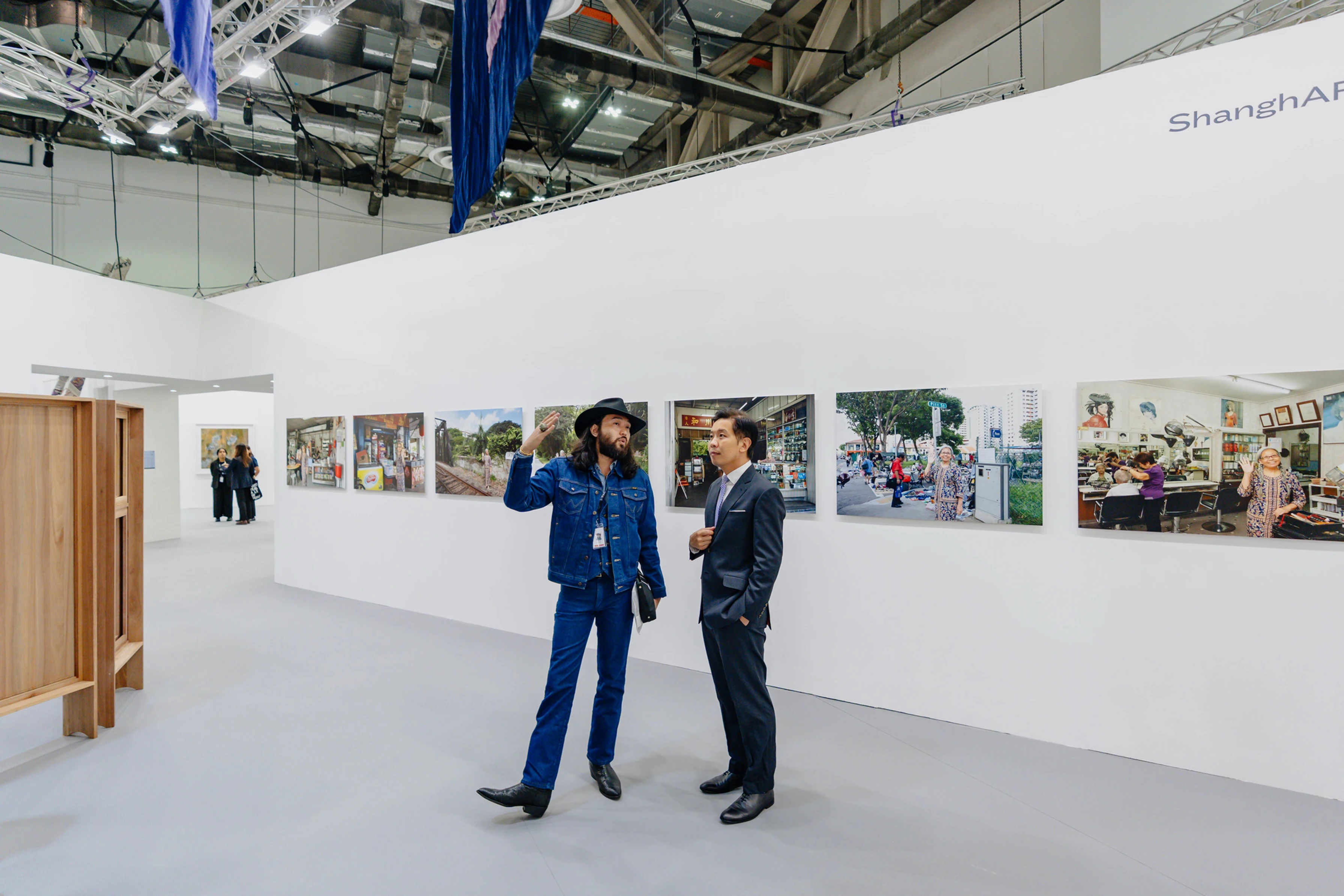
    The approach stayed largely the same, but the venue made a difference. A convention hall is a tabula rasa — a blank slate. It gives you a lot of freedom to build walls exactly the way you want. In the previous venue, we had columns and architectural features we had to work around. Having a blank slate gives more opportunities to exercise creativity.

    For this edition, we centralised X-shaped walls, which became quite iconic, and in previous editions, we modelled the “islands” of the layout to resemble the archipelagos of Southeast Asia. A lot of effort goes into the selection of galleries and artists, considering geographic representation, gender representation, and where artists sit in terms of market presence. The experience is always carefully curated.

    Sarah: How do you think this curatorial platform helps bring in smaller galleries? 

    John: The galleries are actually a very diverse mix. They’re not necessarily all small galleries. Yes, you have new and emerging galleries, but you also have international powerhouses that have participated in numerous editions of SEA Focus as well.

    The unique thing about SEA Focus is that it’s an opportunity for artworks and artists to be contextualised among peers who are practicing in the region. Whether they’re established or emerging, they’re working within the same epoch. Their concerns are aligned; they’re living in the same zeitgeist.

    That’s the greatest value SEA Focus brings. Unlike a typical fair, where each gallery has its own objectives and commercial interests, here everything converges under a singular kind of territorial and conceptual banner. I think we’re starting to see that there is value in seeing connections and contextualising works, rather than just seeing them as individual commercial presentations.

    I thought it was really interesting that with the new Art Basel in Qatar [which opened from February 5–7, 2026], they’ve actually adopted a very similar approach — each booth is supposed to present one artist, they’re all thoroughly screened, and they’re expected to unite under that same singular banner. So this idea of having a curated experience — not purely a fair — we’re starting to see that there’s value in seeing the connections and contextualising the work as well.

    Installation view of SEA Focus at ART SG 2026, Marina Bay Sands Singapore

    What collectors bought at SEA Focus and ART SG 2026

    Sarah: What were some of the most popular themes or works with collectors? Or even some surprise sleeper hits?

    John: [He jokes] I’m a horrible person to ask because I have got such a close working relationship in the realisation of the show. So every work always stands out to me as really unique and really special. 

    There was strong support for many of the young artists. Inez Katamso, for example, did very, very well, which shows collectors are very interested in a younger generation of artists.

    A group of young artists presented by Mr Lim’s Shop of Visual Treasures also saw almost all the works picked up by collectors. But then again, on the other end of the spectrum, a new installation by Robert Zhao was one of the first works acquired during the preview days. So, collector interest remains very broad in Singapore. People are looking at works across a great variety of price points, and SEA Focus is able to provide that range, from recent graduates and newly emerging artists to very established historical figures.

    Cultural capital in Singapore, the region, and the artist sentiments behind it

    Sarah: Do you think Southeast Asian artists are under pressure to explain their region to the world?

    John: I wouldn’t put it as pressure, but there is definitely awareness of how the international art world wants to frame Southeast Asia, and sometimes there’s active resistance against that. [On the platform Something Curated] I wrote an article recently about this notion of Southeast Asia being “up-and-coming.” Up-and-coming benchmarked against what? Are we talking about sales, infrastructure? Western models are still predominant in those conversations.

    Art doesn’t operate like Keynesian economics. In that regard, I think Southeast Asia remains very, very true to themselves. It provides a supply for a demand that doesn’t exist yet. Southeast Asian artists remain very true to themselves. They respond to issues they’ve engaged with for a long time, drawing on distinct and hybridised histories. There’s still very strong cognisance of the postcolonial nature of Southeast Asia’s existence, and that manifests quite clearly in the work.

    Sarah: Singapore is positioning itself as a regional cultural capital — what does Singapore enable that other cities don’t, and why? 

    John: My academic background is not in curating — it’s in cultural policy. I wrote my master’s thesis on the evolution of Singapore’s cultural policy. The notion of being a cultural capital is not new, and Singapore’s model draws from quite a variety of global sources.Even the United States’ Cold War policies come to mind, with the CIA funding abstract expressionist exhibitions abroad as a means of soft power. Singapore isn’t at war with anyone, but there is definitely a desire to be seen as a gateway to Southeast Asia.

    SEA Focus allows people to see some of the best and most recent offerings from across the region in one destination, instead of flying to eleven different countries, to tease it out, to do the excavation, bit by bit. Singapore is leveraging on a lot of its strengths, its history of strong bilateral ties with our neighbours in the region, and the confidence that our neighbours have in Singapore to be able to accurately represent and reflect the variety of tastes, beliefs, and opinions of the different peoples of Southeast Asia.

    That being said, I think it’s also a really heavy burden to bear, the burden of representation, right? So I think, for Singapore, as a commissioner for many of these events, the best they can do is find individuals who take this sort of responsibility seriously. And I would like to think I take this responsibility seriously.

    The growth of private museums in Southeast Asia

    Sarah: Shifting to the art scenes more broadly. How do you think the art scenes in other major Southeast Asian cities are changing?

    John: Across Southeast Asia, particularly in the more developed cultural production centres like Jakarta, Bangkok, and Kuala Lumpur, we’re seeing a rise in private museums being opened. MAIIAM opened fairly recently in Bangkok, and there’s MACAN in Jakarta.

    In Singapore, that trend isn’t manifesting at quite the same scale as in the region. Such as The Private Museum by the Teo Family. There’s also an influx of collector-established art spaces. So I do think that across the region, patrons and benefactors of the arts are really putting their resources where their mouths are, creating infrastructure that runs parallel to state-funded spaces. That’s helping to build a more diverse and vibrant ecosystem overall.

    Sarah: What do you think about collectors opening private museums?

    John: I recall the establishment of MAIIAM in Thailand, which is the project of a really notable collector, Eric Bunnag Booth. His rationale for establishing MAIIAM was quite straightforward. At that point in time, there wasn’t a permanent collection-based institution or museum in Thailand showing Thai art. He very much wanted Thai people — young artists, young students — to have the opportunity to see iconic works of Thai art in Thailand itself.

    Singapore was the regional powerhouse in collecting at the time, but he wanted a place where local countrymen could encounter their own art history. I wholeheartedly believe in the purity of his intentions and vision in establishing MAIIAM, and I think MAIIAM has really been a beacon in the region for how a private museum can be established, run, and operated.

    The space I am currently associated with, Project Art Hunter, was established by another notable Singaporean collector, Yeap Lam Yang. It’s nowhere near the scale of MAIIAM — it’s a relatively small space, about 1,600 square feet. Over the next couple of years, he plans to present a series of rotating exhibitions drawn from his own collection. At the same time, he’s also a well-known patron of the National Gallery Singapore and the Singapore Art Museum, having donated more than 100 works to these institutions. 

    But we need to be cognisant that not all works in a private collection fit well into an institutional context. Collecting institutions have their own acquisition strategies. Just because a collector wants to donate a work doesn’t mean the museum will accept it, if it doesn’t align with their particular strategy. So that leaves many works residing in private collections with limited avenues for public presentation, unless collectors establish their own spaces.

    For a private collector, their strategy does not have to align with institutional goals. They don’t need to chronicle art history in a structured way. Ultimately, private collections reflect tastes and sensibilities. As much as we want to prioritise academic research and art historical frameworks, we shouldn’t forget that one of the biggest catalysts for the development of art over the last 600 years has been connoisseurship. That is what private collections represent. Being able to see and experience the works and collecting preferences of these individuals is valuable. Not just for people who can afford to collect, but also for those who haven’t started collecting or cannot afford to collect as well.

    Quick Fire: The reality of curating, how and why, and what’s next for John

    Sarah: What do you think is one of the most misunderstood things about curating — and the part that’s not glamorous at all?

    John: If you just Google “typical curator,” even myself, right, it’s someone in a funky outfit or a business suit, looking glamorous at an opening. But there are many different types of curators, and I’m very much a “get my hands dirty” kind of curator.

    I’m a strong believer that curatorship comes from the Latin word curare, which means “to care.” And care manifests in many ways. Are you a parent? If you have never changed a diaper, I’ve said, is my approach to curating. What doesn’t get captured in press photos — outside of the fancy outfits — is that there’s a lot of blood and sweat, hopefully not tears, that go into the execution of an exhibition. My hands are literally the most beat-up things in the world right now after Singapore Art Week. It’s going to take a while to recover. But it’s the dirty side of the job that I think makes me love it the most.

    John Tung at SEA Focus 2026

    Sarah: What do you want visitors to feel as they leave one of your shows? What questions do you hope they walk away with?

    John: I think sometimes curating today is seen as this very abstract, theoretical, almost sexy thing — exploring material sensibilities, territorial ideas, all these conceptual frameworks. But at the end of the day, I’m still quite old-fashioned in that sense.

    “With pretty much every exhibition I work on, I always ask myself: what is the moral of the story? What should a visitor be walking away feeling?”

    In its recent edition, SEA Focus, for example, looked at violence perpetrated against people, the ecological crisis, and displacement. I want people to think more deeply about how well we’ve been doing as stewards of this planet. And frankly, we’re doing horribly, as far as I’m concerned.

    So when people go into my exhibitions, I want them to think about the issues I’m raising, which I sometimes put quite explicitly in the curatorial statements. My approach to curating an exhibition is actually the delivery of policy, but in a democratic way. If we think of policy as a form of social engineering, the state might have legislation, schools might have rules, and you’re obliged to follow them. But with an exhibition, you can consider my propositions. You can decide whether you want to buy into that set of beliefs or not. To me, that’s a very democratic way of delivering policy.

    Sarah: And last question — what do you have coming up this year, and what are you most excited about?

    John: I am opening an exhibition tomorrow night called Homecoming. It’s the third edition of a suite of shows I do annually with a good artist friend of mine, Kim Whye Kee.

    For this upcoming edition, I am really excited because, beyond Kim himself, we have a collaborator who’s also presenting, Royston Tan, the acclaimed director of 881 and many prominent works in local cinema. For the first time in 14 years, he’ll be presenting a new video installation. It consists of documentary footage of 100 families in Singapore having dinner.

    So the exhibition is a rumination on home and the rituals of eating, families coming together at the dining table, and a deliberation on what the notion of home, or coming home, really means. That opens tomorrow night [7th February 2026]. 

    Follow curator John Tung and his upcoming exhibitions, including Homecoming and future projects with SEA Focus and Project Art Hunter, as he pushes conversations around Southeast Asian art, cultural policy, and exhibition-making across the region. 

    at johntung.com or @johnsavage.fromthewoods

    [All Images Courtesy of Sutton Communications]
  • A Second Chance at Impressionism: NGV’s French Impressionism Show

    A Second Chance at Impressionism: NGV’s French Impressionism Show

    The National Gallery of Victoria’s restaging of French Impressionism from the Museum of Fine Arts, Boston arrives with a sense of both elegance and excitement (6 Jun – 5 Oct 2025). Drawn from Boston’s renowned holdings, more than 100 paintings by Monet, Renoir, Degas, Pissarro, Manet, Cassatt, Morisot, Signac and Sisley bring to Melbourne audiences a movement whose radical brushwork, saturated colour and novel viewpoints changed the course of art.

    The 2025 presentation makes up for the pandemic‑curtailed 2021 run and also marks the 150th anniversary of the first Impressionist exhibition. It is part of the Melbourne Winter Masterpieces series—an annually anticipated blockbuster—but the curators have emphasised letters and journals to foreground the artists’ voices, hinting at a deeper engagement beyond spectacle.

    Immersive Design and Staging

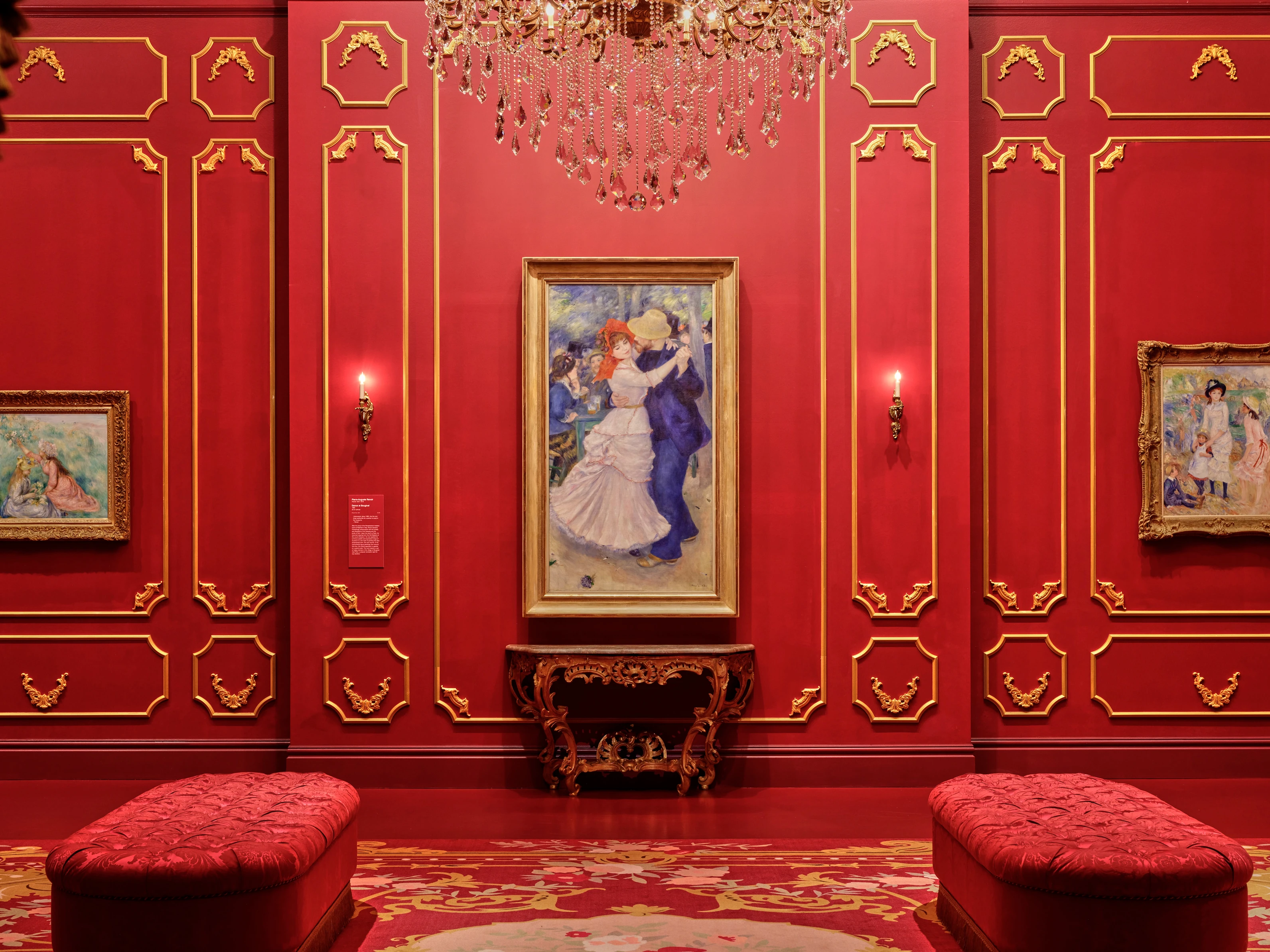
    Visitors enter through a long corridor dressed like a Bostonian drawing room, complete with parquet floors, columns and padded furniture; only two works—Renoir’s Woman with a Parasol and Small Child on a Sunlit Hillside and Monet’s Meadow with Poplars—hang on the walls. The scenography, inspired by East‑Coast collector mansions, situates the paintings within the period’s domestic elegance and hints at the American collectors whose taste shaped the MFA Boston’s holdings. Throughout the show, rooms shift mood: dark green damask for the Barbizon predecessors, duck‑egg stripes and lattice trim for watery gardens, embossed wallpaper and faux gaslight for urban realism, and opulent red‑and‑gold salons for Renoir’s experiments. It is a theatrical approach that immerses visitors in fin‑de‑siècle atmospheres while blurring the boundary between gallery and set.

    An entrance draped with luxurious green curtains leads into an elegantly designed gallery, showcasing a mirror and framed painting on the walls.

    Rhythm of Galleries and Highlights

    After the opening, more traditional hangs return, with thematic rooms dedicated to precursors, still life, urban scenes, and printmaking. A suite of Henri Fantin‑Latour’s roses, Cézanne’s fruit, and Berthe Morisot’s delicate needlework invites quiet contemplation, the next gallery dives into gritty cityscapes and Pissarro’s mentor‑and‑mentee relationships. The crescendo comes in a lilac‑white space filled with sixteen canvases by Claude Monet, including Water Lilies (1905) and Grainstack (Snow Effect) (1891), which demonstrate his obsession with changing light over decades. A final corridor of black‑and‑white photographic portraits of the artists and a projected film of Monet in his garden creates an intimate epilogue.

    A serene water lily pond depicted in soft colors, featuring floating lily pads and blossoms on a calm surface reflecting the sky.

    Highlights and Surprises

    • Self‑portrait by Victorine Meurent — A revelation in the exhibition, Meurent’s inclusion acknowledges her as an artist, not just Manet’s model. Her self‑portrait, with butter‑yellow silk and violet bow, asserts a confident painterly gaze and adds a feminist thread to the narrative.
    • Jean‑François Raffaëlli’s The Garlic Seller – This realist canvas of Paris’s outskirts brings working‑class grit into the show, reminding visitors that Impressionism intersected with social realism.
    • Degas’s Degas’s Father Listening to Lorenzo Pagans Playing the Guitar – Recently conserved, this double portrait emphasises domestic intimacy and sound, contrasting with Degas’s more familiar ballerinas.

    Get your tickets to the show here.

    National Gallery of Victoria / 180 St Kilda Road, Melbourne VIC 3004 / Daily 10am–5pm / enquiries@ngv.vic.gov.au / www.ngv.vic.gov.au

  • A tour by Wolfgang Tillmans at David Zwirner Hong Kong

    A tour by Wolfgang Tillmans at David Zwirner Hong Kong

    David Zwirner’s Hong Kong gallery put on a solo exhibition of Wolfgang Tillmans in The Point Is Matter from 25 March to 11 May, 2024.

    From soft atmospheric moments, intimate still lifes and portraits to abstract studio videos. Spanning two floors, the photographer and artist presents his work as if in conversation with each other, meticulously planned to get the most out of the white-walled space. Tillmans’ universal perspective comes through in new and old works originating from his travels to Addis Ababa, Berlin, Lagos, and Mongolia, alongside those rooted in Hong Kong and Shenzhen, forging a link to local sensibilities.

    “Hong Kong as a subject matter, is infinitely interesting, fascinating because it is such an international place with, obviously, Chinese culture and its own culture. I mean, I’ve felt moved here every time by the incredible energy, resilience, and joy,” says Tillmans. The pivotal figure of contemporary art took our photographers on a tour of the Hong Kong show, look on through their eyes and in his words…

    A man in a white t-shirt stands in an interior space with windows, softly lit in warm tones.
    Wolfgang Tilmans pictured.
    An art gallery featuring a photograph of a man lying on the floor, presented in a framed display on a white wall. The adjacent wall has a large opening leading to a softly lit orange space.

    “This installation is the result of a long evolving conversation or thinking about this space. Yesterday I saw [another] photography exhibition, which was very traditional, which showed one photograph next to the other frame. And it just reminded me of 1992, when I developed my style of installation, I mean, it was a natural reaction. For me, I couldn’t do anything else because why would I show everything in a line when I’m actually in the space? Since a young age, I have loved churches, I loved museums, I love the spatial experience of art. And that is the privilege that we have in these laboratories,” says Tillmans during the tour.

    Interior view of a modern office space featuring a large blackboard with colored sticky notes, framed by a white wall.
    Art gallery interior with visitors examining artworks and interacting, featuring large photographs on white walls.

    “This is not like a time-lapse. This is how fast the Earth rotates. And then the moon slips through the view of the camera and all the videos are set to songs that are part of an album that will be released next month. The piece is set to pictures that are filmed during the printing process of my book, abstract pictures in a giant printing press for colour offset printing press, and I like to go to the press to see the exact colours of the printing. And then, of course, when the run goes to the machine, you have nothing to do, and I just love the sound of the machines, just peeking through all the holes and different ways of where the ink is replenished on top. What was being printed were my abstract pictures. The subject matter was so well suited to this abstract composition. The whole thing with this kind of work is paint in liquid ink.”

    “These works in these spaces relate to my thinking about the world that surrounds me. Even though my thoughts are so often occupied with the past and the future, with thoughts, concepts, spirituality, and emotions, all of that is ultimately round and around matter. The very how things feel and how things work. And some could say what is he talking about? The most basic truism, everything matters. But I hope some people can sense this sense of being in the now, being respectful of your environment, trying to understand things. Also being constantly open to look at things from different perspectives and be open to change.” says Tillmans.

    All images were taken by Jennifer Tang and Shek Po Kwan.


    The Point Is Matter

    Wolfgang Tillmans Solo Exhibition
    March 25–May 11, 2024
    David Zwirner Hong Kong
    5–6/F, H Queen’s,
    80 Queen’s Road Central

    Find out more at David Zwirner.

  • Art Basel Beyond Miami: The Rise of Global Art Weekends

    Art Basel Beyond Miami: The Rise of Global Art Weekends

    Art Basel has redefined global art culture, and its international outposts in Hong Kong, Paris, and São Paulo are setting new standards for high-end art curation. Explore the shift towards art tourism, exclusive VIP previews, and the billion-dollar deals happening behind closed gallery doors.

    Luxury art fairs have evolved from single-city events into globe-trotting cultural extravaganzas. High-net-worth collectors now hop between Art Basel 2025 editions and other international fairs as if following a fashion week circuit, turning each event into a lavish “art weekend.” What began in Basel and Miami has expanded to global art weekends in Paris, Hong Kong, and São Paulo – a shift that is redefining cultural tourism and the art world’s social calendar. Billionaires, museum patrons, and design-forward jet-setters descend on these destinations for VIP art previews, multimillion-dollar deals, and indulgent afterparties. It’s a new era where business, culture, and pleasure meet against exotic backdrops.

    Paris+ Par Art Basel: The European Jewel

    Paris has re-emerged as the jewel of the global art circuit. Launched in 2022, Paris+ par Art Basel quickly became a magnet for the international art elite. Art Newspaper reports the 2023 VIP preview was “heaving, and with a lot of Americans,” one dealer observed, standing by a $40 million Rothko on display. In fact, there were more American collectors at Paris+ than at Frieze London the week prior, and galleries clinched eight-figure sales in hours – David Zwirner’s gallery alone moved a $6 million Kerry James Marshall painting on opening day. Beyond the fair itself, the city amplifies the experience: luxury maisons host private dinners in gilded salons, five-star hotels brim with VIPs and celebrities, and exclusive previews at the Louvre or Fondation Louis Vuitton make the city’s art weekend a bold blend of culture. The result is a cultural tourism boom, with Paris harnessing Art Basel’s glamour to reinforce its status as an apex destination for art and luxury travel.

    Hong Kong: Gateway to Asia’s Art Elite

    If Paris offers Old World grandeur, Hong Kong delivers high-octane cosmopolitan flair. Art Basel Hong Kong has become the gateway to Asia’s art elite, where Eastern and Western collectors converge amid skyscraper views and Michelin-star dining. The nights leading up to the fair are packed with underground parties and gallery soirées, as top collectors often jet out soon after the first VIP day. In 2025, one art insider’s itinerary included an elegant Cantonese banquet hosted by a gallery at Mott 32 and a posh afterparty thrown by Gagosian at the Mandarin Oriental – all before the fair even opened. When the doors opened on March 26, the VIP preview drew throngs of prominent collectors and curators seeking early access to coveted works. Attendees noted a measured approach to buying, yet the atmosphere stayed buoyant. Beyond the convention center, Hong Kong itself becomes an art playground: think curated museum nights, gallery hops in Central, and city-sponsored pop-ups. In one novel twist, the Hong Kong Tourism Board installed a traditional Cha Chaan Teng café inside Art Basel Paris to entice global visitors to experience Hong Kong’s culture. The city’s luxury hotels like the Rosewood and Peninsula are fully booked with VIPs, and private jet charters between Hong Kong and other art capitals spike during the fair. In short, Art Basel Hong Kong has cemented itself as an unmissable stop on the luxury art fairs circuit, blending cutting-edge art with the dynamism of Asia’s world city.

    Photo courtesy of SP-Arte
    Photo courtesy of SP-Arte

    São Paulo: Latin America’s Turn in the Spotlight

    In São Paulo, Brazil’s financial hub, an Art Basel-like atmosphere is thriving at the annual SP–Arte fair. The 2025 edition of SP–Arte – Latin America’s largest fair – saw nearly triple the number of foreign collectors and curators compared to recent years. An influx of international collectors, from New York and London to Doha and beyond, signals a renewed appetite for Latin American art on the world stage. Indeed, São Paulo’s edition offers a refreshing complement to the frenetic pace of Basel or Hong Kong. Collectors spend afternoons browsing modernist Niemeyer-designed pavilions and evenings at gallery dinners in Jardim Europa or rooftop caipirinha receptions overlooking Ibirapuera Park. The city’s renowned restaurants and hotels join in, crafting bespoke experiences for the art crowd – think chef-curated menus at D.O.M. for visiting patrons or after-hours parties set to bossa nova beats. By embracing global art weekends, São Paulo has positioned itself as Latin America’s cultural capital, proving that the art-market jet set will happily add a South American stop to their annual grand tour.

    Basel 2024. Photo Courtesy of Art Basel
    Basel 2024. Photo Courtesy of Art Basel

    From VIP Previews to Private Jets: The New Art World Itinerary

    Welcome to an art world where VIP art previews are just the beginning of a luxe weekend itinerary. At each global art fair, invitation-only preview days see the “cream of the art world” queue up amid bustling aisles and bottomless champagne flutes. These first-look events are as much about networking and scene-making as they are about buying art. VIP programs offer concierge service and exclusive access that blur the line between commerce and leisure – one could start the day with a private collection visit or an artist’s studio tour, enjoy a catered lunch in the VIP lounge, then head to a VIP art preview at the fair. Evenings bring glitzy afterparties at iconic venues, where collectors, artists, and celebrities mingle. In Miami Beach, this might mean dancing under the stars at a seaside villa; in Paris, a midnight fête at a Palais; in Hong Kong, business deals sealed over late-night M+ parties. By the time the weekend wraps, billions of dollars in art have traded hands globally – total art sales topped $57.5 billion in 2024– and countless new connections have been forged over cocktails and canvases.

    What’s clear is that global art weekends have transformed art fairs into destination events that transcend geography. From Paris and Hong Kong to São Paulo, Art Basel and its peers are redefining cultural tourism by marrying high art with high living. And as the art caravan moves from one glamorous city to the next, the art weekend has become the ultimate luxury escape, proving that in the 21st-century art world, business class and culture now share the same itinerary.

  • Jeremyville’s Community Service Announcement Art for All

    Jeremyville’s Community Service Announcement Art for All

    Looking for a daily dose of joie de vivre? Don’t delay; take a journey to Jeremyville now.

    Meet Jeremyville, New York-based multidisciplinary artist harnessing the power of art to inspire change and positivity in the world. Welcome to his world, a creative state of mind that takes you to a happy place. Jeremyville is everywhere with his distinctive graphics and recognisable community service announcements. His work is always at the edge of your vision, from a floor-to-ceiling mural in a fast-food restaurant to a performance animation for a well-known fashion brand. In this interview, the artist reveals how he translates life through artistic practice.

    Using graphic language and your own experiences growing up, how do you inspire others?

    My struggles growing up involved finding a way to a life where I could truly be myself, not a pale imitation. I could never be someone others expected me to be. I needed to be true to myself. That’s more difficult than it sounds. Life has a way of trying to make you something you are not. I needed my strangeness, and I made my weirdness work for me. Weirdness can become our ‘fascinating individuality’ if we create that alchemy.

    I was a solitary child and didn’t have friends growing up. I only had myself to create a dialogue with. This led to great clarity in my life by going inward in my mind to find the answers to my questions. WHO AM I? That’s a question I still ask myself every day. The journey towards the answer creates my daily road map.

    With my comic stories, I try to convey a simple path that anyone can take to arrive at their answers. Each of us has specific challenges and goals. I try to keep my messages open to others’ interpretations. That way, anyone can connect with the messages in my art, assign meaning to it and make the journey their own.

    Start your day with a touch of whimsy, and take a minute to make your daily road map. Find the Jeremyville “relax” daily calendar full of playful reflections for a positive mindset.

    What appeals to you about the style of graphic art?

    I aim to communicate a feeling or idea as quickly and simply as I can. I utilise an easy-to-comprehend graphic language. A recurring theme of symbols, icons and characters that tell a story to connect with.

    How do you remain optimistic about life and what you can achieve?

    My greatest obstacles are in my mind. If I can overcome them, anything is possible. If I can dream it and think about it, I can plan it and do it. What does society or others know about what I can and can’t achieve? Only I know that. If I try and fail, then I’ll just dream again and try again. Failure is fine, but giving up is not fine by me. My dreams and aspirations are very real to me. It’s like if I can think it and imagine it, then that’s 90% of the way there, and the 10% is in the doing. I stopped thinking too much and started feeling more. I believe in dreams, not reality.

    “Let’s get lost in beauty.” Open your mind to Jeremyville’s signature community service announcements; they’re out in the world promoting self-love and happiness. You might spot one, and if you know, you know.

    'Lunar Introspection' by Jeremyville
    ‘Lunar Introspection’ by Jeremyville

    How do you plan around life crises during times of emotional confusion?

    I start my day with a list; each day, it’s my daily road map. All I have to do is write it down (usually the previous night in bed or first thing in the morning). I go through my day, checking off each task. My diary is full of completed lists. Life is just a series of incremental movements. For my emotional life, I find that by getting stuff done and keeping occupied, my mind does not dwell on difficult things I can’t control. I’m too busy ticking stuff off the list. Once you shift that mental focus onto the daily task, you find that your mind has moved on from your emotional troubles. Action is a great way of shifting our focus to a more positive place. Just keep moving, just keep doing, no matter what. Just get stuff done.

    In times of uncertainty, how do you find your inner self?

    Art grounds me by taking me out of the every day into a place that feels like an eternity. Time becomes irrelevant, just an abstract construct. I reach a level of truth that I do not always find in life. Each of us can find something, anything, that provides a key that opens the door to a journey inward. For me, it is a session of drawing or painting. For others, it could be meditation, playing a favourite song, cooking a meal for a loved one or going for a run. Anything that takes us outside ourselves and makes the troubles we are experiencing less important, less of a focus.

    Art is truth for me. Art is beauty, passion, struggle and resolution. Art and love are everything to me. It’s my way of navigating this life. We all have something that can do that for us. If you haven’t found it yet, keep on searching; it’s there.

    Seek your dreams, stop thinking and start feeling. Find your happy place. This is the message expressed in the unique Jeremyville language.

    How is your work influenced by idealism?

    The look of my art probably has a positive feeling on others, but for me, I see the struggle and tension in the art I create. It takes a lot of hard work and introspection to get me to a place of positivity. Mistakes are my greatest teacher, and all my lessons are hard-won victories.

    Viewing art that outwardly is positive and discovering this comes from a place of deep learning for the artist personally is a reminder nothing in life worth having ever just falls in your lap.

    How do you maintain your self-assuredness in yourself and your work?

    From my humanity, from my struggles. There is always a way to reach a positive outcome in life. It just requires time, patience, hard work, introspection, and belief in yourself. Life is never easy, but we can choose a positive outcome if we want it enough and work for it. My confidence in life comes from a belief that anything is possible if we see life that way.

    Take a trip to Jeremyville, and choose positive outcomes for yourself in a place where anything is possible if you see life that way.

    Find the artist on Instagram @jeremyville and artwork at jeremyville.com

    All images courtesy of Jeremyville.

  • Summer in Milan: Top Events, Exhibitions and Galleries, From Fashion Week to Art and Design.

    Summer in Milan: Top Events, Exhibitions and Galleries, From Fashion Week to Art and Design.

    Art patrons look no further than Milan, from international to local acts. Whether cat walk fashion, large-scale installations in vast museum settings, or solo shows at global galleries, we’ve got your summer itinerary sorted.

    Milano Fashion Men’s Fashion Week

    (17 June 2022 – 22 June 2022)

    Milano Moda Uomo 2022 is set to kick off in June with Spring/Summer fashion features from classic Italian brands like Armani, Ermenegildo Zegna, Etro, Prada and Tod’s.

    Multiple locations across Fiera Milano City, Viale Lodovico Scarampo, 20149 Milano MI, Italy, fieramilano.it/

    Milan Design Week

    (07 June 2022 – 12 June 2022)

    Crowned the world’s biggest furniture fair, Milan Design Week is set to take place in the Fiera Milano exhibition center, drawing inspiration from the classics presented in Salone del Mobile. This year focuses on sustainability.

    Fiera Milano, Strada Statale Sempione, 28, 20017 Rho MI, Italy, fieramilano.it/

    Pinacoteca Ambrosiana & da Vinci Codex Exhibition (June 2022)

    Delve into the mind of scientist and artist Leonardo da Vinci coupled with paintings from the 14th and 15th century by artists like Raphael, Caravaggio, Tiziano and Botticelli. Go early to avoid crowds and distractions.

    Address: Biblioteca Ambrosiana, Piazza Pio XI, 2, 20123 Milano MI, Italy, ambrosiana.it/en/

    Esxence

    (15 June 2022 – 18 June 2022)

    Unites perfume enthusiasts with a myriad of fragrances to sample.

    MiCo, Milano Convention Center, Piazzale Carlo Magno, 1, 20149 Milano MI, Italy, esxence.com

    Tadashi Kawamata: Nests in Milan

    (31 March 2022 – 23 July 2022)

    Installation, painting and more with Japanese artist Tadashi Kawamata covering boundary-breaking works that draw inspiration from human relations, under Milan’s social context.

    BUILDING, Via Monte di Pietà 23, Milan, 20121, Italy, https://www.building-gallery.com/en/

    Pinacoteca di Brera

    Named one of the best art galleries in Milan, Pinacoteca di Brera is home to some of the greatest 13th of 20th century Italian masterpieces.

    Via Brera, 28, 20121 Milano MI, Italy, https://pinacotecabrera.org/en/

    Pirelli HangarBicocca

    The non-profit foundation Pirelli HangarBiccoca line up of summer exhibitions features Gian Maria Tosatti Hotel de la Lune (23rd of February to 16th of July 2023) and Ann Veronica Janssens (6th of April to 30th of July).

    Via Chiese, 2, 20126 Milano MI, Italy, pirellihangarbicocca.org/

    Casa-Museo Boschi Di Stefano

    Displayed along the walls of Antonio Boschi and Marieda di Stafano former apartment are over 300 pieces of 20th-century art by some of the best artists like Piero Marussiq, Giorgio Morandi, Enrico Baj and many more. Catch The Invisible event dedicated to Valentino Vago and Silvio Wolf until the 5th of June 2022, which features both painting and photography works.

    Via Giorgio Jan, 15, 20129 Milano MI, Italy, casamuseoboschidistefano.it/

    MUDEC

    The Museum of Cultures has summer booked for two showstopping exhibitions: David Lachapelle’s I believe in miracles (22 April – 11 September 2022) and Marc Chagall’s A taste of two worlds (16 March – 31 July 2022).

    Via Tortona, 56, 20144 Milano MI, Italy, mudec.it/ita/

    Padiglione d’Arte Contemporanea (PAC)

    This gallery stands out for their host of educational programs around contemporary art, for both children and adults.

    Via Palestro, 14, 20121 Milano MI, Italy, pacmilano.it/en/

    Follow @ParadigmHaus on Instagram for a moment of escapism or the latest in shows, exhibitions and events to catch this summer.

  • Venice Biennale Must-See Museum Exhibitions This Spring

    Venice Biennale Must-See Museum Exhibitions This Spring

    After a year of delays from the global pandemic, the Venice Biennale (23 April – 27 November 2022) is set to finally open its doors in museums from Palazzo Grimani, Palazzo Ducale Venezia to Casa dei Tre Oci. The canal-drenched city is dressed to impress visitors and locals alike this spring with exhibitions featuring internationally admired and local Italian artists such as Marlene Dumas and Sabine Weiss. Read on for the top 6 must-see shows and where to find them.

    'Losing (Her Meaning)' (1988) by Marlene Dumas. Image Courtesy of Pallazo Grassi.
    ‘Losing (Her Meaning)’ (1988) by Marlene Dumas. Image Courtesy of Pallazo Grassi.

    Marlene Dumas: Open End

    (27 March 2022 – 08 January 2023)

    @museopalazzogrimani

    This exhibition is a dedication to the hundreds of art pieces by South African artist Marlene Dumas. Curated by Caroline Bourgeois expect an immersive experience across two floors of Palazzo Grassi with pieces from Dumas’ early days of collage and texts to oil paintings and sketches. Many works follow what the artist titles second-hand image-making a patchwork of magazine and newspaper clippings often shot by other photographers offer new perceptions on old and new emotions. Featuring Dumas’ authentic art gathered from private collections, international museums, and her most recent unseen works.

    Address: Rugagiuffa, 4858, 30122 Venezia VE, Italy

    Book here

    Georg Baselitz: Archinto

    (19 May 2022 – 27 November 2022)

    @museopalazzogrimani

    Archinto features a wide array of recent paintings designed by German artist Georg Baselitz. Displayed across twelve stucco framed panels, his works encapsulate Venice’s architecture and decoration in the eighteenth century through the theme of Renaissance portraiture. The works presented throughout draw attention to traditional Venice art, highlighting the separation present between traditional themes of Renaissance portraits and their contemporary counterparts. Archinto showcases the recent works of Baselitz alongside his unique style of printmaking as shown throughout his paintings.

    Address: Rugagiuffa, 4858, 30122 Venezia VE, Italy

    Book here

    Sabine Weiss: The Poetry of the Instant

    (11 March 2022 – 23 October 2022)

    @casa.dei.tre.oci

    Tap into the creative world of Franco-Swiss photographer Sabine Weiss through The Poetry of the Instant. This exhibition pays tribute to Weiss’ creations from 1935 to the 1980s where the artist focuses on capturing life and emotions within themes from street photography to children, in a French humanist photography style. Displaying over two hundred photographs, The Poetry of the Instant also features Weiss’ works from Vogue in the 50’s, giving an insight into the artist’s collaboration works with other talents like William Klein, Henry Clarke and Guy Bourdin.

    Address: Fondamenta Zitelle, 43, 30133 Venezia VE, Italy

    Book here

    'La vestizione della sposa (La Toilette de la mariée)' (1940) by Max Ernst. Image Courtesy of Guggenheim Venice (via website)
    ‘La vestizione della sposa (La Toilette de la mariée)’ (1940) by Max Ernst. Image Courtesy of Guggenheim Venice (via website)

    Surrealism and Magic: Enchanted Modernity

    (09 April 2022 – 26 September 2022)

    @guggenheim_venice

    Artistic works from both Museum Barberini and the Peggy Guggenheim Collection, showcasing creative talents like Max Ernst, Leonara Carrington, Giorgio de Chirico and Remedios Varo. Surrealism and Magic: Enchanted Modernity will feature around 90 works from private collections and international museums like the Art Institute of Chicago and the Israel Museum in Jerusalem. The curatorial draws upon esoteric symbolism in an era where magic had a poetic influence on art.

    Address: Dorsoduro, 701-704, 30123 Venezia VE, Italy

    Book here

    'a cloud and flowers' by Isamu Noguchi and Danh Vo. Image Courtesy of noguchi.org
    ‘a cloud and flowers’ by Isamu Noguchi and Danh Vo. Image Courtesy of noguchi.org

    Danh Vo, Isamu Noguchi, Park Seo-Bo

    (20 April 2022 – 27 November 2022)

    @fondazionequerinistampalia

    Co-curated by Danh Vo and Chiara Bertola, this exhibition displays the works of Vietnamese contemporary artist Danh Vo, alongside leading Korean artist Park Seo-Bo and American sculptor Isamu Noguchi. Spanning across all rooms of Fondazione Querini Stampalia, the sculptures and paintings delve into human play, repetition as well as global power structures and cultural conflicts. This show aims to commemorate Vo’s creations over the years, coupled with Noguchi’s trademark Akari lamps and paintings from Park’s famous Écriture series.

    Address: Campo Santa Maria Formosa, 5252, 30122 Venezia VE, Italy

    Discover more here

    'Occhio di lucertola (eye of lizard)' (1960) by Afro Basaldella. Image Courtesy of Christian Bahier et Philippe Migeat - Centre Pompidou, MNAM-CCI /Dist. RMN-GP
    ‘Occhio di lucertola (eye of lizard)’ (1960) by Afro Basaldella. Image Courtesy of Christian Bahier et Philippe Migeat – Centre Pompidou, MNAM-CCI /Dist. RMN-GP

    Afro 1950-1970: From Italy to America and back

    (21 April 2022 – 23 October 2022)

    @museocapesaro

    Ca’ Pesaro opens its doors to an exhibition like no other featuring works from one of the greatest names in 20th-century Italian art, Afro Basaldella. Featuring 45 masterpieces from drawings to authentic videos, each work highlights the link between Italian and American art styles. As shown through Basaldella’s collaborative works with American artists like Pollock, De Kooning and Gorky, this biennial honors the artist’s timeless creations of action painting and abstract expressionism with Italian and American influence, a skill adopted through Basaldella’s knowledge of the 1950s to 1970s American art scene.

    Address: Santa Croce, 2076, 30135 Venezia VE, Italy

    Discover more here

  • BOMS a Graffiti Artist in Hong Kong from Anime, Cartoons to Social advocacy.

    BOMS a Graffiti Artist in Hong Kong from Anime, Cartoons to Social advocacy.

    Hong Kong-based street artist and b-boy BOMS, speaks on his growth as a creative individual and the influence that street dancing and hip hop have on his art pieces. Sharing his thoughts on modern-day graffiti art, he explains how COVID-19 and the Hong Kong movement has had an impact on the art scene.


    Paradigm Haus: I heard you started as a truck driver, how did that lead on from then going into graffiti and street art?

    Boms: Well, actually I was not the driver though. I didn’t even have my driving license. I was just an assistant to the truck driver. So the truck driver is like a team leader to me. I’m just a little boy working with him. We need to carry on a bunch of silver and then deliver it to different doors.

    After I resigned from my nine to five full-time job, I was just seeking my bread and butter, and then I took in a lot of different types of stuff, like a delivery boy and even a painter just to put my foot on the table. I was fascinated by the truck driver, like all those road rages and maybe some clients made him super angry while he was driving on the road.

    The truck to me, it’s like traditional graffiti. For graffiti, there are some trains running around New York City, but in Hong Kong, it’s so hard to get inside the train station to paint all the trains. So a truck will become the train in Hong Kong. They drive around the city. We paint on the truck and it runs. That’s pretty fascinating to me. So for my artwork, I also projected some kind of experience with the trucks. So I’m a truck man, I love to paint and I also worked inside. It’s pretty close to me, I think.

    PH: How did you get started with b-boy and hip hop influences as well?

    B: After I graduated from high school, I went to IVE which is an education center. We have different kinds of subjects. I was in design because I have loved to paint since I was little. I started to get to know a lot of different societies and clubs. I went straight to the dancing scene because I love to listen to hip hop music, like Eminem and Linkin Park. I liked the music, so I wanted to get involved with the music, but I don’t have the ability to play instruments. I thought why don’t I just move my body around? So I got into the dancing society, doing choreography, being a b-boy and going inside the hip hop culture.

    PH: How does that work? Does it ever intersect in terms of your dancing and being kind of like a multidisciplinary artist? Do you see yourself in that sense?

    B: At the beginning, I think it’s like two separate things because I love dancing and I also love painting, but once I dig inside two different things, I started to realize that some things are similar. When I’m writing a word or painting a big word, we have a flow. We also have a flow when dancing. It’s like some water or liquid flowing around. I’m using the pen or I’m using my whole body to express that kind of flow. So those two things are pretty similar. It’s like I’m visualizing the rhythm.

    PH: Have you seen the dancing and the street art changing since you started?

    B: I think on the street art scene, like the graffiti, more and more people grab the spray and then go to the street. I think it’s because, after the movements in Hong Kong, people need some ways to express their emotions. I think using spray it’s a pretty nice medium to express ourselves. People start to know maybe they can grab their own spray and spread messages, whether it’s a name or some other message. More and more people are doing this, so I am feeling good about it.

    PH: What kind of groups and individuals are you seeing getting more involved in this scene? For example, are there any kinds of patterns that you’ve noticed?

    B: Anyone and everyone. Because you know graffiti is ghetto stuff, which came from the street, they don’t need to receive a lot of education to get to know that medium. I think it’s suitable for everybody.

    PH: It’s quite interesting because I think there’s quite a big contrast between Hong Kong. Some places are industrial, kind of underground, grimey, still like a developing city. While there’s also the finance sector and the high glam. Do you see it ever intersecting at all?

    B: I think we are in different categories, because most of the people who are doing the gallery stuff are more artsy, which is not a popular lifestyle. I think street art is pretty down-to-earth. But I am not really familiar with the gallery stuff, so I worked with that gallery team to explore more about it.

    PH: How do you categorize the lifestyle of street artists?

    B: The people surrounding me all have a similar background. They are all from the public houses and then go to the society and find a full-time job, but maybe the job is not the best for them, so they quit and started to do street art. For me, I would say it’s pretty down-to-earth. However, there are also some other artists from different backgrounds, such as being from a more wealthy family. I can’t represent all of them.

    PH: How does storytelling play into your artwork? I remember I saw some of your art with anime, Godzilla-like aesthetic with the Hong Kong skyline too.

    B: In recent years, I have been trying to explore my hometown. After the movement, I think what is more important for me is where I come from. I can show you this artwork from Arthur Hacker called Lap Sap Chung. This one is a rubbish worm, promoted by the Hong Kong government during the 1960s to 1990s and used as a city ambassador for city cleaning.

    I tried to develop these characters from past pop culture references. It’s different because for the early years, what I did was some original characters, some myths like Godzilla. Like you said. For example, there’s a fisherman in some old story and then I pick it up and design another character. I think that’s the biggest difference between my past artwork and what I did recently.

    PH: What caused that change? Why did you start choosing these new more Hong Kong-based characters?

    B: I think what makes Hong Kong Hong Kong is the age between 1980’s to 1990’s. So that’s why I try to travel back as if I have a time machine and then find some characters while Hong Kong is Hong Kong, then just make them pop out today.

    PH: Do you feel some nostalgia towards those 1980s and 1990s characters or the time in general? Also, why do you think Hong Kong was more Hong Kong-style back at that time?

    B: What people know about Hong Kong is that Hong Kong is a mixture of Western culture and Eastern culture. Many Westerners lived here and built a lot of Western-style architecture. So back to that time, the old Chinese architecture and new Western architecture all blended in this city. However, nowadays some historical Western architecture got torn down and replaced by skyscrapers. I can’t say it’s not Hong Kong but it’s what Hong Kong is like today. It’s an Eastern mindset that portrays the whole city landscape today.

    PH: Do you think that era was more authentic? How would you categorize today? Are people being real about what they’re trying to say? I guess because sometimes I feel people can create art in a way that they just want to cater to the XYZ audience or to a new market. But I feel with street art, there’s a lot to it. That’s more about what we feel and what the people feel.

    B: Yeah. I love the buildings in the past, because nobody can tell how Hong Kong will go in the future. I can just become a narrator and watch back, and then pick up something about Hong Kong stuff to portray in my art. But I think for today it’s pretty hard that you need to be brave to be real in the Eastern culture, especially after the movement. But before the movement, people didn’t really care about politics and society so they didn’t realize what was happening in the world.

    PH: Do you think street art is becoming better or worse?

    B: I think it’s like a battle between street artists and the government. The government forced us to do more street art! It’s nice that many of my friends I know are doing graffiti in other countries. When they come back to Hong Kong, they will say “Oh, Hong Kong is too peaceful. You’re pretty safe doing graffiti in Hong Kong, you can paint whatever you want”. But now, there are more and more people getting involved so you can’t be lazy. You need to go out to the street, maybe a couple of times a week and then get yourself up to date with the city. So yeah, I would say it’s a good thing.

    PH: It’s a good thing. There’s more rebellion out of everyone now.

    B: Yeah, graffiti came from the rebellion mindset. We can’t be good boys 24-7.

    PH: Do you think there is more opportunity for emerging artists to get known?

    B: I don’t care who is watching, but I believe the people outside are watching Hong Kong and what’s happening in the art scene. To me, the most important thing is just being real and being honest to yourself. Also, of course, be honest about your art. I don’t care about marketing, just about what I did in my art. It’s not very popular in the market, but I don’t want to twist my style because of any other comments. I started doing some business so that I can protect my little operation space, then I can keep doing what I want to do. All about achieving a balance.

    PH: Who do you think you’re inspired by in terms of your art?

    B: In technical terms, I’m watching Stefano Bloch from LA. I’m also watching Helio Bray and Sofles of course. They are all super well-known graffiti street artists. They have some unique skills. I really love their artwork. In Hong Kong, after I resigned from my job, I tried to do different stuff. I went into a company called Egg Shell Sticker. It’s a pretty well-known sticker company in the world. At that moment, the company was owned by my friend Dan, who is also an artist.

    I tried to learn from him because he is an experienced artist in Hong Kong. I got some inspiration from him. After I did it for two years, I found my partners doing my business and they also inspired me in a mental way. In the past, I didn’t really care what was happening around me. After I had my partners, I started to be aware of what was happening around me, which really changed a lot of my life and my artwork. So, I’m pretty grateful that I met all these guys.

    PH: What effect do you think it’s had on your artwork?

    B: I think it’s the message and the storytelling. Recently I’m not only focusing on some fantasy stories but some cultural stuff and some slang from my hometown. I turned them into my art. I keep creating a logo to represent my hometown in the way I think it should be, which is the main difference between what I did previously and now.

    PH: What do you think a logo should be?

    B: I think a logo should be a super expert on our language, Cantonese. As you did mention I mixed two languages, English and Cantonese in my art, this is a norm for every single Hong Konger here. For example, we have some English words like ‘shopping’ pronounced by the local Cantonese accent. It’s inside our culture. Therefore, I think Cantonese is definitely one of the ways to present who we are.

    PH: Outside of graffiti, do you think language as a medium is another one of your favorites?

    B: Yes. We will call ourselves writers because graffiti is mainly a writing thing and that’s definitely the medium. My mother tongue is Chinese, so I started to explore how to write Chinese for graffiti.

    PH: What do you value in terms of the art that you create? What message would you like to send?

    B: I think it’s basically every story that happens around me and also some cultural stuff, such as Cantonese. I wish I could make a guide for people about Cantonese because there are a lot of local slang with double meanings, which are super fun. I wish I could present the fun part of Cantonese.

    PH: Yeah. I feel whenever I learn Cantonese, it’s more about profanities. That’s fun.

    B: It’s so interesting. Last year I created some allegorical sayings in Cantonese. I turned the first part of the meaning into a piece of art, and I kept the second part to let people think about it and guess the story behind it.

    PH: I want to ask as well about the light trucks that you’re making, the sculptural works. Are you still working? What came first? When did you start getting into sculptural pieces?

    B: Actually it’s a toy project. My first exhibition was in 2017. The monster truck you saw was my original character. My friend visited my exhibition in 2017 and he invited me to make it into a sculpture. Then I gave him the design. Now the project’s hanging in the air. We originally planned the whole project to be launched in 2020, but the movement and COVID-19 made everything get postponed. We all wish to restart the project now.

    PH: Do you think your art changed a lot because of the movement?

    B: I think I focused more on the Cantonese stuff after the movement. As I said, I want to present Cantonese to the people, which is who we are, but I still love to paint a character.

    PH: What are you working on at the moment and what do you hope for? What will you be doing in the future?

    B: Recently, we opened a retail shop and I am working there. For my art, I have some projects with some galleries. We are collaborating with many artists, including tattoo artists and pop artists, to present a group show together. I want to keep doing the gallery work because I think it provides me with power. I also continue to paint when I’m hanging out with my friends.

    PH: Can you tell me more about your retail shop?

    B: This is one of my parts of the business. My friends were running different brands and products. Some of my artist friends may have made some artworks but they didn’t have a place to display and sell. Therefore, we opened a shop to let our friends put their brands, products or artworks at our shop.

    We also have some trendy stuff, such as Northface and Carhartt, so we can guide people to that trendy stuff. I am also doing some business importing cans, so I will put them at my store for styling. My artist friends can also find a place to show their work. We hope to have a space to build our community and stay united.

    PH: Are most of the products or artworks you’re showcasing in your retail store locally sourced?

    B: No, not only local, because one of our partners is actually from LA, he also brings some American brands and jewelry to our store.

    PH: That sounds really interesting. I’m excited to see it!


    Find BOMS on Instagram at @boms_boming_here

    Discover more on BOMS and his latest portfolio on bomsblackbook.com

  • Juan Gabarron’s Top Artists & Music for When in Spain.

    Juan Gabarron’s Top Artists & Music for When in Spain.

    We asked the CEO of The Gabarron Foundation, Juan Gabarron for his top artists and the tracks for when in Spain.

    This is part of our ‘Rapid Fire’ Series from our interview with Juan Gabarron. Read the full interview here.

    Interview by Paradigm Haus


    Juan Gabarron’s Top 5 Contemporary Artists

    David Hockney

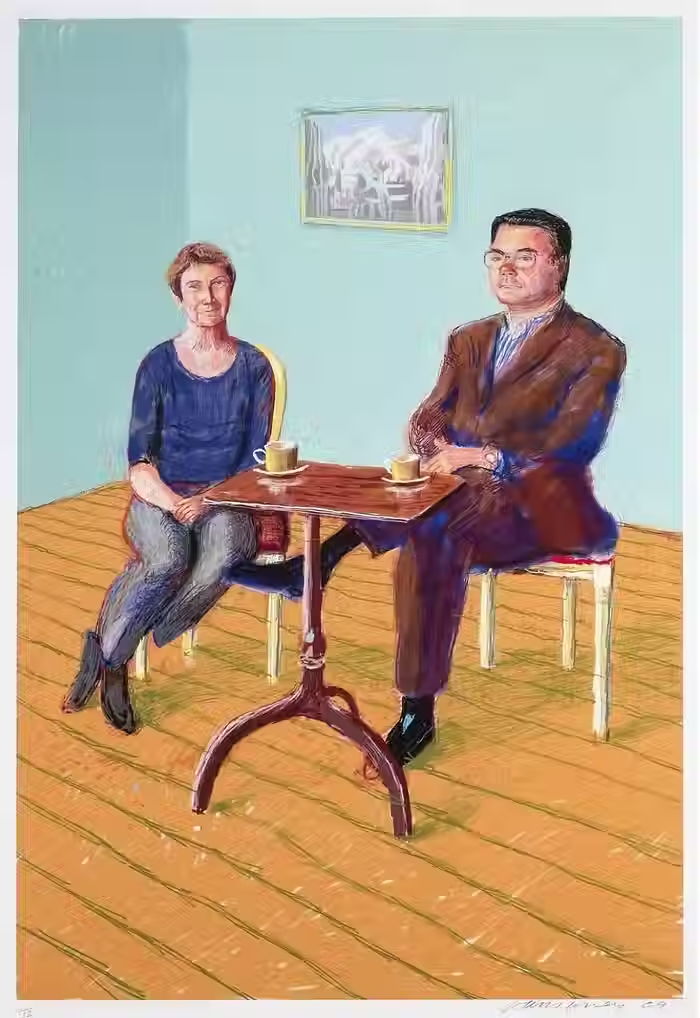
    Michelle and John Spike, inkjet printed computer drawing on paper, 49 X 33.5 inch, 2009, David Hockney
    Michelle and John Spike, inkjet printed computer drawing on paper, 49 X 33.5 inch, 2009, David Hockney

    Juan Gabarron: Beyond his age. He mastered many different media, like his impressive digital artworks.

    Christo and Jean-Claude

    L'Arc de Triomphe, Site Specific Wrap, Paris 1961-2001, Christo and Jean-Claude
    L’Arc de Triomphe, Site Specific Wrap, Paris 1961-2001, Christo and Jean-Claude

    JG: A unique couple creating a new concept of public art, with monumental installations, wrapping buildings, lakes installation, or land art in the mountains. On September 18th, wrapping the Arch of Triumph in Paris!

    Louise Bourgeois

    Spiders, bronze and granite, 2003, Louise Bourgeois
    Spiders, bronze and granite, 2003, Louise Bourgeois

    JG: Painter, sculptor, and printmaker. She was among the very few female artists with late-career success and recognition. she obsessively relived through her art the traumas of her childhood.

    Picasso

    Bust of a Woman, oil on canvas, 810 x 650 mm, 1955, Pablo Picasso
    Bust of a Woman, oil on canvas, 810 x 650 mm, 1955, Pablo Picasso

    JG: A controversial artist who explored new art expressions and transformed modern art history.

    Cristóbal Gabarrón

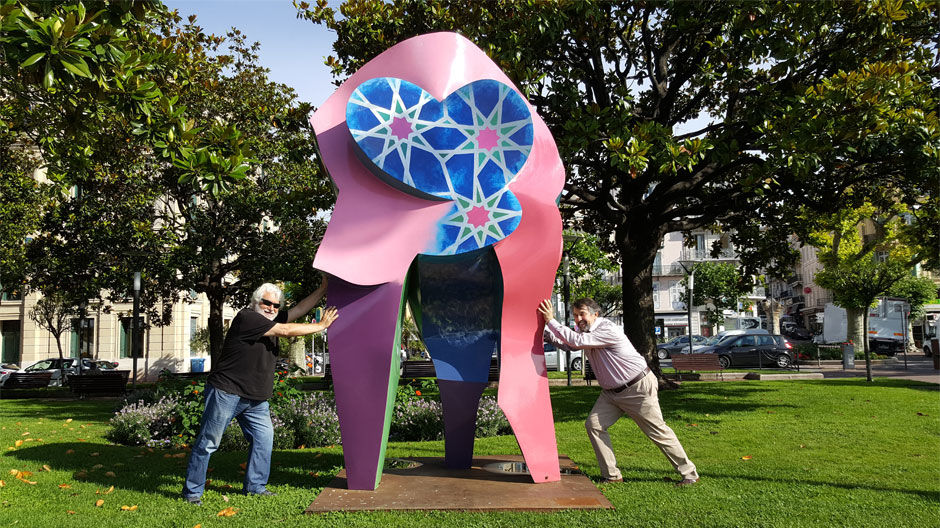
    Gabarrón y Frédéric Ballest
    Gabarrón y Frédéric Ballest

    JG: Beyond his colorful artworks, he has a unique way of understanding the impact of public art and culture in our society. He is, among the very few artists, to create a foundation for the arts at his young age to contribute in their arts.

    Juan Gabarron’s ‘When in Spain’ Playlist.

    The Beatles “Here Comes The Sun”

    Enrique Iglesias “Bailando”

    Icona Pop “I Love It”

    Carlos Baute and Marta Sánchez “Colgando en tus manos”

    Billie The Vision & The Dancers “Summercat”


    Listen to Juan’s playlist now on Spotify: Juan Gabarron’s When in Spain Playlist

    Follow Juan Gabbarron on Instagram @juanmagab.

    View The Gabarron Foundation’s work here.

    For more from Juan Gabarron read the full interview: Juan Gabarron and Art-Tech Intersections in Asia.

  • Juan Gabarron and Art-Tech Intersections in Asia

    Juan Gabarron and Art-Tech Intersections in Asia

    Juan Gabarron is the CEO of the Gabarron Foundation Asia, a non-profit art foundation that is pushing the avenues of art-tech and education for children and adults alike.

    Interview by Paradigm Haus


    Paradigm Haus: Please give us a quick rundown of your background, where you are based and what you hope to achieve in your field.

    Juan Gabarron: I studied Sciences as technology is another of my passions. Later, I studied my MBA as I’m passionate about the business world and how it can improve society through better service and better companies. I’ve been working in arts for most of my career; today I serve as director of the Gabarron Foundation Asia. In 2005 I moved to New York to develop the Gabarron Foundation in USA and in 2017 I moved to Hong Kong to develop our family foundation vision into Asia.

    2022 will make the 30th anniversary of our first foundation in Spain, today our mission remains the same, to create awareness through the arts and education. We have three main goals: 1) we aim to foster the humanities into people’s life; today more than ever we need to leverage the current technology overexposure. 2) Art and culture is a powerful communication language, capable of connecting people regardless of their language or culture. We want to create bridges through arts to connect people across cultures and continents. 3) Children’s education is the key to the future, art is natural for all of us. Since the cave era, we can draw figures and show concepts, before we can even speak, but somehow we lose this natural tool when we get into school growing up. We want kids to continue art education from elementary to their higher education to unlock the full potential of art education as another fundamental skills of humankind, not to create more artists but to deliver more creative people into our future world.

    PH: Where does your drive for the art and culture sector come from?

    JG: I grew up surrounded by artists and art in Valladolid, Spain. My father is an artist and this cultural environment has been around me always as a natural atmosphere. Seeing the big gaps in the society and believing in the capacity of art to fill those gaps and create better society is the drive that keeps me going forward through the years.

    PH: You mentioned being involved in a 360-VR exhibition/experience, how did this come about and what was the response?

    JG: The COVID-19 pandemic has impacted the capacity of people to travel and, of course, visiting museums, art exhibitions, etc. We had a very important program coming up, the commemoration of the 75th Anniversary of the United Nations, with a monumental outdoor installation and museum exhibition about different UN pillars in dialogue through the art.

    As COVID limited the museum capacity as well as all national and international travels, we found on 360-VR the best tool to overcome these limitations. At the same time, we untapped another hidden gap, people cannot use technology the same way, so we deliver three main experiences, to cover most of the visitor’s technological backgrounds, so they can have a more natural visit (it’s not the same the technology understanding of a 10-year-old, than a 60-year-old visitor). You can visit 360.gabarron.org.

    This technology is simple (fast delivery, no apps to download) yet powerful (can deliver the immersive experience with a laptop, a smartphone, and the VR-Headset with the same web browser. It integrates interaction with visitors, not just moving around the 360 but also visitors could create their own images by changing the field of view, distance, etc generating infinite compositions, up to their own little planets.

    The holistic approach was not just using VR on a basic level but we did the most out of it. We shot more than a thousand 360-immersive panoramas, we used drone shooting, as well as 360-video to have an immersive experience with the curator’s tours through the different museum galleries. We had Gigabyte resolution, to embed a 24 meters wide by 4 meters high mural, into a seamless zoom up to centimeter resolution. The panoramas also integrated into Google Maps, so we added new channels, besides our own website.

    The result is triple: 1) the visitors can have a new way to enjoy the art that was not possible before, and they don’t need to have a VR-headset, it can be enjoyed from any device. 2) the fast content delivery and the three levels of 360 experiences, made the engagement really high, integrating arts and technologies for a centered-human experience. 3) Beyond the physical time limits of any exhibition in the real world, the exhibition now is timeless, accessible not just during the dates of the exhibition but will exists for the years to come in the digital world.

    Shanghai Art Museum Colon y kronos
    Shanghai Art Museum Colon y kronos

    PH: Tell us more about your think-tank and how it got started.

    JG: As I briefly stated before we are very concerned of the imbalance of the technology with all the humanities, and with our ORG think tank we aim to leverage a bit that. With all the IT, AI, ML… we need to make equally stronger our humanities, to develop our society balanced. We should always target in our societies to the natural equilibrium of sciences and humanities, but nowadays the nature of the technology demands intrinsically a reborn of humanities. Technology is replacing human labor, hence, in order to make humans more capable of being ahead of the machines, we need to make humans with new strengths so people can be more creative in ways that machine cannot compete. This mostly involve core humanities, this is the focus of our ORG…the most relevant example that I can think of is Steve Jobs back in 1972, after dropped out of the main university curriculum, before he was able to build his revolutionary technology company Apple, he took courses of calligraphy, dance, and Shakespeare at Reed university; later on himself acknowledged those courses were key in the concept and development of Apple, without even knowing when he took them.

    PH: How are art and tech intersecting now, and what does this mean for artists and the NGO sector?

    JG: It’s a complex subject that would require many hours so I would just summarize that art and tech have always been intersecting in different ways, the difference today is that the technology revolution and the art market speculation produced a bubble with NFT that is making many artists to explore digital art as this is a new trend for the market. In this case is very complex as the NFTs are linked to the value of the Crypto currencies which make it very volatile and speculative. Time will tell us if this will really reinvent digital-art world and the market or if will turn into a historical attempt to change the art world.

    To me the NGOs, as many other companies, have way more potential with the development of the blockchain applications, the key of its success rely on the easiness to use it, its sustainability as most blockchain technologies requires a lot of energy consumption, and the size of market they serve, if it is not big enough to make it on the mainstream it would be doomed.

    On the other hand, besides NFTs hype, as young artists are more naturally using technology in their lives, it is normal that they create art with these new technology tools. Also young collectors growing up in the same natural technology ecosystem, they will be buying more digital art as is more natural to them, this is for sure a trend that will keep getting stronger and stronger. Another important change is the traditional museums and galleries, will coexist with digital museums and galleries, a parallel art world to contemplate the art in the traditional and the new digital ways.

    PH: What changes have you seen throughout the art and culture industry?

    JG: With the years we see a more global art-world, the auction houses sell art across the regions where they could find more demand. The art fairs become a game changer for this global art-world, and the collectors rise to stardom equally as the artists. The market gap between expensive and affordable art keeps growing which makes most artists struggling more than ever.

    PH: What do you love about art’s impact on the world?

    JG: Art acts like a magic mirror; the more people look at it the more they find interesting thoughts about their selves. The most remarkable function of art is its capacity of healing. Art makes people to be more relaxed in general; art is the expression of a human need, once the basic needs are covered (food, shelter, education, work…) we human look at the art as the satisfaction of our intellect need. Additionally, art therapy can heal people with many problems; It’s used in schools, hospitals, and many other applications.


    Visit The Gabarron Foundation VR experience here.

    All Images Courtesy of Juan Gabarron.