Category: Culture

  • Dark Mofo and MONA in Hobart: An Insider’s Guide.

    Dark Mofo and MONA in Hobart: An Insider’s Guide.

    From MONA, Night Mass, Altar to the Odeon Theatre, find out where to go and what to see.

    Dark Mofo is synonymous with artistic exploration, immersive experiences, and provocative displays, a winter festival for arts, culture and music in the heart of Hobart. This year, the two-week-long festival brought in the likes of Black Flag, Eartheater, Tianzhuo Chen, Laurel Halo, Dean Hurley, Max Richter, Ryoji Ikeda, Berlin Atonal, and ¥ØU$UK€ ¥UK1MAT$U. Alongside a new vanguard of Australian artists from GLVES, Tasman Keith, V, Arcana, Kaylani, Kinder and OKENYO.

    Then across the waters is MONA — Museum of Old and New Art — founded by David Walsh and accessible via a 25-minute ferry ride from the city in an art-deco bar boat. On show now is Oceans of Air (17 December 2022—24 July 2023), a solo exhibition of Tomás Saraceno that approaches the Argentinian artist from a native lens. Paintings, sculptures and interactive works are on view to reflect our relationship with nature, society and spiders.

    AT MONA

    Oceans of Air, curated by the in-house team Emma Pike and Olivier Varenne, separate the exhibition into over eleven rooms of dark-walled encounters with nature. Within the subterranean galleries, a serenity follows as you walk through the maze of literal spider webs in Webs of At-tent (s)ion. Then there are declarations of ‘Invertebrate Rights’ and sound installations that make up a wire-strung symphony.

    The 4pm orchestra show is a project by Tasmanian musician Dean Stevenson, who writes a new piece of music every day from scratch and performs it at 4pm with a different ensemble of musicians. Grab a drink and sit in the open lounge, or for something more private behind closed green curtains The Lady’s Lounge for high tea. Then there is Event Horizon by James Turrell, an immersive experience of the Ganzfeld Effect, leaving you feeling lost between the beginning and end.

    Newly opened inside the MONA Library is a recording studio open to public bookings with a viewing glass to studio sessions by The Frying Pan Studio. Inside is original equipment from The Beatles Abbey Road Album, Pink Floyd and The White Stripes. Be part of history.

    Western Flag, John Gerrard, Dark Mofo 2023. Photo credit: Andy Hatton, 2023.
    Western Flag, John Gerrard, Dark Mofo 2023. Photo credit: Andy Hatton, 2023.

    DARK MOFO

    A two-week-long winter festival for arts, culture and music that takes over the city of Hobart at night.

    NIGHT MASS

    Unveiling Hobart’s Underground from Altar, The Grand Poobah, The Alleway and an Underground Cinema.

    In Altar, graffiti-clad walls set the scene as international DJs deliver melodic techno, bass, and trance on the upper floors. Downstairs, immerse yourself in hardcore metal, rap, and raunchy drag shows that defy convention. With every hour, new performers take the stage until dawn.

    Seek solace in Poobar’s back room, where tarot card readings intertwine with string melodies and theatre performances of the oracle predictions. As you venture further into the labyrinthine depths of Nightmass, stumble upon the underground cinema nestled by the Alleyway entrance. The Alleyway hosts loft DJs surrounded by outdoor campfires, where the underground cinema offers satirical theatre and drag bingo.

    And if you’re lucky enough to enter the coveted Red Room in the Odeon Theatre, prepare to be enchanted by boundary-breaking performances. Be quick, though, as space fills up swiftly once a show concludes, or you’ll be lining up for hours. Night Mass is an immersive journey into Hobart’s underground scene.

    TRANCE Photo credit: Rosie Hastie, 2023.
    TRANCE Photo credit: Rosie Hastie, 2023.

    But the stand out performance showcasing underground sub-cultures was TRANCE by Tianzhuo Chen (Thu 8 – Sat 10 June). The ‘3 day rave’ put on three 12-hour long performances in an immersive nature-scape with art installations, interpretive characters, bass DJs and music performances. Artists from around the globe flew in to participate including Dis Fig, City, KIM KHAN, Lavinia Vago, OMI, and ¥ØU$UK€ ¥UK1MAT$U.

    ODEON THEATRE AND IN THE HANGING GARDEN

    Two music venues for international and local acts in a historic theatre and open-air stage.

    The opening night show In The Hanging Garden tilted The Gathering — saw powerful verses of BARKAA, the alluring flow of Tasman Keith, and the soulful dameeela. These remarkable First Nation artists forge a profound connection with the audience and land, setting the tone for the rest of the festival. Amidst this symphony of sounds, In The Hanging Garden is a multi-level outdoor venue adorned with cathedral-like light installations serving local wine or food from wild wallaby, pepperberry and more.

    Then at the Odeon Theatre, its architecture is reminiscent of a bygone era. The ornate details, from the intricately carved pillars to the rich tapestries adorning the walls, create an atmosphere of musical grandeur. PS. It’s the location of The Red Room, but only expect a seat if you arrive by midnight when doors open.

    As for the shows, the first weekend saw Black Flag’s unapologetic energy and Thundercat’s instrumental jazz, while Ethel Cain’s haunting melodies closed out the weekend.

    Enter the ethereal realm of Borderlands I, where Dean Hurley and Laurel Halo, two electronic composers from the United States, created soundscapes of tension and cinema to sit back and relax too. The second weekend for Borderlands IV will host Tujiko Noriko, Hiro Kone, KMRUKEN and Hüma Utku for their rendition of the electronic music concept.

    Crosses, Dark Mofo 2023 Photo credit: Rosie Hastie, 2023.
    Crosses, Dark Mofo 2023 Photo credit: Rosie Hastie, 2023.

    WINTERFEST AND DARK PARK

    Feed the body at Winterfest and the soul at Dark Park this winter solstice at Dark Mofo.

    As the frosty air wraps the city in its embrace, the people come out to play at night. Winter Feast beckons, a nightly feast where local and international cuisines intertwine over communal tables, fire pits and live music. From spit roasts, seafood, local wines and craft beers, the indoor-outdoor halls lit from neon red crucifixes and hourly fireworks have their own rugged charm.

    Spectra, Ryoji Ikeda, Dark Park, Dark Mofo, 2023 Photo credit: Remi Chauvin, 2023.
    Spectra, Ryoji Ikeda, Dark Park, Dark Mofo, 2023 Photo credit: Remi Chauvin, 2023.

    Dark Park, nestled within the former industrial site of Macquarie Point, blends raw and weathered elements with contemporary design. As you traverse the landscape, Spectra commands attention with its towering presence. A monumental beam of light crafted by Japanese artist Ryoji Ikeda can be seen throughout Hobart. But the ancient ritual of Ogoh-Ogoh genuinely captures the spirit of Dark Park. The pinnacle event is on the festival’s final night, as the Ogoh-Ogoh is set ablaze. In this ritual, the audience is invited to write their hopes, dreams, and wishes on paper, which they then cast into the bonfire. A practice of catharsis and release to end the two-week-long festival of art, culture and debauchery.

    Winterfest and Dark Park become the epicentre of Dark Mofo’s enchantment as the winter solstice casts its spell.
  • Asia’s Emerging Literary Scene from the eyes of Author and Journalist Nury Vittachi

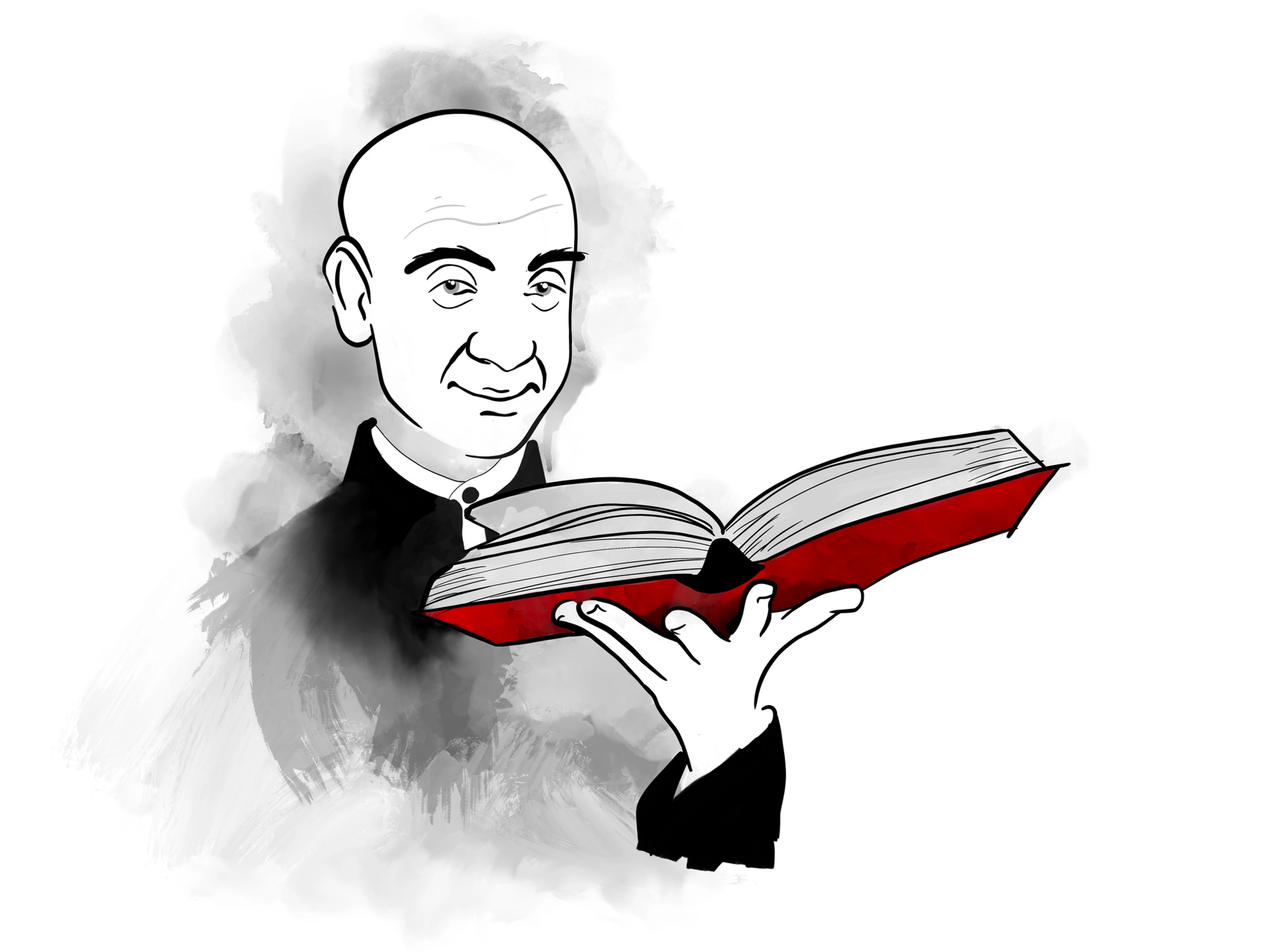
    Asia’s Emerging Literary Scene from the eyes of Author and Journalist Nury Vittachi

    Interview by Faye Bradley and Sarah Wei

    Written by Faye Bradley

    HONG KONG. For decades Western cinema – Hollywood – has dominated the international movie scene. Thanks to martial arts master Bruce Lee the 70s gave ‘the West’ its first peek into Asian culture, and recent years have seen an encouraging new wave of Asian cinema and Asian-inspired Western cinema coming into play from blockbusters like Pixar’s Turning Red, Marvel’s Shang Chi, and Crazy Rich Asians. But where is this cultural shift in film representation stemming from?

    The answer is right in front of our eyes. As the largest population in the world, Asia will inevitably continue to make waves in different sectors with creativity and entrepreneurialism at the forefront. Some of the best filmmakers are based in Asia and with Parasite (Bong Joonho, Korea) and Chungking Express (Wong Kar-wai, Hong Kong) impressing the likes of big names like Quentin Tarantino, foreign directors are setting the stage.

    Collaborations between Western and Eastern filmmakers will be one of the most prolific cinematic movements and the literary scene is taking note – writers and multi-disciplinary creatives are one of the most sought-after talents in Asia right now. Zooming out from the era of Asian cinema and tapping into this near future, Nury Vittachi a Hong Kong-based journalist, author, and founder of Asia Literary Review and Hong Kong International Literary Festival, speaks with us on Asia’s creative scene, and the books and films leading the wave.

    Paradigm Haus: Can you tell us about Asia’s creative scene?

    Nury Vittachi: Basically, there’s a huge anomaly. Until recently, most of the creative material in English books was from the West. What’s Asia’s contribution to culture in the terms of books, stories, and screenplays? Almost nothing.

    Anomalies are quite good because they normally fix themselves, which will lead to growth in Asia. That’s why publishers have offices in Hong Kong looking for the next great trend. It’s also why all the movies we watch today have Asian characters in it including Jet Li and recently Michelle Yeoh. The market is recognizing this change and has accelerated. In fact, China retained the top spot at the box office with US$7.9 billion in 2021.

    Chinese cinema and the rest of the Asian movie market is overtaking globally. So publishers are saying that is going to happen in books as well. We need to find the next Harry Potter and the next JK Rowling, who will likely be Asian!

    PH: How has the Asian creative market entered the West so quickly and effectively?

    NV: It’s partly numbers. The population is larger and we produce a lot – some good, some not so good. But if 1% of Asian material is fantastic, then it adds up. The market is on our side because most of the consumers in the world are Asian. Eventually getting fed up with the likes of Harry Potter – they want their own material. The other thing is that Asian culture has not been exploited in the way that Western culture has been exploited. For example, you’ve seen a million movies or books about witches and wizards – that’s classic Western culture. But have you seen a million movies and books about ancient Asian folklore? Do you think language is a barrier? Well, people are finding a way around it. All the big publishing companies now have scouts who look at Asian language publications – and these writers are making it on the Booker Prize List. A Hong Kong filmmaker recently made it on the Oscars list, Derek Tsang. Tsang was on the shortlist for foreign language movies, the first Hong Kong filmmaker on it for years.

    The other change is that movies these days are made with less dialogue, and more visuals. For example, Matt Damon’s Jason Bourne film has an entire dialogue of around 200 lines for the whole movie, and the average line was three words like “move” or “now.” With this style of tiny phrases, it’s easy to understand and not even necessary to translate.

    PH: Which comes first – market then movie or movie then market?

    NV: Big companies are very aware of trends. I remember about 15 to 20 years ago, I got a phone call from an agent in Hollywood, Miramax I think. She said, “I’m standing in a Hong Kong bookshop and it’s full of Harry Potter, but I’ve been sent here to look for Asian writers. You’re the only one I can find. What’s happened to the Asian writers?” That was 20 years ago and Hollywood was already becoming aware of the need for Asian representation. We need Asian movies.

    Disney has been at the forefront sending out agents and feelers for years. They’ve tried to remake Asian books into Disney movies. They’ve tried to send money to China to make Asian-style movies. They’ve tried all sorts of things, with experiments using Asian-Americans, like the first Mulan, and then they tried using actual people born in Asia, then the second Mulan, which had mixed reactions. But they are trying at least.

    There is still an opportunity for the next great Asian writer to hit the global stage. We’re counting on you, the next generation. I know one publisher who actively reads things like fan fiction and poetry and they are actually looking for Asian writers.

    PH: How do you think the process has changed? Like the scouting process or the ability to be discovered?

    NV: For the big Western companies, the process should be easier. But it’s not to be honest because movies are still dominated by the West and so they’re using the same stars. In Asia, however, it’s a bit more interesting because it is surprisingly quite creative. So Asia invented live streaming, for example – Asia invents a lot of stuff, but we don’t realize it. Like, I’ll give you an example between 2003 and 2006. The top stories in this part of the world, the biggest part of the world, were either on phones or on computers. They were texts based on technology and that was before the iPhone was invented and before the Kindle was invented. Right. So the best-selling stories in Asia were text-based stories before the keyboard, which not a lot of people know about. They would immediately assume Kindle invented eBooks. But no. They were never in print. They were always on your phone, always on your computer, always on, well now your iPad.

    There was one called “the ghost blows out the candle”, using the typical Chinese story. People are hunting for some treasure and then somebody blows out the candle and you’re in the dark. Who blew out the candle? It’s none of us, so it must’ve been, you know, the ghost. It was a huge hit in China. Everybody had it on their phone and computer – it was like the first big e-book sensation and nobody in the Western world even knew about it. Eventually, the writer sold the story to a physical book publisher who tried to publish it. But the Chinese government had lots of weird rules at the time and one of the rules was that no occult stuff. So, they said, well, can you rewrite the book but without the ghost? So that was a bit problematic. Fortunately, in the last couple of years, the Chinese government has totally relaxed and the ghost blowing out the candle became a TV series.

    PH: Which regions in Asia are becoming popular for creative writers?

    NV: Well, not so much a region, but a whole region. The biggest potential market is books and stories for young people. There are 750 million young people in Asia. Now name an Asian children’s book writer. There aren’t any, right? So even when we were doing the literary festival here, we had to import children’s book writers from America, England, and Australia, all the Western countries with majority white writers. So there’s a huge opportunity for local writers, because Western books would begin with “Billy went out of his house to play baseball” and we think, okay, nobody is called Billy and nobody plays baseball [in Asia]. Not good.

    We’ve been trying to cultivate local talent a lot. So we ran competitions to try and get the standard up. And it was really frustrating for the last seven or eight years, because what we found was great children’s book art but really bad stories – they just weren’t interesting. Like really bad folk tales, but in the past couple of years, the standard of stories has come up. So, I think within the next year or two, we’ll start to see more children’s books from Asia.

    Have you heard of the Gruffalo? Are you the Gruffalo generation? Now here’s some interesting gossip from the industry that drives the Asian book industry mad. You know why? Because the story is taken from here. It’s an Asian story that the writer Julia Donaldson read and then rewrote and published it with a Western publisher. And now it’s the biggest selling children’s book of the last 10 years or something. Occasionally in interviews, she will say, by the way, I took it from an Asian quote – but usually, she doesn’t say that.

    Another interesting one is Cinderella. There’s something weird about Cinderella compared to all the other Western folktales and traditional fairy tales. Typically, the woman marries the prince because she’s beautiful or clever or both. There’s no such fairy tale where a woman marries a prince because she has small feet. There’s only one place in the world where that makes sense – Asia. So Cinderella was written in China like thousands and thousands of years ago, and it made sense. It made sense to find that it was stolen. It was pirated by the French about 400 years ago or 300 years ago. And then it’s now everybody assumes, it’s a Walt Disney production with Walt Disney copyright. But in fact, it’s a story from this part of the world and only makes sense in this part of the world.

    This article is from our Asia’s Emerging Creative Scene feature available to read in print. Get your limited edition copy here.