Tag: beijing

  • Bloodz Boi on his Debut Australian Tour, raw and unfiltered

    Bloodz Boi on his Debut Australian Tour, raw and unfiltered

    The Beijing rapper brought to Melbourne a deep-cut show of emotion.

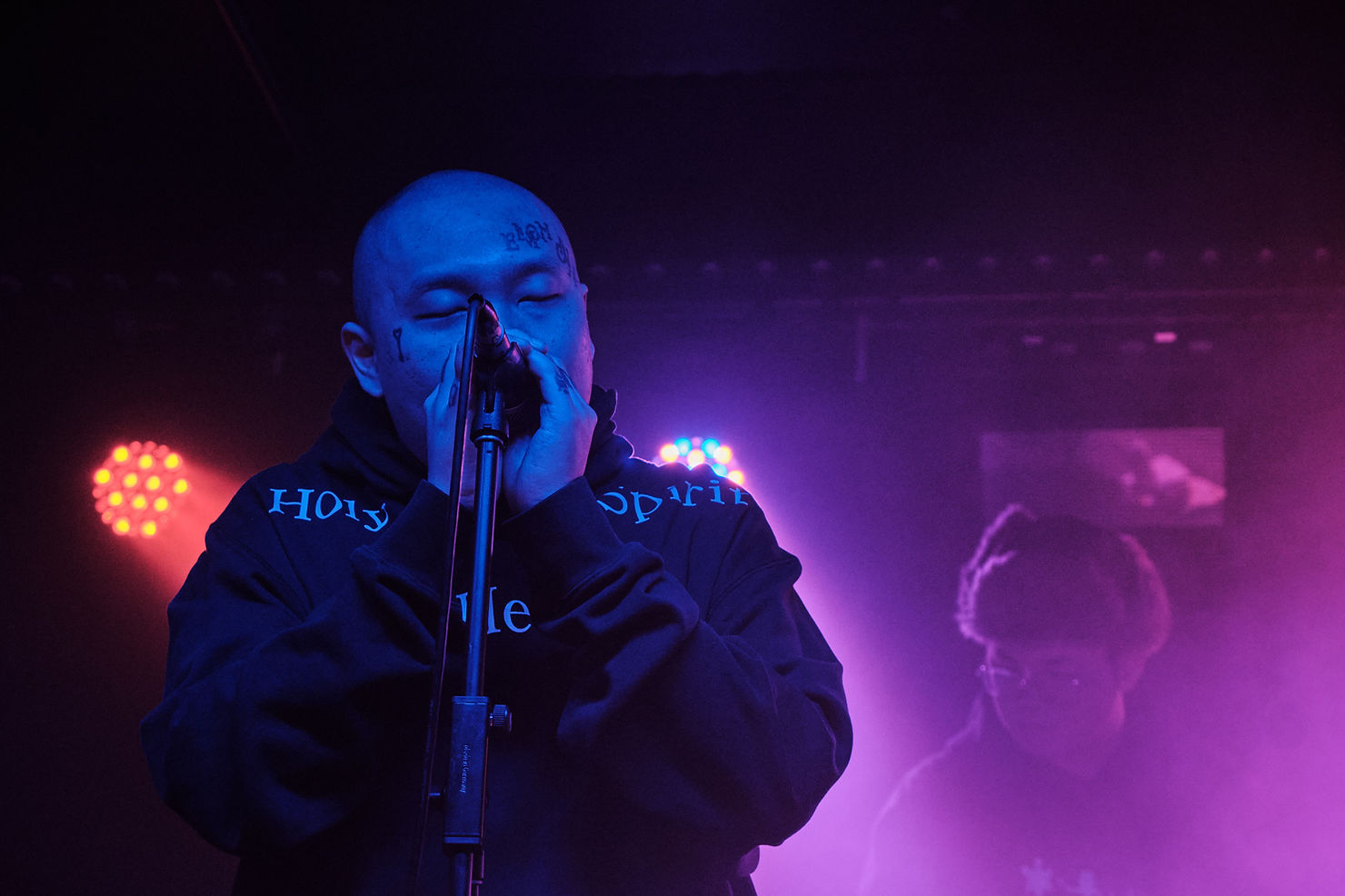
    In the world of cloud rap, few artists carve out a niche as distinctively as Bloodz Boi. The rapper debuted on Australian shores and played two intimate shows in Melbourne and Sydney. He is known for his lyricism, lo-fi beats, and a stage presence that commands attention. The Melbourne show provided a raw, unfiltered look into his heart. We met up with the artist in tow, so read on as Yang Fan sheds light on his introspective approach to music and performance, and a desire for authenticity over fame.

    Sarah Wei: Is this your first time in Australia?

    Bloodz Boi: Yeah, first time. 

    SW:What do you think motivates your music?

    My life, yeah, I think my life. Right now, it’s mostly from my life, and maybe just art in general influences me. As soon as I start fighting with my mind… It’s not a very serious thing.

    SW:Is it the same when you create a set for a performance?

    I don’t perform a lot. I don’t want people to see me because every time I perform, I have to reface every scene I created from my songs. 

    My music and songs are careful and are not from good memories. So, while singing them, I want to make them very legit, make myself be there, make myself very sad or something, to feel that. I want to give the people 100% of what I am thinking. It is the emotions that are way more important than anything else.

    It’s like revisiting your emotions… Once you make a song or once it goes out to the public, do you ever revisit it?

    No, I don’t listen to my music. I have taken down a lot of music. The feeling is right now. I always change.

    SW: Why were you drawn to cloud rap?

    Because I’m a soft person. I don’t have a hard style; I am living myself. I don’t like the high energy. 

    SW: And what about DJing? Do you still do that?

    DJ for radio is good enough [currently Bloodz Boi hosts for NTS Radio]. I don’t like to DJ offline. 

    You don’t enjoy it as much?

    Yes. Sometimes, I will. DJing is like karaoke to me. I am saying, you can’t go to karaoke every week, or you will lose your passion. I listen to a lot of music, so I like to listen to it on a club monitor.

    SW: Do you feel much impact from the nightlife in Beijing?

    Like before 2019. When Dada [a Beijing club] opened, the first day I was there. The very old, the old one. I was in high school at that time. My music was influenced a lot.

    SW: Did you find a sense of community there?

    Yes. I made a lot of friends in Dada. I have a very good friend in high school, we grew up to grow up together. I’m older than him, and after his final high school exams in China, I brought him there the same day. Now, he DJs there, every weekend, there or someplace else in Beijing. I have met a lot of interesting people, but I have lost them in the last four years because I don’t talk to people.

    SW: Would you want to reconnect with them?

    I don’t want to be here in any community now, I don’t want to socialise. I only have one or two friends in Beijing. My very close friends don’t listen to my music, they’re not about the music. Never listen to my music, please. Like, I want people to know me. So, my real name is Yang Fan, I want people to know me.

    On the internet, it’s really interesting. Like people, if they saw you making music, they saw you as an artist, and then saw your listing. They think you are very famous.

    When people see you making music, they recognise you as an artist and then notice your fame. But the truth is, anyone can make music these days, much like anyone can send an email. But why? Oh, [because you] got to do something, you know? So, there are not many people making music like ours. I don’t want to trade myself.

    SW: How about China’s underground music scene?

    If you are an underground artist, you are an underground artist; there is no crossover into the mainstream. If you are commercial, you are getting big. Rich and poor. There is no crossover.

    SW: Is your collaboration mostly from your online friends?

    From different countries, talking different languages. Music is not about the language or anything else. So it’s really good. We can meet through the music.

    SW: Is there any artist you really want to work with?

    I want everything just natural. You know? For some people I make music with, it wasn’t because I like their music; it was just because I like this guy. And it’s way more than music.

    Like, I am a fanboy of some people as well. But I don’t want to break the feeling. I just want to listen to them, I don’t want to make music with them.

    If we make music, I want it to be natural. We meet, get to know each other, and then make the music.

    SW: Then, does each new track become individual to the artist?

    Yes, right, right. I never make a song where it’s just half a song, and here you go, do the rest. No, I won’t do that. Every song is just for him or for her.

    SW: How much of your identity do you tie to your music?

    Yes, all of them. I mean, I want the people to like me, for me. The music is a part of me. In the music, I can express all of myself. It is more than the music. It is the real me. There are some people who tell me it’s too real. Like this is too much. They can’t take it. This is too heavy… Like last night [at the concert], I tried my best. But the set up was not good, and it might have made people misunderstand.

    [At his Melbourne show, Bloodz Boi reperformed songs multiple times]. 

    Some people really come for me. I have to do that. I have to do that for them. I want them to feel, to listen, to my set and receive the vibe.

    Find Bloodz Boi’s music, tours, and radio shows here.

    Live Concert Images Courtesy of Valerie Joy.
  • Juan Gabarron and Art-Tech Intersections in Asia

    Juan Gabarron and Art-Tech Intersections in Asia

    Juan Gabarron is the CEO of the Gabarron Foundation Asia, a non-profit art foundation that is pushing the avenues of art-tech and education for children and adults alike.

    Interview by Paradigm Haus


    Paradigm Haus: Please give us a quick rundown of your background, where you are based and what you hope to achieve in your field.

    Juan Gabarron: I studied Sciences as technology is another of my passions. Later, I studied my MBA as I’m passionate about the business world and how it can improve society through better service and better companies. I’ve been working in arts for most of my career; today I serve as director of the Gabarron Foundation Asia. In 2005 I moved to New York to develop the Gabarron Foundation in USA and in 2017 I moved to Hong Kong to develop our family foundation vision into Asia.

    2022 will make the 30th anniversary of our first foundation in Spain, today our mission remains the same, to create awareness through the arts and education. We have three main goals: 1) we aim to foster the humanities into people’s life; today more than ever we need to leverage the current technology overexposure. 2) Art and culture is a powerful communication language, capable of connecting people regardless of their language or culture. We want to create bridges through arts to connect people across cultures and continents. 3) Children’s education is the key to the future, art is natural for all of us. Since the cave era, we can draw figures and show concepts, before we can even speak, but somehow we lose this natural tool when we get into school growing up. We want kids to continue art education from elementary to their higher education to unlock the full potential of art education as another fundamental skills of humankind, not to create more artists but to deliver more creative people into our future world.

    PH: Where does your drive for the art and culture sector come from?

    JG: I grew up surrounded by artists and art in Valladolid, Spain. My father is an artist and this cultural environment has been around me always as a natural atmosphere. Seeing the big gaps in the society and believing in the capacity of art to fill those gaps and create better society is the drive that keeps me going forward through the years.

    PH: You mentioned being involved in a 360-VR exhibition/experience, how did this come about and what was the response?

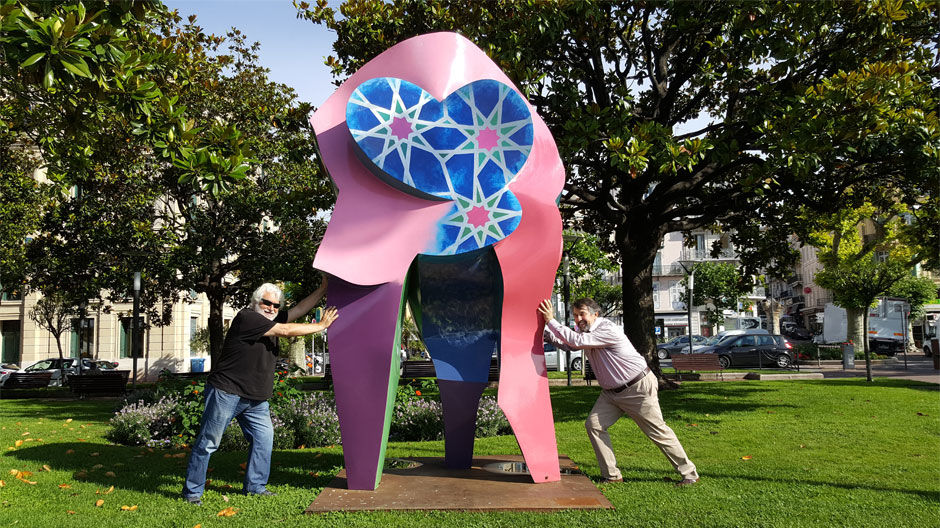
    JG: The COVID-19 pandemic has impacted the capacity of people to travel and, of course, visiting museums, art exhibitions, etc. We had a very important program coming up, the commemoration of the 75th Anniversary of the United Nations, with a monumental outdoor installation and museum exhibition about different UN pillars in dialogue through the art.

    As COVID limited the museum capacity as well as all national and international travels, we found on 360-VR the best tool to overcome these limitations. At the same time, we untapped another hidden gap, people cannot use technology the same way, so we deliver three main experiences, to cover most of the visitor’s technological backgrounds, so they can have a more natural visit (it’s not the same the technology understanding of a 10-year-old, than a 60-year-old visitor). You can visit 360.gabarron.org.

    This technology is simple (fast delivery, no apps to download) yet powerful (can deliver the immersive experience with a laptop, a smartphone, and the VR-Headset with the same web browser. It integrates interaction with visitors, not just moving around the 360 but also visitors could create their own images by changing the field of view, distance, etc generating infinite compositions, up to their own little planets.

    The holistic approach was not just using VR on a basic level but we did the most out of it. We shot more than a thousand 360-immersive panoramas, we used drone shooting, as well as 360-video to have an immersive experience with the curator’s tours through the different museum galleries. We had Gigabyte resolution, to embed a 24 meters wide by 4 meters high mural, into a seamless zoom up to centimeter resolution. The panoramas also integrated into Google Maps, so we added new channels, besides our own website.

    The result is triple: 1) the visitors can have a new way to enjoy the art that was not possible before, and they don’t need to have a VR-headset, it can be enjoyed from any device. 2) the fast content delivery and the three levels of 360 experiences, made the engagement really high, integrating arts and technologies for a centered-human experience. 3) Beyond the physical time limits of any exhibition in the real world, the exhibition now is timeless, accessible not just during the dates of the exhibition but will exists for the years to come in the digital world.

    Shanghai Art Museum Colon y kronos
    Shanghai Art Museum Colon y kronos

    PH: Tell us more about your think-tank and how it got started.

    JG: As I briefly stated before we are very concerned of the imbalance of the technology with all the humanities, and with our ORG think tank we aim to leverage a bit that. With all the IT, AI, ML… we need to make equally stronger our humanities, to develop our society balanced. We should always target in our societies to the natural equilibrium of sciences and humanities, but nowadays the nature of the technology demands intrinsically a reborn of humanities. Technology is replacing human labor, hence, in order to make humans more capable of being ahead of the machines, we need to make humans with new strengths so people can be more creative in ways that machine cannot compete. This mostly involve core humanities, this is the focus of our ORG…the most relevant example that I can think of is Steve Jobs back in 1972, after dropped out of the main university curriculum, before he was able to build his revolutionary technology company Apple, he took courses of calligraphy, dance, and Shakespeare at Reed university; later on himself acknowledged those courses were key in the concept and development of Apple, without even knowing when he took them.

    PH: How are art and tech intersecting now, and what does this mean for artists and the NGO sector?

    JG: It’s a complex subject that would require many hours so I would just summarize that art and tech have always been intersecting in different ways, the difference today is that the technology revolution and the art market speculation produced a bubble with NFT that is making many artists to explore digital art as this is a new trend for the market. In this case is very complex as the NFTs are linked to the value of the Crypto currencies which make it very volatile and speculative. Time will tell us if this will really reinvent digital-art world and the market or if will turn into a historical attempt to change the art world.

    To me the NGOs, as many other companies, have way more potential with the development of the blockchain applications, the key of its success rely on the easiness to use it, its sustainability as most blockchain technologies requires a lot of energy consumption, and the size of market they serve, if it is not big enough to make it on the mainstream it would be doomed.

    On the other hand, besides NFTs hype, as young artists are more naturally using technology in their lives, it is normal that they create art with these new technology tools. Also young collectors growing up in the same natural technology ecosystem, they will be buying more digital art as is more natural to them, this is for sure a trend that will keep getting stronger and stronger. Another important change is the traditional museums and galleries, will coexist with digital museums and galleries, a parallel art world to contemplate the art in the traditional and the new digital ways.

    PH: What changes have you seen throughout the art and culture industry?

    JG: With the years we see a more global art-world, the auction houses sell art across the regions where they could find more demand. The art fairs become a game changer for this global art-world, and the collectors rise to stardom equally as the artists. The market gap between expensive and affordable art keeps growing which makes most artists struggling more than ever.

    PH: What do you love about art’s impact on the world?

    JG: Art acts like a magic mirror; the more people look at it the more they find interesting thoughts about their selves. The most remarkable function of art is its capacity of healing. Art makes people to be more relaxed in general; art is the expression of a human need, once the basic needs are covered (food, shelter, education, work…) we human look at the art as the satisfaction of our intellect need. Additionally, art therapy can heal people with many problems; It’s used in schools, hospitals, and many other applications.


    Visit The Gabarron Foundation VR experience here.

    All Images Courtesy of Juan Gabarron.