Tag: interview

  • John Tung on curating SEA Focus and the artistic sentiments in the region now.

    John Tung on curating SEA Focus and the artistic sentiments in the region now.

    When John Tung talks about curating, he begins with a toolbox, a literal one. Fresh from the close of the 2026 edition of SEA Focus at ART SG, Tung has a get your hands dirty attitude to exhibiting. “We had a really strong response,” he says. “[feedback was] very positive from most of the visitors… I’m very happy with how it turned out.” Behind the fair’s success lies a philosophy of exhibition-making that is far removed from the glamorous stereotype of the jet-setting curator.

    “People imagine stylish outfits and opening nights,” he jokes. “But I’m a hands-on curator. Behind me right now are toolboxes and scaffolding. My hands are beaten up and I am wearing workwear.” For Tung, the word “curate” returns to its Latin root, curare — to care. “Are you a parent? If you have never changed a diaper, I’ve said, is my approach to curating… There’s blood and sweat behind them — hopefully not tears.”

    Read on for our full interview Q+A covering SEA Focus, ART SG, curating, and cultural capital in the region, expectations, and more.

    On SEA Focus moving into ART SG

    Sarah: Previously SEA Focus was in a separate location, and now it’s inside the fair. How did that change the way you curated the show? SEA Focus has often been described as more of a museum-like experience than a typical fair booth.

    John Tung: That museum-like quality has really been part of SEA Focus’s identity for many years, especially since it moved to Tanjong Pagar District Park about five or six years ago. SEA Focus is a curated platform, so the experience is always closer to going to a museum than visiting a typical art fair booth.

    I’ve had the pleasure of creating three editions — two at Tanjong Pagar Distripark and this most recent one at ART SG. Each edition aims to create a very different visitor experience from the previous one.

    The approach stayed largely the same, but the venue made a difference. A convention hall is a tabula rasa — a blank slate. It gives you a lot of freedom to build walls exactly the way you want. In the previous venue, we had columns and architectural features we had to work around. Having a blank slate gives more opportunities to exercise creativity.

    For this edition, we centralised X-shaped walls, which became quite iconic, and in previous editions, we modelled the “islands” of the layout to resemble the archipelagos of Southeast Asia. A lot of effort goes into the selection of galleries and artists, considering geographic representation, gender representation, and where artists sit in terms of market presence. The experience is always carefully curated.

    Sarah: How do you think this curatorial platform helps bring in smaller galleries? 

    John: The galleries are actually a very diverse mix. They’re not necessarily all small galleries. Yes, you have new and emerging galleries, but you also have international powerhouses that have participated in numerous editions of SEA Focus as well.

    The unique thing about SEA Focus is that it’s an opportunity for artworks and artists to be contextualised among peers who are practicing in the region. Whether they’re established or emerging, they’re working within the same epoch. Their concerns are aligned; they’re living in the same zeitgeist.

    That’s the greatest value SEA Focus brings. Unlike a typical fair, where each gallery has its own objectives and commercial interests, here everything converges under a singular kind of territorial and conceptual banner. I think we’re starting to see that there is value in seeing connections and contextualising works, rather than just seeing them as individual commercial presentations.

    I thought it was really interesting that with the new Art Basel in Qatar [which opened from February 5–7, 2026], they’ve actually adopted a very similar approach — each booth is supposed to present one artist, they’re all thoroughly screened, and they’re expected to unite under that same singular banner. So this idea of having a curated experience — not purely a fair — we’re starting to see that there’s value in seeing the connections and contextualising the work as well.

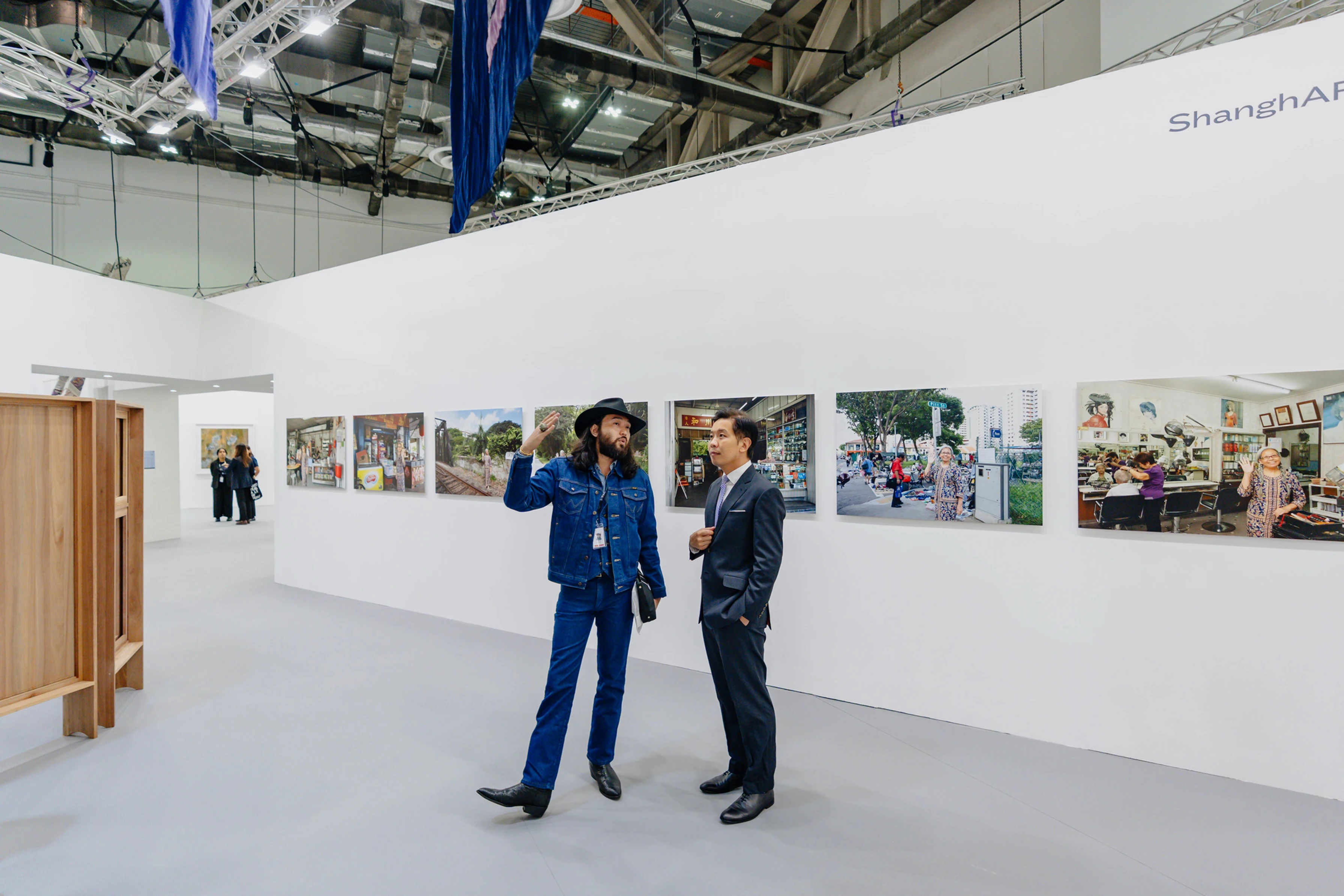
    Installation view of SEA Focus at ART SG 2026, Marina Bay Sands Singapore

    What collectors bought at SEA Focus and ART SG 2026

    Sarah: What were some of the most popular themes or works with collectors? Or even some surprise sleeper hits?

    John: [He jokes] I’m a horrible person to ask because I have got such a close working relationship in the realisation of the show. So every work always stands out to me as really unique and really special. 

    There was strong support for many of the young artists. Inez Katamso, for example, did very, very well, which shows collectors are very interested in a younger generation of artists.

    A group of young artists presented by Mr Lim’s Shop of Visual Treasures also saw almost all the works picked up by collectors. But then again, on the other end of the spectrum, a new installation by Robert Zhao was one of the first works acquired during the preview days. So, collector interest remains very broad in Singapore. People are looking at works across a great variety of price points, and SEA Focus is able to provide that range, from recent graduates and newly emerging artists to very established historical figures.

    Cultural capital in Singapore, the region, and the artist sentiments behind it

    Sarah: Do you think Southeast Asian artists are under pressure to explain their region to the world?

    John: I wouldn’t put it as pressure, but there is definitely awareness of how the international art world wants to frame Southeast Asia, and sometimes there’s active resistance against that. [On the platform Something Curated] I wrote an article recently about this notion of Southeast Asia being “up-and-coming.” Up-and-coming benchmarked against what? Are we talking about sales, infrastructure? Western models are still predominant in those conversations.

    Art doesn’t operate like Keynesian economics. In that regard, I think Southeast Asia remains very, very true to themselves. It provides a supply for a demand that doesn’t exist yet. Southeast Asian artists remain very true to themselves. They respond to issues they’ve engaged with for a long time, drawing on distinct and hybridised histories. There’s still very strong cognisance of the postcolonial nature of Southeast Asia’s existence, and that manifests quite clearly in the work.

    Sarah: Singapore is positioning itself as a regional cultural capital — what does Singapore enable that other cities don’t, and why? 

    John: My academic background is not in curating — it’s in cultural policy. I wrote my master’s thesis on the evolution of Singapore’s cultural policy. The notion of being a cultural capital is not new, and Singapore’s model draws from quite a variety of global sources.Even the United States’ Cold War policies come to mind, with the CIA funding abstract expressionist exhibitions abroad as a means of soft power. Singapore isn’t at war with anyone, but there is definitely a desire to be seen as a gateway to Southeast Asia.

    SEA Focus allows people to see some of the best and most recent offerings from across the region in one destination, instead of flying to eleven different countries, to tease it out, to do the excavation, bit by bit. Singapore is leveraging on a lot of its strengths, its history of strong bilateral ties with our neighbours in the region, and the confidence that our neighbours have in Singapore to be able to accurately represent and reflect the variety of tastes, beliefs, and opinions of the different peoples of Southeast Asia.

    That being said, I think it’s also a really heavy burden to bear, the burden of representation, right? So I think, for Singapore, as a commissioner for many of these events, the best they can do is find individuals who take this sort of responsibility seriously. And I would like to think I take this responsibility seriously.

    The growth of private museums in Southeast Asia

    Sarah: Shifting to the art scenes more broadly. How do you think the art scenes in other major Southeast Asian cities are changing?

    John: Across Southeast Asia, particularly in the more developed cultural production centres like Jakarta, Bangkok, and Kuala Lumpur, we’re seeing a rise in private museums being opened. MAIIAM opened fairly recently in Bangkok, and there’s MACAN in Jakarta.

    In Singapore, that trend isn’t manifesting at quite the same scale as in the region. Such as The Private Museum by the Teo Family. There’s also an influx of collector-established art spaces. So I do think that across the region, patrons and benefactors of the arts are really putting their resources where their mouths are, creating infrastructure that runs parallel to state-funded spaces. That’s helping to build a more diverse and vibrant ecosystem overall.

    Sarah: What do you think about collectors opening private museums?

    John: I recall the establishment of MAIIAM in Thailand, which is the project of a really notable collector, Eric Bunnag Booth. His rationale for establishing MAIIAM was quite straightforward. At that point in time, there wasn’t a permanent collection-based institution or museum in Thailand showing Thai art. He very much wanted Thai people — young artists, young students — to have the opportunity to see iconic works of Thai art in Thailand itself.

    Singapore was the regional powerhouse in collecting at the time, but he wanted a place where local countrymen could encounter their own art history. I wholeheartedly believe in the purity of his intentions and vision in establishing MAIIAM, and I think MAIIAM has really been a beacon in the region for how a private museum can be established, run, and operated.

    The space I am currently associated with, Project Art Hunter, was established by another notable Singaporean collector, Yeap Lam Yang. It’s nowhere near the scale of MAIIAM — it’s a relatively small space, about 1,600 square feet. Over the next couple of years, he plans to present a series of rotating exhibitions drawn from his own collection. At the same time, he’s also a well-known patron of the National Gallery Singapore and the Singapore Art Museum, having donated more than 100 works to these institutions. 

    But we need to be cognisant that not all works in a private collection fit well into an institutional context. Collecting institutions have their own acquisition strategies. Just because a collector wants to donate a work doesn’t mean the museum will accept it, if it doesn’t align with their particular strategy. So that leaves many works residing in private collections with limited avenues for public presentation, unless collectors establish their own spaces.

    For a private collector, their strategy does not have to align with institutional goals. They don’t need to chronicle art history in a structured way. Ultimately, private collections reflect tastes and sensibilities. As much as we want to prioritise academic research and art historical frameworks, we shouldn’t forget that one of the biggest catalysts for the development of art over the last 600 years has been connoisseurship. That is what private collections represent. Being able to see and experience the works and collecting preferences of these individuals is valuable. Not just for people who can afford to collect, but also for those who haven’t started collecting or cannot afford to collect as well.

    Quick Fire: The reality of curating, how and why, and what’s next for John

    Sarah: What do you think is one of the most misunderstood things about curating — and the part that’s not glamorous at all?

    John: If you just Google “typical curator,” even myself, right, it’s someone in a funky outfit or a business suit, looking glamorous at an opening. But there are many different types of curators, and I’m very much a “get my hands dirty” kind of curator.

    I’m a strong believer that curatorship comes from the Latin word curare, which means “to care.” And care manifests in many ways. Are you a parent? If you have never changed a diaper, I’ve said, is my approach to curating. What doesn’t get captured in press photos — outside of the fancy outfits — is that there’s a lot of blood and sweat, hopefully not tears, that go into the execution of an exhibition. My hands are literally the most beat-up things in the world right now after Singapore Art Week. It’s going to take a while to recover. But it’s the dirty side of the job that I think makes me love it the most.

    John Tung at SEA Focus 2026

    Sarah: What do you want visitors to feel as they leave one of your shows? What questions do you hope they walk away with?

    John: I think sometimes curating today is seen as this very abstract, theoretical, almost sexy thing — exploring material sensibilities, territorial ideas, all these conceptual frameworks. But at the end of the day, I’m still quite old-fashioned in that sense.

    “With pretty much every exhibition I work on, I always ask myself: what is the moral of the story? What should a visitor be walking away feeling?”

    In its recent edition, SEA Focus, for example, looked at violence perpetrated against people, the ecological crisis, and displacement. I want people to think more deeply about how well we’ve been doing as stewards of this planet. And frankly, we’re doing horribly, as far as I’m concerned.

    So when people go into my exhibitions, I want them to think about the issues I’m raising, which I sometimes put quite explicitly in the curatorial statements. My approach to curating an exhibition is actually the delivery of policy, but in a democratic way. If we think of policy as a form of social engineering, the state might have legislation, schools might have rules, and you’re obliged to follow them. But with an exhibition, you can consider my propositions. You can decide whether you want to buy into that set of beliefs or not. To me, that’s a very democratic way of delivering policy.

    Sarah: And last question — what do you have coming up this year, and what are you most excited about?

    John: I am opening an exhibition tomorrow night called Homecoming. It’s the third edition of a suite of shows I do annually with a good artist friend of mine, Kim Whye Kee.

    For this upcoming edition, I am really excited because, beyond Kim himself, we have a collaborator who’s also presenting, Royston Tan, the acclaimed director of 881 and many prominent works in local cinema. For the first time in 14 years, he’ll be presenting a new video installation. It consists of documentary footage of 100 families in Singapore having dinner.

    So the exhibition is a rumination on home and the rituals of eating, families coming together at the dining table, and a deliberation on what the notion of home, or coming home, really means. That opens tomorrow night [7th February 2026]. 

    Follow curator John Tung and his upcoming exhibitions, including Homecoming and future projects with SEA Focus and Project Art Hunter, as he pushes conversations around Southeast Asian art, cultural policy, and exhibition-making across the region. 

    at johntung.com or @johnsavage.fromthewoods

    [All Images Courtesy of Sutton Communications]
  • Bloodz Boi on his Debut Australian Tour, raw and unfiltered

    Bloodz Boi on his Debut Australian Tour, raw and unfiltered

    The Beijing rapper brought to Melbourne a deep-cut show of emotion.

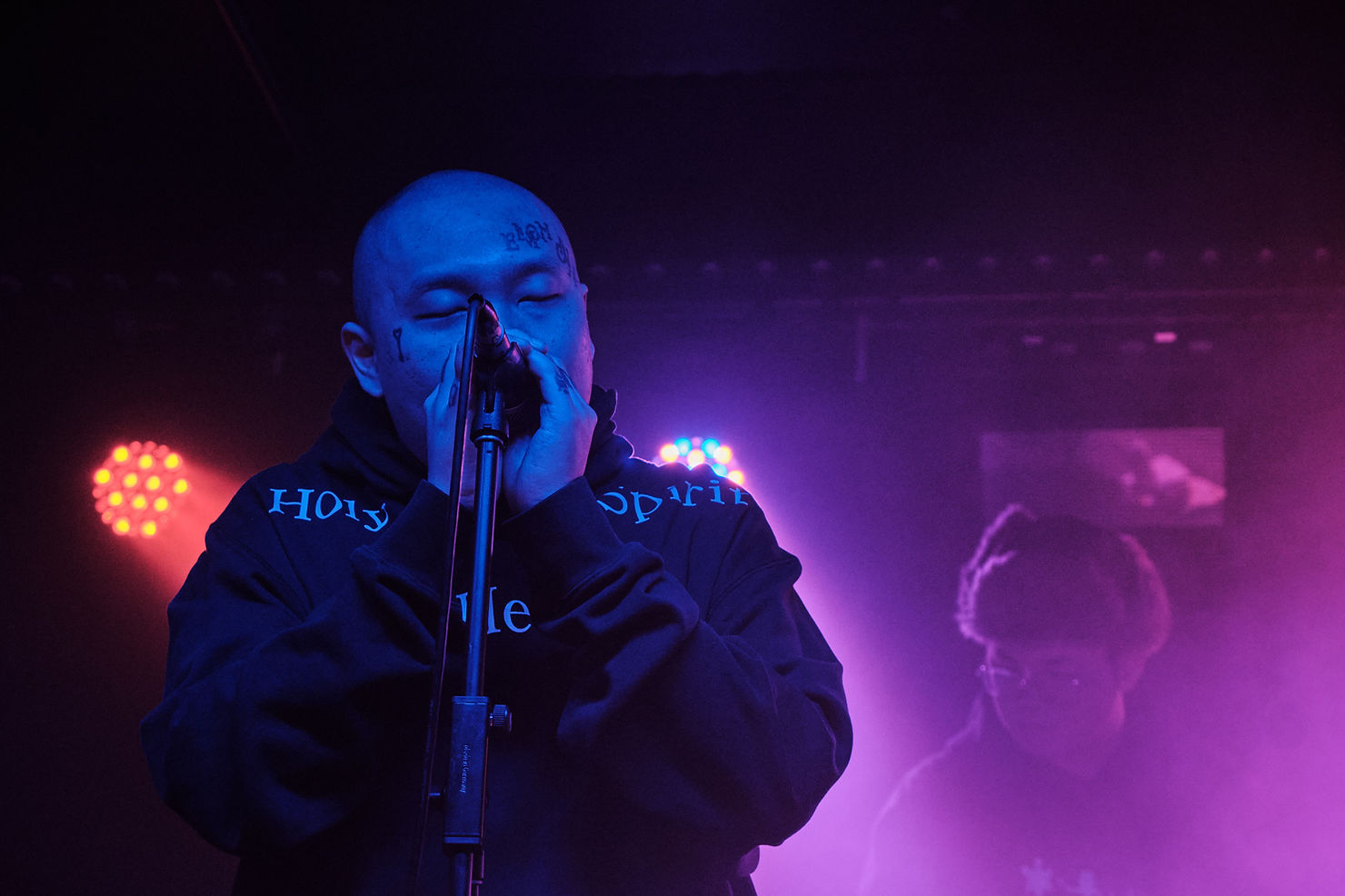
    In the world of cloud rap, few artists carve out a niche as distinctively as Bloodz Boi. The rapper debuted on Australian shores and played two intimate shows in Melbourne and Sydney. He is known for his lyricism, lo-fi beats, and a stage presence that commands attention. The Melbourne show provided a raw, unfiltered look into his heart. We met up with the artist in tow, so read on as Yang Fan sheds light on his introspective approach to music and performance, and a desire for authenticity over fame.

    Sarah Wei: Is this your first time in Australia?

    Bloodz Boi: Yeah, first time. 

    SW:What do you think motivates your music?

    My life, yeah, I think my life. Right now, it’s mostly from my life, and maybe just art in general influences me. As soon as I start fighting with my mind… It’s not a very serious thing.

    SW:Is it the same when you create a set for a performance?

    I don’t perform a lot. I don’t want people to see me because every time I perform, I have to reface every scene I created from my songs. 

    My music and songs are careful and are not from good memories. So, while singing them, I want to make them very legit, make myself be there, make myself very sad or something, to feel that. I want to give the people 100% of what I am thinking. It is the emotions that are way more important than anything else.

    It’s like revisiting your emotions… Once you make a song or once it goes out to the public, do you ever revisit it?

    No, I don’t listen to my music. I have taken down a lot of music. The feeling is right now. I always change.

    SW: Why were you drawn to cloud rap?

    Because I’m a soft person. I don’t have a hard style; I am living myself. I don’t like the high energy. 

    SW: And what about DJing? Do you still do that?

    DJ for radio is good enough [currently Bloodz Boi hosts for NTS Radio]. I don’t like to DJ offline. 

    You don’t enjoy it as much?

    Yes. Sometimes, I will. DJing is like karaoke to me. I am saying, you can’t go to karaoke every week, or you will lose your passion. I listen to a lot of music, so I like to listen to it on a club monitor.

    SW: Do you feel much impact from the nightlife in Beijing?

    Like before 2019. When Dada [a Beijing club] opened, the first day I was there. The very old, the old one. I was in high school at that time. My music was influenced a lot.

    SW: Did you find a sense of community there?

    Yes. I made a lot of friends in Dada. I have a very good friend in high school, we grew up to grow up together. I’m older than him, and after his final high school exams in China, I brought him there the same day. Now, he DJs there, every weekend, there or someplace else in Beijing. I have met a lot of interesting people, but I have lost them in the last four years because I don’t talk to people.

    SW: Would you want to reconnect with them?

    I don’t want to be here in any community now, I don’t want to socialise. I only have one or two friends in Beijing. My very close friends don’t listen to my music, they’re not about the music. Never listen to my music, please. Like, I want people to know me. So, my real name is Yang Fan, I want people to know me.

    On the internet, it’s really interesting. Like people, if they saw you making music, they saw you as an artist, and then saw your listing. They think you are very famous.

    When people see you making music, they recognise you as an artist and then notice your fame. But the truth is, anyone can make music these days, much like anyone can send an email. But why? Oh, [because you] got to do something, you know? So, there are not many people making music like ours. I don’t want to trade myself.

    SW: How about China’s underground music scene?

    If you are an underground artist, you are an underground artist; there is no crossover into the mainstream. If you are commercial, you are getting big. Rich and poor. There is no crossover.

    SW: Is your collaboration mostly from your online friends?

    From different countries, talking different languages. Music is not about the language or anything else. So it’s really good. We can meet through the music.

    SW: Is there any artist you really want to work with?

    I want everything just natural. You know? For some people I make music with, it wasn’t because I like their music; it was just because I like this guy. And it’s way more than music.

    Like, I am a fanboy of some people as well. But I don’t want to break the feeling. I just want to listen to them, I don’t want to make music with them.

    If we make music, I want it to be natural. We meet, get to know each other, and then make the music.

    SW: Then, does each new track become individual to the artist?

    Yes, right, right. I never make a song where it’s just half a song, and here you go, do the rest. No, I won’t do that. Every song is just for him or for her.

    SW: How much of your identity do you tie to your music?

    Yes, all of them. I mean, I want the people to like me, for me. The music is a part of me. In the music, I can express all of myself. It is more than the music. It is the real me. There are some people who tell me it’s too real. Like this is too much. They can’t take it. This is too heavy… Like last night [at the concert], I tried my best. But the set up was not good, and it might have made people misunderstand.

    [At his Melbourne show, Bloodz Boi reperformed songs multiple times]. 

    Some people really come for me. I have to do that. I have to do that for them. I want them to feel, to listen, to my set and receive the vibe.

    Find Bloodz Boi’s music, tours, and radio shows here.

    Live Concert Images Courtesy of Valerie Joy.

  • Jeremyville’s Community Service Announcement Art for All

    Jeremyville’s Community Service Announcement Art for All

    Looking for a daily dose of joie de vivre? Don’t delay; take a journey to Jeremyville now.

    Meet Jeremyville, New York-based multidisciplinary artist harnessing the power of art to inspire change and positivity in the world. Welcome to his world, a creative state of mind that takes you to a happy place. Jeremyville is everywhere with his distinctive graphics and recognisable community service announcements. His work is always at the edge of your vision, from a floor-to-ceiling mural in a fast-food restaurant to a performance animation for a well-known fashion brand. In this interview, the artist reveals how he translates life through artistic practice.

    Using graphic language and your own experiences growing up, how do you inspire others?

    My struggles growing up involved finding a way to a life where I could truly be myself, not a pale imitation. I could never be someone others expected me to be. I needed to be true to myself. That’s more difficult than it sounds. Life has a way of trying to make you something you are not. I needed my strangeness, and I made my weirdness work for me. Weirdness can become our ‘fascinating individuality’ if we create that alchemy.

    I was a solitary child and didn’t have friends growing up. I only had myself to create a dialogue with. This led to great clarity in my life by going inward in my mind to find the answers to my questions. WHO AM I? That’s a question I still ask myself every day. The journey towards the answer creates my daily road map.

    With my comic stories, I try to convey a simple path that anyone can take to arrive at their answers. Each of us has specific challenges and goals. I try to keep my messages open to others’ interpretations. That way, anyone can connect with the messages in my art, assign meaning to it and make the journey their own.

    Start your day with a touch of whimsy, and take a minute to make your daily road map. Find the Jeremyville “relax” daily calendar full of playful reflections for a positive mindset.

    What appeals to you about the style of graphic art?

    I aim to communicate a feeling or idea as quickly and simply as I can. I utilise an easy-to-comprehend graphic language. A recurring theme of symbols, icons and characters that tell a story to connect with.

    How do you remain optimistic about life and what you can achieve?

    My greatest obstacles are in my mind. If I can overcome them, anything is possible. If I can dream it and think about it, I can plan it and do it. What does society or others know about what I can and can’t achieve? Only I know that. If I try and fail, then I’ll just dream again and try again. Failure is fine, but giving up is not fine by me. My dreams and aspirations are very real to me. It’s like if I can think it and imagine it, then that’s 90% of the way there, and the 10% is in the doing. I stopped thinking too much and started feeling more. I believe in dreams, not reality.

    “Let’s get lost in beauty.” Open your mind to Jeremyville’s signature community service announcements; they’re out in the world promoting self-love and happiness. You might spot one, and if you know, you know.

    'Lunar Introspection' by Jeremyville
    ‘Lunar Introspection’ by Jeremyville

    How do you plan around life crises during times of emotional confusion?

    I start my day with a list; each day, it’s my daily road map. All I have to do is write it down (usually the previous night in bed or first thing in the morning). I go through my day, checking off each task. My diary is full of completed lists. Life is just a series of incremental movements. For my emotional life, I find that by getting stuff done and keeping occupied, my mind does not dwell on difficult things I can’t control. I’m too busy ticking stuff off the list. Once you shift that mental focus onto the daily task, you find that your mind has moved on from your emotional troubles. Action is a great way of shifting our focus to a more positive place. Just keep moving, just keep doing, no matter what. Just get stuff done.

    In times of uncertainty, how do you find your inner self?

    Art grounds me by taking me out of the every day into a place that feels like an eternity. Time becomes irrelevant, just an abstract construct. I reach a level of truth that I do not always find in life. Each of us can find something, anything, that provides a key that opens the door to a journey inward. For me, it is a session of drawing or painting. For others, it could be meditation, playing a favourite song, cooking a meal for a loved one or going for a run. Anything that takes us outside ourselves and makes the troubles we are experiencing less important, less of a focus.

    Art is truth for me. Art is beauty, passion, struggle and resolution. Art and love are everything to me. It’s my way of navigating this life. We all have something that can do that for us. If you haven’t found it yet, keep on searching; it’s there.

    Seek your dreams, stop thinking and start feeling. Find your happy place. This is the message expressed in the unique Jeremyville language.

    How is your work influenced by idealism?

    The look of my art probably has a positive feeling on others, but for me, I see the struggle and tension in the art I create. It takes a lot of hard work and introspection to get me to a place of positivity. Mistakes are my greatest teacher, and all my lessons are hard-won victories.

    Viewing art that outwardly is positive and discovering this comes from a place of deep learning for the artist personally is a reminder nothing in life worth having ever just falls in your lap.

    How do you maintain your self-assuredness in yourself and your work?

    From my humanity, from my struggles. There is always a way to reach a positive outcome in life. It just requires time, patience, hard work, introspection, and belief in yourself. Life is never easy, but we can choose a positive outcome if we want it enough and work for it. My confidence in life comes from a belief that anything is possible if we see life that way.

    Take a trip to Jeremyville, and choose positive outcomes for yourself in a place where anything is possible if you see life that way.

    Find the artist on Instagram @jeremyville and artwork at jeremyville.com

    All images courtesy of Jeremyville.

  • Behind the Scenes of We Don’t Dance for Nothing

    Behind the Scenes of We Don’t Dance for Nothing

    We Don’t Dance for Nothing is about Filipina domestic workers in Hong Kong, their struggles, dreams, and communal expression through dance. The main character “H,” played by Miles Sible, raises the children of two busy Chinese parents. This is a common arrangement in Hong Kong, where roughly 200,000 Filipinx women have left their homes to raise the children of their employers. They experience abuse, live under constant threat of deportation, and have no path to permanent residency. But they’ve also created a thriving dance culture in the city center on Sundays, where they gather. This is where director Stefanos Tai saw an opportunity to create a multi-dimensional story highlighting these workers’ talents.

    The film was shot on 16mm, using almost entirely still images to convey a sense of the main character feeling stuck within her circumstances. It combines real events, remembered personal narratives, and staged dances with hundreds of domestic workers. Production took place in 2020, during Hong Kong’s social unrest and the pandemic lockdowns.

    A panel discussion featuring a speaker with a microphone, seated in front of an audience, with a large screen displaying a colorful image of dancers in the background.
    Director Stefanos Tai pictured

    This interview by Conor Provenzano with Stefanos Tai was conducted one month after the world premiere of the film “We Don’t Dance for Nothing” at DOXA Film Festival in Vancouver BC on 10 May 2022.

    Conor Provenzano: I want to ask you about the writing process. I’m curious what it was like for you to go out and meet women on Sunday and then develop relationships and access.

    Stefanos Tai: I fell into the community pretty quickly. They were hospitable to me, they invited me to things – barbecues, birthday parties, and dances. They were surprised that this foreigner wanted to hang out with them, and I told them every Sunday I was making a project. Most didn’t take it seriously, and many didn’t care, or were too exhausted from their workweek to care, so I had to meet them where they were.

    CP: Did you write the script from transcribed interviews?

    ST: We had so many conversations, but most of them were not transcribed. At that point I didn’t know what form the project would take, I was just inspired. But eventually, I started to keep notes and read books. I researched in-depth, watched documentaries, we danced more together, and I came to realize that no one in the media was framing them through their talents. Everyone was only talking about their struggles. I could see they wanted to be known for more than just their professions, as we all do. So from there I wrote an outline myself and started to model characters based on the people I’d met.

    A group of dancers performing on a city street under bright sunlight, with skyscrapers in the background. The dancers wear casual outfits and are captured in dynamic, expressive poses.
    Film still

    CP: Did you go over outlines together?

    ST: Always in a very loose way. We didn’t say, “Everyone! Let’s meet on Sunday and we’ll go over the latest draft.” That couldn’t have worked, and I was always respectful of their time since they were often exhausted. Sunday was their only day off, so I’d just try to listen. And I heard trends of what they were dealing with; not enough food was shockingly common.

    From there I wrote a script in English. And the actors, I would say, did a lot of writing as well. A) to convert the narrative into Tagalog, but also B) to point out anything that wouldn’t ring true to actual members of their community. I gave them enormous agency, but I reminded them that we’re not making propaganda. Of course we’re painting these women with warmth, but we wouldn’t ignore anything, or sanitize their rougher edges. Sometimes these women would make jokes about the Chinese folks and, you know, is it benign? Is it racist? I’m not sure. It’s a small way they can feel some power over their situation, for a moment. But I felt we needed to show all sides of their personalities, including these moments, even if they elicit mixed reactions from an audience.

    CP: Right, that’s a good example of a multi-dimensional representation.

    ST: We tried to be fair, and re-writing took place until the end of post. We could change anything because we shot mainly in still images. We recorded the location sound on set but it wasn’t synced. So in the sound studio later, we’d play the location dialogue, and the actors would say, “Oh, it would be funnier if I said it like this”. They were redesigning lines and I was furiously writing notes trying to catch up. Enormous credit goes to our cast.

    CP: Did you feel any doubts as an outsider?

    ST: Definitely, mostly stemming from the fact that I don’t speak Tagalog. Sometimes I get the oddest questions on this topic. People ask me, “Did you ever consider doing it in English”? And the answer is no, because they don’t speak to each other in English.

    CP: It’s a basic matter of representation, and maybe de-centering this whole English obsession.

    ST: The other question, perhaps even more ridiculous is: “What was behind the decision to cast Filipino talent to play Filipinos?”

    CP: Wow. That indicates the need for this film, actually.

    ST: And many more as well, right? But I definitely had doubts. I think the key was meeting with Filipino folks, not only domestic workers but friends of ours, friends of our actors, early in the script stage. I would annoy them: “You need to tell me: does this line make sense? Tear it apart, please! Because the worst thing that could happen is to have viewers say, ‘that doesn’t make sense in Tagalog! Who wrote this?’” I’m still worried someone will see the film and catch something that we never did (so far nothing major has happened).

    It was also important for us to hold work-in-progress screenings. Our friends and actors brought their parents and grandparents. I needed to see if the cut could work for them all. And they did point out many things to change, remove, or fix.

    CP: Let’s talk a little bit about the dance element. Do you have a history of dance, or a dance background?

    ST: My parents were dancers. I think dance is the highest form of art. It’s the most beautiful thing to watch in person, or on-screen. It’s also the most beautiful thing you create with someone. It’s like music, it’s beyond words. So I’ve always had an appreciation for it, but seeing the domestic workers dancing expanded my whole view on dance. I saw literally hundreds of women in the middle of the city— which, by the way, is not embellished, and actually does happen every Sunday. People never believe me, but I say, “Go to Hong Kong and see for yourself.” COVID has reduced its scale, but still it’s there.

    So while at first, I saw their street dancing as fun, and visually interesting, it was once I looked closer that I discovered how profound dance was to them. It’s not all happy faces. Despite their high level of skill, you can sense that many are dancing to shed something, trying to release something. It’s an act of survival, and they weren’t dancing for nothing, hence the film’s title. And when I asked them about this, I heard things like “it’s the only way we can forget. In dance, I can feel like I’m not here anymore.” Or, “by moving my body, I can escape that house that I’m working in, 24 hours a day.”

    A person wading in shallow water at a beach, with buildings and mountains in the background under a clear sky.
    Film still

    CP: You said in a panel I watched recently that they’re “dancing through their struggles,” which indicates a serious need for embodiment, to return to the body. Of course, it’s true for everyone, but these women have such a demanding schedule and only one day for self-care.

    ST: Absolutely. I’ve started to believe recently that art needs something to push back against, and they certainly have no shortage. They’re dancing with their pain. And that’s how I view the film, as a dance-filled romance between H and her circumstances. She’s constantly wrestling to figure out her life. But again, on a simpler level, the talent of these domestic workers was unbelievable. I couldn’t imagine that they’re not practicing their routines daily, and it often seemed unbelievable that they could do strenuous housework all week long, and summon such energy on Sundays.

    CP: Yes I agree. [SPOILER ALERT] And then there’s the intimacy of the duet sequences between the two leads, H and Sampa. And they never kiss! Can you talk a little bit about that choice?

    ST: It might sound strange, but I believe that in general, kissing is shown too much in films. I like the Bollywood approach – kissing is almost obscene. You don’t need it, and often the moment is stronger with only its implication, or the tension… There’s a Danish director I like, Nicolas Winding Refn. He says violence in films is like sex: it’s about the build-up. And I think romance is the same. A kiss always feels like the climax of a romantic buildup, but I feel it’s usually so poorly done in films, and it takes me out. I begin thinking of these two actors, who are clearly not in love, and how they must be feeling during the take. To me, some things just can’t be faked.

    CP: Chemistry, you know…

    ST: So in this film, we take viewers right up to that point, without actually showing a kiss. It essentially accomplishes the same thing, but we don’t need to see it. Of course, kissing is not actually obscene, I guess I just believe it’s often creatively stronger to imply than show. And I mean that for men and women, women and women, men and men. It’s a general proclivity I have.

    CP: Thank you for that. We don’t actually know if the two characters H and Sampa ever explore each other sexually, and what if they don’t?

    ST: Right.

    CP: They have a real connection that is vulnerable. But it couldn’t possibly come across that you view sexuality as obscene, because there is so much tension in the dance sequences as they are. The body-dancing and so on.

    ST: I hope so.

    CP: Was that how it appeared to you in person?

    ST: Absolutely. You would see a lot of relationships that seemed romantic, but you couldn’t be sure. Nobody was talking about it, and it wasn’t my place to ask directly. But I also found these relationships beautiful, because Hong Kong, despite its glitz, is a conservative place, and there are still many folks against two women being together. And domestic workers usually can’t afford to risk losing their jobs, so I wanted to show that it’s not Berlin, or New York City. Hong Kong is a different place, and it’s a more closed society that they’re navigating.

    CP: The performances were so moving and so real to me. And yet, the film consists mainly of still images. Xyza and Miles (who play H and Sampa) said that they couldn’t use footage from WDDFN in their reel. This was shocking to me. And you responded to that by saying that industry people showered praise on their performances.

    ST: I think what they meant— which I understand— is that it’s hard for them to show still-image performances to get moving-image acting jobs. And I’d be lying if I said I knew with certainty that their performances – or any actors performances – would be heightened by stills. I felt strongly stills could carry weight emotionally, but it was always a risk. A worthwhile one .

    CP: It’s also the nature of moving images that there are gaps in between the frames. Our eyes and our brains put it together.

    ST: True.

    CP: Actually I found this film to be more immersive than traditional 24-frames-per-second. There’s a lot of movement, it’s dynamic. [SPOILER ALERT] And it all builds toward a scene at the beach, the one-take dance, which was shot in 24fps. It took two days, four takes, and an unbelievable performance by Miles— the music and display of emotion through movement was so intense for me, it was so effective. Miles could use that for her reel, right?

    ST: She can definitely use that one for her reel! But if we’d shown the dances in stills as well, the actors would have killed me (laughs). And this gets to the heart of the watchability question. I always wanted to meet viewers halfway. We can and should ask people to watch something different, but we’ve got to reward them for their effort. I intended for viewers to be a bit uncomfortable in the beginning, but tried to structure the film such that if they put in a bit of extra work, there would be something to be gained, a transcendence of the medium itself… And the dances are the key to this— nobody dislikes watching dance on-screen. And ours are peppered in throughout the film, so if viewers start to tire of the static stills-treatment, there’s always a high-octane dance right around the corner, to grab you with a more familiar experience, more easily “watchable.”

    CP: I felt it was a breeze to watch. The still images are never held for too long. Not as long as La Jetée, which you cite as one of the influences. Have you had any complaints about the stills?

    ST: Oh yeah (he laughs). Of course.

    CP: A lot?

    ST: Not a lot. I think it’s about expectations. I do find that if we’re sending it to people and they’re watching it on a small screen (or their phone), and they have no idea that it’s not a traditional film, I end up hearing “is my Wi-Fi broken? What’s going on?” And that’s a tough place to come back from within a 90-minute film. But several people have also said they grew to love our cinematic experiment. Overall, we’ve seen everything from standing ovations to walkouts.

    CP: That’s hard, knowing it didn’t work for some people. But there’s also the issue of lack of viewer openness. We shouldn’t write things off so quickly. I myself have been historically bad at this, walking out of films and so on. Then later, facing heavy criticism of my own work, I start remembering the way certain friends seem to appreciate and learn from everything they see. Sometimes our criticisms say more about us.

    CP: Let’s talk about photo-montage. This is the correct term, right? “Photo-montage”?

    ST: I suppose so (laughs). If there is one.

    CP: From the financial side, was it difficult to pitch this film? “La Jeteé” is only 28 minutes, and here you have an 86-minute film.

    ST: It was difficult. Many producers we spoke to didn’t understand why we even cared about this topic, why this needed to be a movie. I’d say, “aren’t you inspired when you see these women dancing?”, but we’d get blank looks, and responses like “yeah, but who cares… why do you want to make a film about maids. We already know about them.” And I think that’s a result of some people in Hong Kong having grown up around domestic workers. They don’t see these women as special, as anything more than their cleaners and cooks. And another sad truth… was that box office revenue was the first, last, and only concern of so many people in the industry. Or wanting to shoot sexier topics with celebrities to build their clout… And let me be clear, there’s nothing wrong with making money with a celebrity-driven film, but I quietly thought to myself, “isn’t there something you want to say with your films? I’m trying to help someone, somehow. Whether I succeed or not, I am trying. How about you?” But despite living amongst hundreds of thousands of Filipino workers, they somehow seemed not to care about Filipinos at all.

    CP: Filipino women specifically, if we want to name that.

    ST: Definitely… Now, about financing such a wildly different kind of film (a photo-montage), funders would say “it sounds interesting, do you have an example?” And we’d say, “Well… there’s La Jetée,” and you’d be surprised how many people have never heard of “La Jetée.”

    CP: I’m not surprised I guess, because it’s mostly shown in Universities these days.

    ST: But it’s also on the IMDb “Top 250 Films of All Time” I believe. In the film world it’s iconic, right?

    CP: True, true.

    ST: I love Chris Marker’s work. But even now, some people tell me, “don’t mention ‘La Jetée’ cause you can never sell your film. You’re trying to sell your movie, don’t mention a movie that’s unsellable!” (laughs)

    CP: So you mention “La La Land” as well [in the pitch], which was really smart, I thought.

    Film still

    ST: Certainly, that’s a very profitable film.

    CP: Brilliant marketing move.

    ST: Well, let’s see if it works. No one’s bought the film yet! But we’re happy just to have finished it. When I look back, I see how steep our hill was. So many potential funders asked, “have you made a feature?” —“No I haven’t” —“Oh, well do you have name talent attached?” —“No we don’t.” —“And you want to do some sort of photo-movie project that you can’t show us references for?” I could have shown them La Jetée, but I’d have to say “we’re not shooting black and white, it’s not sci-fi, it won’t feel slow, there will be dialogue. Oh, and it’s something of a dance-musical as well.” It’s no wonder people couldn’t visualize that – and fair enough, right? It was hard enough for me to visualize…

    CP: How did you reach producers in the beginning? Can you describe that process a little more?

    ST: We attended Hong Kong Film Art. We cold-talked to as many producers as possible and… it’s funny how these industry events work. We didn’t have a script yet, but had a one pager, a 15-second read. We attended meetings and I’d hand over the one-pager, and I would see them take the paper, not read any of it, put it down and say, “You know, Stefanos, I think your idea is strong, but I think you need to go back to the drawing board and make sure it has this, that and the other…” It was ridiculous, but today, some of those very people have seen our finished film and reached back out to congratulate us. I think people don’t expect you to actually make a movie when you say you will. And now that I’ve crossed that first finish line with this project, they view me as an entirely new filmmaker, which is odd considering that I’m still the same artist, interested in the same stories. The reason I make films is the same.

    CP: Well, your film got made, you’re showing it, and you have, to me, a lot of grounded confidence in speaking about it. But at that time, when you had no backing, it must have been hard on your confidence. How did you deal with that?

    ST: I’m fortunate that older and more accomplished directors had told me it was the same for them. And also thanks to the internet, you can find any master filmmaker’s advice on YouTube, and they echo the same struggles. The industry has high walls, and you’ve got to find a way over them while it’s raining ‘no’s. Of course you’re helped by amazing friends, but you really do hear ninety-nine ‘no’s for every ‘yes.’ Especially if you’re doing something entirely new.

    And to be fair, I didn’t make it easy on myself. I knew making a photo-montage feature was crazy, but I thought, “If I can pull this off, with the right team, and make something entertaining out of a shooting style most people wouldn’t touch, nobody else will be in that space. We’ll be truly original, which counts for a lot in today’s world of commodified, derivative filmmaking. But along the way, so many naysayers told us bluntly we were working with a bad idea, or trying too hard to be different. But I tuned them out, because they never bothered to boil the idea down to its fundamentals. They never could answer: Why can’t a photo-montage work? Exactly, why? Prove it. So I knew that if we afforded ourselves this level of intense curiosity, and never made assumptions about what could or couldn’t work until we tried— if we started there, and created anything of interest, we’d get attention. And, we’d attract the perfect future collaborators: people willing to take risks and forge new ground.

    CP: That’s right… I wish you all the best with this amazing work of art that amplifies the experiences of domestic workers in Hong Kong. Right up until the end, it was so tender and sad and beautiful. I had a lot of tears for this character H.

    ST: That’s really nice to hear, thank you for saying that. And thank you for being willing to amplify, it helps a lot.

    CP: I felt a responsibility to do so, because it touched me deeply. Thank you for letting me into your process.

    In collaboration with Movies Move Us on film making with social impact.

    Follow We Don’t Dance for Nothing on Instagram and Facebook for the latest screenings in your city.


    Upcoming:

    Singapore International Film Festival

    Sunday November 27th, 1:30PM

    Hawaii International Film Festival [Online]

    until November 27th


    All images courtesy of Stefanos Tai.

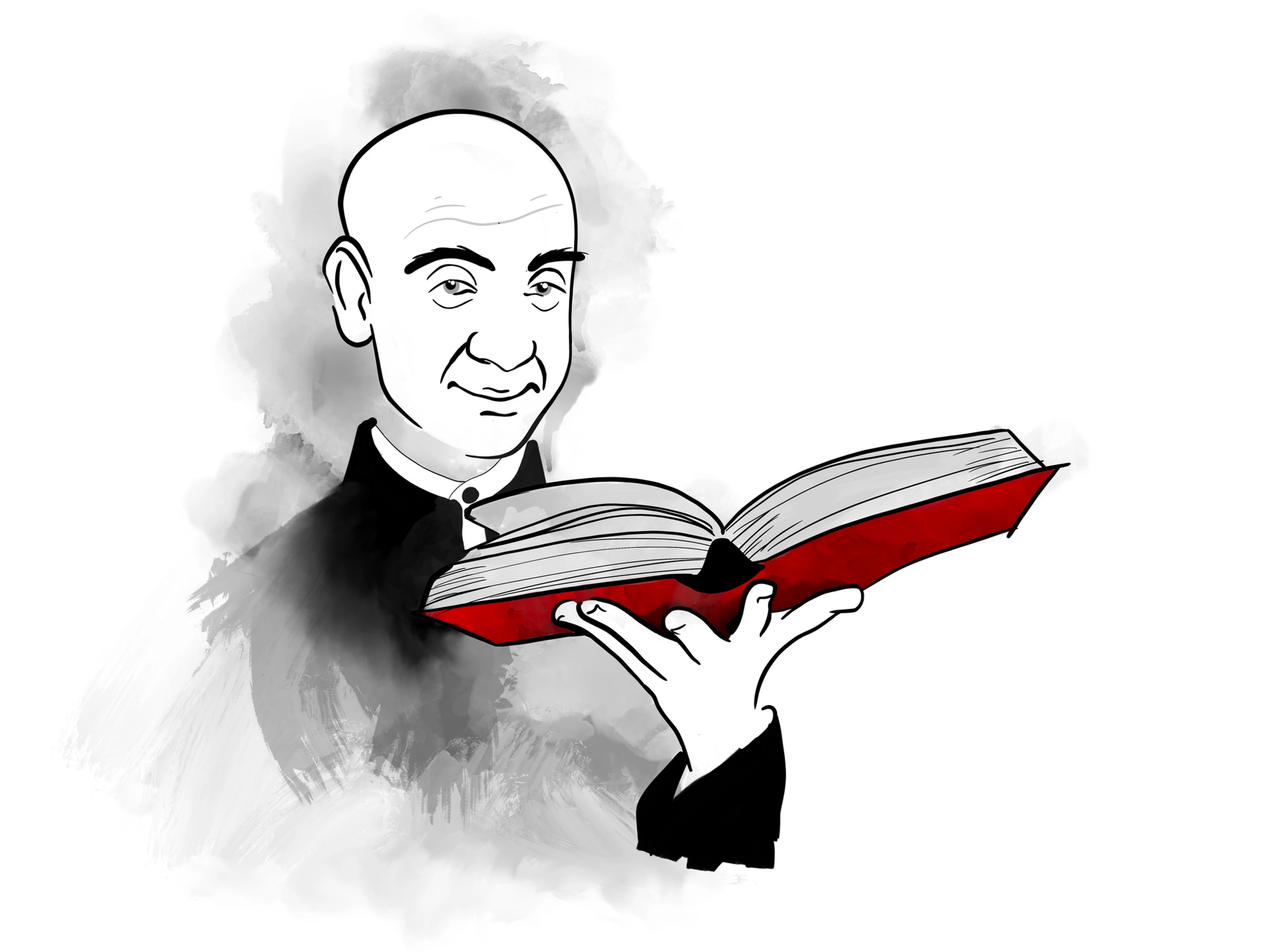
  • Asia’s Emerging Literary Scene from the eyes of Author and Journalist Nury Vittachi

    Asia’s Emerging Literary Scene from the eyes of Author and Journalist Nury Vittachi

    Interview by Faye Bradley and Sarah Wei

    Written by Faye Bradley

    HONG KONG. For decades Western cinema – Hollywood – has dominated the international movie scene. Thanks to martial arts master Bruce Lee the 70s gave ‘the West’ its first peek into Asian culture, and recent years have seen an encouraging new wave of Asian cinema and Asian-inspired Western cinema coming into play from blockbusters like Pixar’s Turning Red, Marvel’s Shang Chi, and Crazy Rich Asians. But where is this cultural shift in film representation stemming from?

    The answer is right in front of our eyes. As the largest population in the world, Asia will inevitably continue to make waves in different sectors with creativity and entrepreneurialism at the forefront. Some of the best filmmakers are based in Asia and with Parasite (Bong Joonho, Korea) and Chungking Express (Wong Kar-wai, Hong Kong) impressing the likes of big names like Quentin Tarantino, foreign directors are setting the stage.

    Collaborations between Western and Eastern filmmakers will be one of the most prolific cinematic movements and the literary scene is taking note – writers and multi-disciplinary creatives are one of the most sought-after talents in Asia right now. Zooming out from the era of Asian cinema and tapping into this near future, Nury Vittachi a Hong Kong-based journalist, author, and founder of Asia Literary Review and Hong Kong International Literary Festival, speaks with us on Asia’s creative scene, and the books and films leading the wave.

    Paradigm Haus: Can you tell us about Asia’s creative scene?

    Nury Vittachi: Basically, there’s a huge anomaly. Until recently, most of the creative material in English books was from the West. What’s Asia’s contribution to culture in the terms of books, stories, and screenplays? Almost nothing.

    Anomalies are quite good because they normally fix themselves, which will lead to growth in Asia. That’s why publishers have offices in Hong Kong looking for the next great trend. It’s also why all the movies we watch today have Asian characters in it including Jet Li and recently Michelle Yeoh. The market is recognizing this change and has accelerated. In fact, China retained the top spot at the box office with US$7.9 billion in 2021.

    Chinese cinema and the rest of the Asian movie market is overtaking globally. So publishers are saying that is going to happen in books as well. We need to find the next Harry Potter and the next JK Rowling, who will likely be Asian!

    PH: How has the Asian creative market entered the West so quickly and effectively?

    NV: It’s partly numbers. The population is larger and we produce a lot – some good, some not so good. But if 1% of Asian material is fantastic, then it adds up. The market is on our side because most of the consumers in the world are Asian. Eventually getting fed up with the likes of Harry Potter – they want their own material. The other thing is that Asian culture has not been exploited in the way that Western culture has been exploited. For example, you’ve seen a million movies or books about witches and wizards – that’s classic Western culture. But have you seen a million movies and books about ancient Asian folklore? Do you think language is a barrier? Well, people are finding a way around it. All the big publishing companies now have scouts who look at Asian language publications – and these writers are making it on the Booker Prize List. A Hong Kong filmmaker recently made it on the Oscars list, Derek Tsang. Tsang was on the shortlist for foreign language movies, the first Hong Kong filmmaker on it for years.

    The other change is that movies these days are made with less dialogue, and more visuals. For example, Matt Damon’s Jason Bourne film has an entire dialogue of around 200 lines for the whole movie, and the average line was three words like “move” or “now.” With this style of tiny phrases, it’s easy to understand and not even necessary to translate.

    PH: Which comes first – market then movie or movie then market?

    NV: Big companies are very aware of trends. I remember about 15 to 20 years ago, I got a phone call from an agent in Hollywood, Miramax I think. She said, “I’m standing in a Hong Kong bookshop and it’s full of Harry Potter, but I’ve been sent here to look for Asian writers. You’re the only one I can find. What’s happened to the Asian writers?” That was 20 years ago and Hollywood was already becoming aware of the need for Asian representation. We need Asian movies.

    Disney has been at the forefront sending out agents and feelers for years. They’ve tried to remake Asian books into Disney movies. They’ve tried to send money to China to make Asian-style movies. They’ve tried all sorts of things, with experiments using Asian-Americans, like the first Mulan, and then they tried using actual people born in Asia, then the second Mulan, which had mixed reactions. But they are trying at least.

    There is still an opportunity for the next great Asian writer to hit the global stage. We’re counting on you, the next generation. I know one publisher who actively reads things like fan fiction and poetry and they are actually looking for Asian writers.

    PH: How do you think the process has changed? Like the scouting process or the ability to be discovered?

    NV: For the big Western companies, the process should be easier. But it’s not to be honest because movies are still dominated by the West and so they’re using the same stars. In Asia, however, it’s a bit more interesting because it is surprisingly quite creative. So Asia invented live streaming, for example – Asia invents a lot of stuff, but we don’t realize it. Like, I’ll give you an example between 2003 and 2006. The top stories in this part of the world, the biggest part of the world, were either on phones or on computers. They were texts based on technology and that was before the iPhone was invented and before the Kindle was invented. Right. So the best-selling stories in Asia were text-based stories before the keyboard, which not a lot of people know about. They would immediately assume Kindle invented eBooks. But no. They were never in print. They were always on your phone, always on your computer, always on, well now your iPad.

    There was one called “the ghost blows out the candle”, using the typical Chinese story. People are hunting for some treasure and then somebody blows out the candle and you’re in the dark. Who blew out the candle? It’s none of us, so it must’ve been, you know, the ghost. It was a huge hit in China. Everybody had it on their phone and computer – it was like the first big e-book sensation and nobody in the Western world even knew about it. Eventually, the writer sold the story to a physical book publisher who tried to publish it. But the Chinese government had lots of weird rules at the time and one of the rules was that no occult stuff. So, they said, well, can you rewrite the book but without the ghost? So that was a bit problematic. Fortunately, in the last couple of years, the Chinese government has totally relaxed and the ghost blowing out the candle became a TV series.

    PH: Which regions in Asia are becoming popular for creative writers?

    NV: Well, not so much a region, but a whole region. The biggest potential market is books and stories for young people. There are 750 million young people in Asia. Now name an Asian children’s book writer. There aren’t any, right? So even when we were doing the literary festival here, we had to import children’s book writers from America, England, and Australia, all the Western countries with majority white writers. So there’s a huge opportunity for local writers, because Western books would begin with “Billy went out of his house to play baseball” and we think, okay, nobody is called Billy and nobody plays baseball [in Asia]. Not good.

    We’ve been trying to cultivate local talent a lot. So we ran competitions to try and get the standard up. And it was really frustrating for the last seven or eight years, because what we found was great children’s book art but really bad stories – they just weren’t interesting. Like really bad folk tales, but in the past couple of years, the standard of stories has come up. So, I think within the next year or two, we’ll start to see more children’s books from Asia.

    Have you heard of the Gruffalo? Are you the Gruffalo generation? Now here’s some interesting gossip from the industry that drives the Asian book industry mad. You know why? Because the story is taken from here. It’s an Asian story that the writer Julia Donaldson read and then rewrote and published it with a Western publisher. And now it’s the biggest selling children’s book of the last 10 years or something. Occasionally in interviews, she will say, by the way, I took it from an Asian quote – but usually, she doesn’t say that.

    Another interesting one is Cinderella. There’s something weird about Cinderella compared to all the other Western folktales and traditional fairy tales. Typically, the woman marries the prince because she’s beautiful or clever or both. There’s no such fairy tale where a woman marries a prince because she has small feet. There’s only one place in the world where that makes sense – Asia. So Cinderella was written in China like thousands and thousands of years ago, and it made sense. It made sense to find that it was stolen. It was pirated by the French about 400 years ago or 300 years ago. And then it’s now everybody assumes, it’s a Walt Disney production with Walt Disney copyright. But in fact, it’s a story from this part of the world and only makes sense in this part of the world.

    This article is from our Asia’s Emerging Creative Scene feature available to read in print. Get your limited edition copy here.

  • Vivarium Director Lorcan Finnegan on Irish Folklore in Film & Dystopian Cities

    Vivarium Director Lorcan Finnegan on Irish Folklore in Film & Dystopian Cities

    Interview by Sarah Wei and Faye Bradley

    Lorcan Finnegan’s exploration into uncanny dystopia settings started way before Vivarium, the highly-praised debut featuring Imogen Poots and Jesse Eisenberg. His career began in creating surreal absurdist content for Zeppotron, one of Charlie Brooker’s early ventures before Black Mirror, where he began shooting sketch comedy and motion graphics. Fast forward through his career, Finnegan started his own company Lovely Productions to pursue independent short films, which followed with Foxes, Without Name and Vivarium. The Irish director has been busy since and is working on several projects on the go including an upcoming film with Eva Green and Mark Strong.

    We spoke with Finnegan on his key themes interwoven in each film, including what makes a dystopia, sociopolitical systems and Irish folklore.

    Faye Bradley: Could you give us a bit of background on yourself and how you got into filmmaking?

    Lorcan Finnegan: I studied graphic design originally – I thought at the time that graphics was more like motion graphics, you know, from watching things like the Channel Four logo coming together and stuff like that. So I was like, oh yeah, that looks cool. Graphic design. And then I studied graphic design and it turned out to be mostly about print. But I started experimenting with animation in college, just sort of teaching myself some motion graphics and animation and I made a couple of short films, like fake trailers for movies, and a stop motion interactive game and stuff like that. When I graduated, I was really into absurdist comedy. So I was watching a lot of American and British surreal and absurdist comedy and was watching a show called Unnovations which was like a fake shopping channel comedy show and I got in touch with the creators of the show at Zeppotron in London. And I asked if I could get a job doing whatever. They were starting to make comedy content for the very first mobile phones with video that came preloaded with content. So I ended up getting a job with them and ended up editing some of this comedy content. They gave me a camera course and I started shooting some sketch comedy on a PD 150, which is a mini DV camera and doing motion graphics and intro sequences to the sketches and stuff like that.

    That company actually ended up making Black Mirror much later – it was Charlie Brooker’s company. Then I started creating sketches myself with my friends in Dublin. I’d borrow equipment from work and fly back and make stuff with my friends. And then I realised that I preferred not working for anybody. So I started a small company, just to make my own stuff and started applying for short script awards and funding to try and get stuff made.

    My first short film that had a budget was called Changes – it’s about two caterpillars in love and when they emerge after metamorphosis, with one of them has turned into an unpleasant butterfly. She’s really mean to the other butterfly and they break up. It did well and won some festivals.

    From there, I got to make more. I got funding for another short film called Defaced. I was putting everything I was doing on the internet. It was at a time when YouTube was really just coming up. Its content was user-generated and they were trying to get more short films and things like that. So a lot of people ended up seeing the shorts that I was making. And then an ad agency got in touch asking if I could direct a TV commercial in this style. So I started doing some TV commercials and music videos and that kind of thing. So it was kind of an organic transition from graphic design to filmmaking. I think once you start making films, there’s definite interest in feature films since it’s a big challenging project to take on, to create an entire movie. So that’s what I’m doing at the moment.

    FB: Your feature film Vivarium came out in 2019 which was actually before the pandemic hit. How do you think the meaning of the film has changed since its launch, with reference to concepts like self-isolation and people’s views of the future?

    LF: So Vivarium was coming out in March and I was in France. It came out in France first and then it was supposed to come in the U.S., in late March, early April. So I was in Paris and a lot of people came to see the film on the day of release but there was already a fear of coronavirus and people were a little bit wary. The next day the government started shutting down the schools and the following day they shut down cinemas. So it was a bit of a bummer. And then I had planned on doing a US promotional thing with Jesse and Imogen and then suddenly everything closed there too.

    I was lucky, first of all, to make the film and I got to travel a lot to festivals and all that kind of thing. But then it took on this other life of its own when people were watching it during lockdown. A couple stuck in a house with a child that was driving them crazy, not being able to go anywhere. You know, Jesse’s character, Tom contracts a mysterious illness and he starts coughing. There’s a book showing some sort of strange virus that seems to be dividing into a man and woman with this child in the middle. So there are all these weird coincidences. In some ways, if you’re interested in collective consciousness, in which humans all share similar ideas and thought patterns, then maybe it was inevitable that we were going to make this film to be released for to watch during quarantine. It’s certainly interesting but I’ve never got to see it from that perspective. When you make a film, you never really get to see it as an audience member would. And even then the experience I’d have wouldn’t be the same as seeing somebody seeing during lockdown as a completely fresh thing. Did you guys see it during lockdown?

    A man and a woman stand in a misty environment, with the woman holding a baby. The man has a concerned expression on his face, while the woman looks intently at the viewer.

    Paradigm Haus: We did yes. I think it was kind of like April or May last year.

    LF: Right. It must have taken on a whole other meaning, but I think maybe it did no harm in a way because it’s quite existential in a lot of regards. So, I imagine people had a lot of time to think about their life and the future and what they would like life to be perhaps, while they were stuck at home.

    FB: You mentioned quite a bit about Irish folklore in your film. How do you think this Irish folklore or these stories have influenced your creative processes?

    LF: It’s interesting. It’s hard to tell what parts are folklore for me. Greek mythology, Roman mythology and those stories because they generally have a dual purpose. Their narratives are there to steer society or give whoever’s listening to the story some sort of moral guidance. And that’s sort of the function of folklore in many ways. There’s a lot of fairy stuff, I guess that could be related to Vivarium and Without Name. But Irish fairies aren’t really, you know, like Tinkerbell or anything. It’s much more of an idea that nature is an entity in itself and it sort of manifests as the faerie rather than a fairy and you know, there are ideas that they live under hills and all that kind of things. So, I’ve seen people draw parallels between Martin and some sort of changeling and that fairies live underground. So, I mean, maybe subconsciously there is an element of that. But it wasn’t put into the film as some sort of Irish folklore, but at the same time, I think our role, Garrett and I work together at creating these stories that could be, considered as modern folklore, because the means of telling stories now is different to when like people sat around the fire, before electricity. Now you can have an audiovisual story being told and it can still be folklore essentially.

    Sarah Wei: Are there any futuristic concepts you’ve integrated into your films to kind of enhance this dystopic theme? Like where did they come from – are they parallel universes?

    LF: Vivarium was influenced a lot by art, architecture and film. The idea of the lifting of the curb, I think came from like a Bansky painting, like lifting a curtain on the side of the street and sweeping stuff underneath, which sort of drew a parallel between what’s underneath, what’s behind, what’s the kind of machinery that’s driving consumer-capitalist society is never something that we really see and it’s sort of behind the curtain. So I think that’s where that idea came from. But yeah, I mean I was influenced by people like Roy Andersson, David Lynch’s films and Todd Haynes’ film Safe.

    It’s also been a while since I’ve made the film – I’m currently making another film. So it’s hard to remember where all the various influences come from. But I don’t think it was so much thinking about this topic, worlds or dystopia, trying to do a film version of that. It’s more that we’re trying to explore themes, and through these themes create dystopic sort of environments for the stories play within. And that version of dystopia, it’s just this world of homogenous, characterless, de-humanised, gigantic housing developments. This was what was inspired by Foxes and what really went on after the crash in 2008 – all these abandoned housing developments with people living there and they were really trying to get out of their predicaments, but they were trapped there because they bought a house that cost way too much money and the banks wanted the mortgage paid back and all of that. So on a kind of parallel, the world we were creating for Vivarium was like an amplification of all of that in order to show how strange and absurd real-life would be if we all decided to that let a capitalist mindset just go for it – that’s what you’d end up with because they would literally strip back all of the natural world and cement you into little boxes that make it very easy to predict your behaviour and bleed you dry in order to just expand and keep growing, a little bit like Yonder itself. So, yeah, I mean, that probably leads to the whole technology thing as well, where like, you know, what the problem is with the future and all of this. Yeah. But it doesn’t look good.

    FB: What is your take on us living through this internet age with all this new technology in a virtual reality-driven future?

    LF: So I saw an article about cows in Japan wearing VR headsets that were showing green pastures that made calmer and produce more milk. It’s a pretty grim concept, but yeah, I mean, it’s strange. It’s strange, but there’s the version of the future where everyone just kind of goes along with it and just keeps on allowing their data out and all of that kind of thing, which is one version of one trajectory, but I wouldn’t be surprised if it became more punk and new wave to reject all of that and start taking privacy more seriously.

    They may start using technology to better society rather than just kind of continuing in this sort of untenable pyramid scheme where people end up quite unhappy because they’re in a pursuit of happiness that is actually not real. It’s something that’s advertised. So I guess that’s the difference between individualism and community and all of that.

    Technology is bringing people together in a lot of ways, but it’s also alienating people and isolating them and giving them sort of a false sense of reality. So, yeah, it’ll be interesting to what happens. I don’t have the answers to how we save ourselves from a horrible world like Yonder in Vivarium, but I think it’s up to the younger generations as well. There’s a responsibility for everybody to leave behind a world to the next generation, but then it’s also up to the next generations to visualise the kind of world that they want to live in and then make that into reality

    SW: Yonder exists as its own community – there were only two people. Did you ever think about adding the other variables of neighborhood – more people and neighbors and stuff – and how does that kind of affect the society?

    LF: Well with Vivarium, the idea is quite abstract. As we were developing the story, we conceptualised that there are other people in the houses, but they can’t see each other, which is sort of mirroring subdivisions and these sort of housing developments on commuter belts where people don’t actually know their neighbours and never see them because everyone is working all the time. We were also interested in string theory while working on this as well, that each home is sort of vibrating at a frequency that the next home is out of sync with. When Gemma goes underneath the curb and experiences the other houses, it’s as if she’s able to pass through these other dimensions and see there are people going through the exact same kind of things. And some people are handling it better than others. The idea was that the place is actually full of people, but nobody can talk to each other. They’re all trapped in their own little worlds.

    SW: What do you think post-modern culture would look like? In the context of Vivarium, there wasn’t much of that community culture that we get in regular neighbourhoods or in this kind of like ghost estates, how they were kind of created from scratch?

    LF: Maybe I’m just optimistic, but I have a feeling that people are starting to feel the absence of community in society. And I think that even during the whole lockdown, people are starting to notice and appreciate the smaller things like that, like knowing the people down the road and your neighbour, spending time locally and shopping locally and all of that kind of thing. Maybe that could be a positive takeaway from the whole pandemic, that there’s more of a veering towards respect and admiration and desire for community rather than pre pandemic when it was everyone was so busy working and trying to reach goals that were impossible and not spending enough time to just enjoy life and see their family and friends.

    I’d like to think that post-modern society is more focused on community and producing local products and supporting the local community and less about giant corporations owning everything. Even like 20 years ago, you know, if you go traveling, each city fell quite different, you know, different shops. I remember people would come back from France with H&M clothes and you’re like, oh, cool you got that in France. Whereas now every high street is pretty much the same, everywhere in the world has the same stuff, which makes it all a bit boring, you know? It would be nice to see less of that and more choice and more local-based business. The film I’m working on now is sort of dealing with fast fashion and exploitation. I think people expect everything to be cheap. Therefore these giant companies do well because they buy up all of the smaller shops and offer people cheaper things. I think that if people appreciate spending money on things that lasted longer the community will do better and everyone would probably be happier.

    FB: Do you have any recurring themes or themes that you would like to explore more in your filmmaking?

    LF: It seems that these films have a cyclical theme to the nature of the narrative. When you’re making a film, you need to care about it – the themes that you’re trying to explore – enough to fuel the duration of development up to pre-production, production, post-production, you know because the whole process takes years. So it needs to be something you’re passionate about. The current film obviously I’m very passionate about. It has interesting themes on folklore and culture and cultural differences from the east and the west. It’s about a Filipino nanny who moves into the home of a fashion designer who is suffering from a mysterious illness and she uses a traditional folk healing to reveal a horrifying truth.

    I’m working on another project with the same writer that’s about war, creating monsters in order to start wars and steal natural resources. So I suppose they’re quite universal themes that explore humanity but in a slightly sci-fi or genre way. The narratives wrapped up in a way that’s engaging I hope, but also it is multilayered and people get to disseminate it afterwards.

    A camera crew is filming a scene in a studio. A director stands beside a table, guiding an actor while holding a script. The setup includes professional lighting and a camera focused on the actor.

    SW: Can you take us through how your creative process starts? Does it start from these themes that you were just talking about, like what’s topical, for example?

    LF: It’s not like we think, oh, what’s topical? It’s more about what are we interested in and the starting point can be different for different projects. For example, the war film was inspired by paintings in the National Gallery here of David and Goliath. David is standing over Goliath and he looks like he’s about 15. Goliath is looking at him with sad eyes, not wanting his head to be chopped off. He looks like a sympathetic character and that image is what inspired the story. And with Vivarium, I suppose it was socio-political events that ended up inspiring the story because we made Foxes based on what was going on. And then that developed into Vivarium

    With Without Name, it’s about a land surveyor who ends up trapped in this forest being protected by an entity. I think that was kind of vaguely inspired by a documentary about the Finnish nuclear waste disposal programme, burying nuclear waste underground and sealing it up because it will be dangerous for the next 2000 years and how they warn future generations not to go down there as it we don’t even know what language people will speak in the distant future. I guess that Garrett and I talk to each other a lot, so we ended up discussing these ideas and themes – talking and watching stuff and talking and watching stuff and then stories start to emerge and then I gather visuals and we watch a lot of films, documentaries, share them with each other and then the writing process starts and that can go for a couple of years. Generally, it takes maybe three or four years from the beginning of an idea to getting it into production.

    SW: Would you say there’s any period in history of artists that you feel most inspired by or nostalgic for? Would you want to explore these even more in the future?

    LF: Hmm, not really a period in time. I mean, in terms of films, I think I’m inspired by the sixties and seventies because they were a little bit more free. They were breaking the mold and experimenting and making really interesting films.

    Now, there are new techniques emerging and new types of filmmaking coming out. But in terms of a time, not really, I mean, I’m interested in doing a prehistory story, set in the bronze age. There’s an amazing museum here in Dublin with preserved bodies which were found in bogs from the bronze age. There’s a guy who you can see who had his hair slicked back and has been preserved – he has his nipples cut off and apparently Kings used to have their nipples sucked and they cut his nipples off so they could never become King. So you know, it was an interesting time.

    SW: What elements do you think make up a dystopian society? How do you integrate that into film?

    LF: Ultimately a dystopia is like the opposite of utopia. And I think a lot of that comes from the feeling of dehumanisation, a lack of control and love, happiness, humanity, all those kind of things. I think with Vivarium, what we’re trying to do is create a very synthetic world that was tangible, but fake. So the boy was only mimicking a human only in order to reproduce like a brood parasite. He was completely devoid of humanity and the place is devoid of nature. The food is vacuum packed, processed and stuff just arrives boxes. So to me, that is a horrible nightmarish dystopia where everything looks the same and everything’s synthetic and there’s no nature anywhere to be found.

    This article is from our interview feature on Lorcan Finnegan available to read in print. Get your limited edition copy here.

    All images courtesy of Lorcan Finnegan.

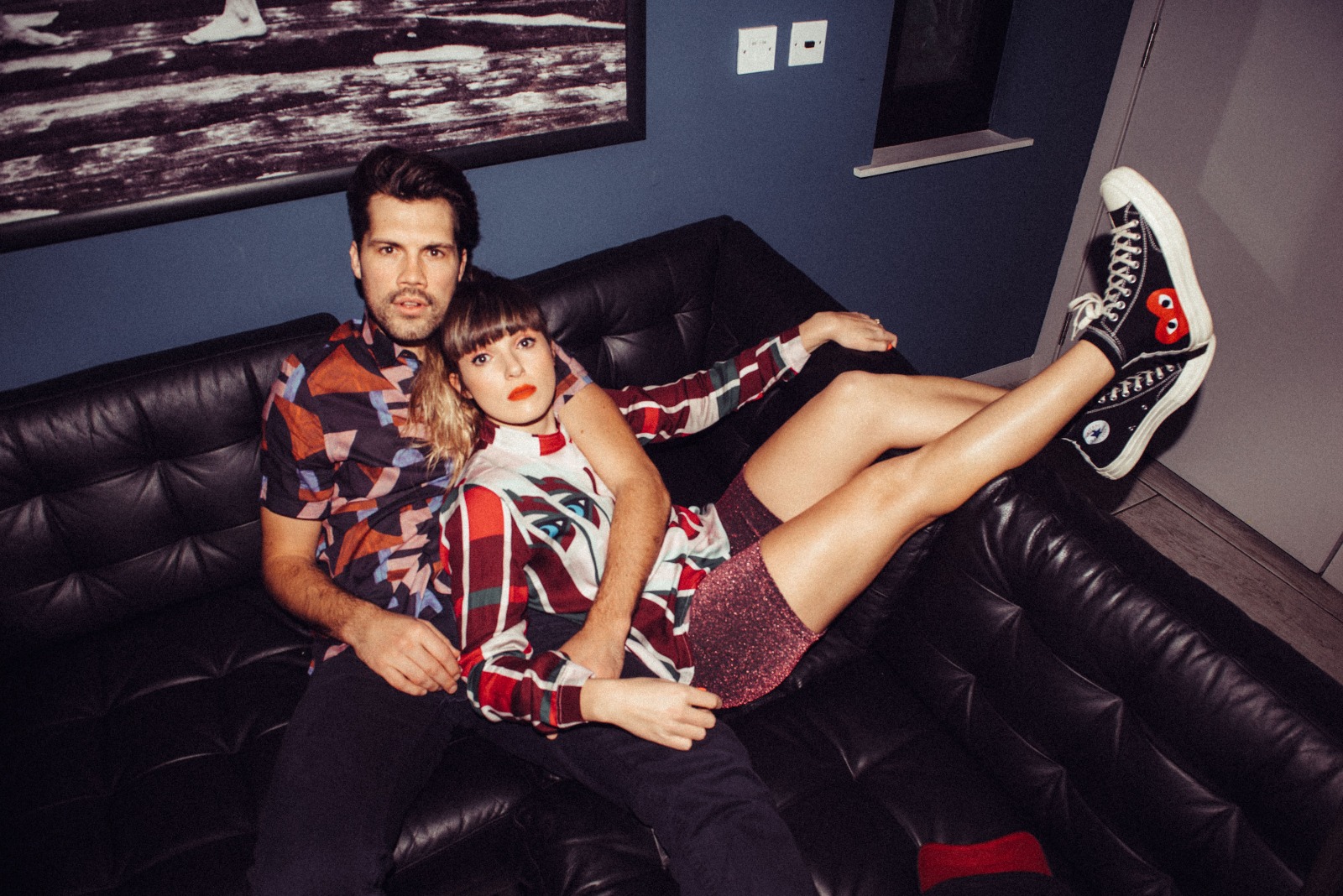
  • Music, Coffee, and Creative Culture in London with Oh Wonder

    Music, Coffee, and Creative Culture in London with Oh Wonder

    LONDON. An ever-evolving music and coffee culture scene in London have shaped the city into the creative hub it is now. An interview with Anthony West and Josephine Vander Gucht of indie-pop band Oh Wonder and Peckham cafe NOLA on the relationship between music and coffee and how NOLA is bringing together communities.

    London has spawned some of the most successful indie bands over the decades. Drifting away from mainstream tunes, the ‘indie’ moniker can be categorized by its soft melodies, passionate drum beats, and home-strung instrumentals. The alternative rock music genre coincides with the independent artist ethos, taking an autonomous, homegrown appeal. Neighborhood live music venues of London have brought us today’s legends, from David Bowie playing at London’s Marquee Club in Soho to The Horrors at The Spread Eagle on Kingsland Road.

    But moving forward from the ’70s and ’80s of pop-rock culture, the ’90s and 2000s saw a surge in more acoustic melodies to soothe the soul – with indie fan favorites including The Libertines, Bombay Bicycle Club, and The xx. A more recent emergence from London’s indie scene is Oh Wonder, made up of couple Josephine Vander Gucht and Anthony West. The artists began their journey in 2014 when they were dropping one track per month for a year in anticipation of their debut album. The band became an instant hit with millions of streams, a series of tours, and four more album releases. Growing up around a live music scene was crucial in the making of the band and its influences. “We both grew up in the indie scene in London, playing super small venues and pubs to very small crowds,” Vander Gucht and West tell Paradigm Haus. Digital presence was instrumental in helping boost a loyal fan base. “Streaming services have had a huge impact on the way bands can develop and have enabled musicians to not just rely on playing shows to be noticed by fans and the industry.” The duo pointed out that it certainly helped them with forming an audience, but in-person attendance is of course, essential. “You can have many listeners and fans of your music without ever having played a show, but we both feel like it’s so important to get on stage, find yourself as a musician, and grow in a very organic way.”

    So what’s changed besides our obvious relationships with technology and an ability to ‘discover’ new artists online? London, without a doubt, has become a hub for artisanal coffee culture – one that has percolated over recent years. The spectrum of coffee options is wide-reaching with each district showcasing its own unique charm, and as a ritual stopover for many work commuters, coffee shops are embedded in the typical Londoner’s regime. It’s music that makes this daily pursuit even more uplifting – and is something that Oh Wonder has embraced with open arms.

    “London is our home,” Oh Wonder tells us, on London’s influence on the band’s creative processes, “it’s where we grew up, where we met, where our studio is – it has soundtracked our whole relationship”. They noted that the new albums are very personal and reflective of the conversations they have walking around their neighborhood. Oh Wonder had just started their first week into a world tour when the most unexpected, unprecedented call came to return home due to the pandemic. “We’d just released our third album, and put so much work into creating the live show,” they said, “it was actually really difficult to go from performing on stage and being mentally prepared to play hundreds of shows to thousands of people, to sitting inside with absolutely no prospect of live music opening back up.” This global loss of live music was undoubtedly a struggle for many bands and hindered opportunities for touring. It was at this moment that Oh Wonder decided to expand its ventures into the London coffee culture scene while being able to merge it with music.

    Opening NOLA in Peckham, London was a way to stay creative during lockdown, they added. “We became extremely grateful for our community and neighborhood…We admire that each coffee shop, whilst sometimes being a destination coffee spot, predominantly and proudly serves its local people.” Choosing Peckham as the neighborhood for NOLA was no coincidence. The South London abode is frequently overshadowed by the likes of hipster Shoreditch and Soho but it has been cropping up on more radars thanks to its up-and-coming creative scene. To the couple Peckham is, “the center of culture and cool for South London.” Adding to the buzzing appeal of the affluent area, “it’s where we walk our dog, go out for dinner, drink cocktails, see friends, visit ceramic fairs and creative markets, go to the gym, fix our bike, do yoga…it’s the best place!”

    Image Courtesy of French+Tye
    Image Courtesy of French+Tye

    The duo opened NOLA with the intent to fully welcome a neighborhood community. “Our slogan is ‘coffee for everyone’…for us, this means being able to facilitate the local coffee fans who want to enjoy our hand brew or try our rotating seasonal espressos, whilst also welcoming those who just want a flat white and a chat.” Coffee is about connecting with people, they said, “It’s a ritual, it’s an escape, it’s joy.”

    Merging music with coffee culture was a given for the duo. The chosen tunes in a coffee shop are so important in setting a mood. “It dictates the vibe and feel of the space and fills the gaps to create a flow in the store. It puts people at ease and provides a soundtrack to the ritual of a coffee. It has to be the right song at the right volume.” They shared a story about a time when the speaker system was cut out for an hour and it was “the most awkward hour ever”. Of course, the playlist matters – and it varies depending on the sun. “In the morning people need a gentle nudge, by the weekend the sun is out, everyone is a bit happier and our staff wants something to boogie to whilst they’re making hundreds of coffee.” Classics on the Nola speakers include Window by Still Woozy, Eugene by Arlo Parks, and Pink + White by Frank Ocean. On the similarities between the creative process of designing a coffee shop and curating an album, the Vander-Wests share their experiences, “in both processes, you are driven by an overall big feeling, but very focused on the details,” they said, “We have spent hours trying to find the perfect synth sound and hours trying to position the word NOLA on a cup.” The joy and the rewards are in the details. “It’s also strangely similar in the way that you make an album and it’s not yours anymore; it belongs to the listener – NOLA now belongs to the Peckham locals.”

    Image Courtesy of WatchHouse
    Image Courtesy of WatchHouse

    As creators, they are facilitating everyone else’s emotions and providing a soundtrack to their lives. The main differences between coffee and music link back to perhaps the preferences of the people. “Even if we don’t particularly like a mocha, we still have to try and serve the best one we can,” then when talking about music, “We’d never release a song we didn’t like though!” Their top recommendations for NOLA include the Ethiopian Buku espresso made by Head Barista Kyumin, or the Columbian El Carmen batch brew. “Also order a pastrami sandwich, a waffled cinnamon bun, a slice of carrot cake for later and put them in one of our ‘Don’t Cry Over Spilt Milk’ tote bags.”

    Meanwhile, out in London’s famous Bermondsey Street, WatchHouse – a popular stop for Oh Wonder – honors a community of coffee lovers in a bright-designed space. Community Manager Faye Mitchell shared her notes on the importance of music in a coffee shop. “​Experience for both customers and the team in a coffee shop is super important, and music plays a big part of that,” she told us, “For the team, it is part of expressing the identity of the café and keeping the ambiance welcoming and interesting. For customers, it is another layer of experience to connect with and enjoy.” The London coffee scene is so passionate and driven by community spirit. “There’s lots of creativity too; people take chances on projects, ideas, and collaborations that take a lot of courage and curiosity, meaning the culture in London is always evolving in new and exciting ways.”

    Oh Wonder’s new album 22 Make will be released July 22, 2022.

    This article is from our interview feature on Oh Wonder available to read in print. Get your limited edition copy here.

  • Mini Trees’ Lexi Vega on Expressing Her Life Through Music

    Mini Trees’ Lexi Vega on Expressing Her Life Through Music

    Lexi Vega from Los Angeles-based band Mini Trees speaks on the shift from drumming to songwriting, and how the pandemic and self-discovery play into her music.

    Interview by Ashmitaa Thiruselvam

    Paradigm Haus: Can you please tell us about the beginnings of your music career and how it came about?

    Lexi Vega: I’ve been playing and writing music ever since I was a kid but it wasn’t really until Mini Trees (in 2018) that I decided to actually try making something of it. Prior to that, I had been gigging in other people’s projects, playing the drums and kind of just taking a backseat to the whole thing. But I really enjoyed getting to play with so many people and I think it set me up really well to start my own project.

    PH: I heard that you were initially a drummer, why did you choose to further explore your creativity through singing and songwriting?

    LV: Songwriting is something that I’ve always done but used to reserve for personal self-reflection. It took me a while to get over the initial embarrassment of sharing something that felt so deeply vulnerable, and I think that’s honestly what held me back from doing so for so long. Mini Trees kind of came about by accident. The other bands I was playing in at the time all happened to be on hiatus, so I found myself with all this extra time to write and work out my songs in the studio with my friend and producer Jon Joseph. From there, things kind of just started to take off.

    PH: The tracks in your latest album Always in Motion hold so much meaning and draw attention to your personal experiences. Why do you feel it is important to create music in light of your past?

    LV: For me, songwriting has been a really important and helpful tool for processing and dealing with my past. It’s allowed me to search down deep and uncover emotions or feelings that I didn’t really know were there, and to also vocalize and “let them go”. I’ve found it to be an incredibly healing way to process it all.

    PH: I noticed that Always in Motion has also been produced as a Japanese CD on your website. What was the reasoning behind releasing a Japanese adaptation?

    LV: Early on in chats with my label (Run for Cover) I mentioned that I wanted us to partner with a Japanese label/distributor like Tugboat so that I could share my music more widely with Japanese audiences. My Japanese heritage has played a major role in my songwriting, especially the songs that deal with identity, so having unique Japanese releases felt like a small way to celebrate that.

    PH: Your album and EP Slip Away were released during isolation. Has the pandemic impacted you as an artist? Did it maybe help you in some ways too?

    LV: The forced “slow down” that the pandemic brought is what led me to write the album when I did. I was initially expecting to spend a lot of 2020 on the road to support the EPs but like everyone else, I was forced to stay home and rethink everything. All of that extra time to sit at home and process my thoughts definitely helped inspire the album; it was written entirely in 2020. It wasn’t all easy though; I definitely struggled with the isolation from family and friends and had a lot of anxiety and fear to work through. I know we’re not out of the woods yet but I’m grateful to be able to hug my family again.

    Mini Trees’ EP Slip Away by David Dean Burkhart (via YouTube)

    PH: Congratulations on announcing your performance alongside Hovvdy’s shows in May and June of 2022. It must be super exciting! What are some things fans can expect when they see you perform?

    LV: Thanks, I’m super excited! We’ll be touring as a full band and probably playing a lot of songs off the LP but we’ll definitely get the hits from the EPs in there as well.

    PH: What can listeners look forward to for the future of Mini Trees?

    LV: Well, I’m not planning on stopping or slowing down any time soon so hopefully a lot more music and touring. I’ll be on the road here and there this year (including the UK/EU this summer) and in between that I’m just focusing on writing and planning whatever the next thing is.

    Listen to Lexi’s latest album Always in Motion on streaming platforms.

    Find Lexi Vega on Instagram at @minitrees

    Discover more on Lexi and her discography on solo.to/minitreesband

  • Percussionist Angela Wai Nok Hui Experimental Music Artist in London

    Percussionist Angela Wai Nok Hui Experimental Music Artist in London

    Percussionist and multi-disciplinary artist Angela Wai Nok Hui, tells the narrative of her youth spent between Hong Kong and London through her collaborative project Let Me Tell You Something. Still relevant today, the show examines identity, relationships and memory through the performance medium.

    Paradigm Haus: How did you feel after Let Me Tell You Something?

    Angela Hui: I can tell you how I felt right after the show. Wing is my producer and we are good friends as well. She told me that she had a strange feeling but she didn’t know how to describe it. However, I didn’t feel that way because I have experience performing and I don’t get this kind of “post-show depression”.

    I’m using the show as a medium to express my feelings to the world and to Hong Kong, to London and to my family and friends. The show is me and I am a person that doesn’t know how to use words as you can tell maybe.

    Let Me Tell You Something, Image Courtesy of Angela Wai Nok Hui (by Dimitri Djuric)

    PH: I saw one of the photos where you picked a branch off the street, how did you choose different mediums and how are they all tied together?

    AH: I collaborated with different composers. The composer Gregory Emfietzis has a piece called “Hestia”, which means “goddess of fire”, “goddess of home” and “goddess of a home setting”. That piece is interesting because Greg made this card game with a set of instructions. I composed the whole piece with his instructions, so the composition is the input of that piece.

    For the main component, Greg tried to make me tell a story in front of the audience and he also told me it would be great to find any objects that are related to the story. I chose a full flowerpot and a baby’s glockenspiel, which is a toy instrument used throughout the whole program. This baby glockenspiel appears in Lucy’s piece and Jasmin’s pieces. Then there were normal bricking sticks, which I didn’t choose.

    PH: What does collaboration mean to your creative process?

    AH: Collaboration is very important for me. Collaborating with people is like talking to people. Because I am a classically trained percussionist. I went to the Royal College of Music. I spent six years playing a lot of notes, marimba, timpani, Beethoven, symphony, counting bars, triangles and all that. I love them. I enjoyed the experience. But then I always find it’s a little bit lonely when I’m practicing in my own practice room. I enjoy collaborating and making stuff in a whole different way that I wouldn’t even think of before asking people to join me, to have a jam.

    This whole project started more than two years ago. Two pieces for Angus Lee, a Hong Kong composer, are actually finished. The final version finished in 2019 with Timothy Cape, where I made a very weird dance next to a bass drum. He is based in Italy, he would have come to London to work with me if not for the pandemic. We were doing videos back and forth. We were looking for weird and different sounds and we were jamming. He was making projections for me to have a feel and then I told him my feeling. But then he would say “maybe that’s not how I want you to feel, so maybe let’s do something else.” I work with composers, so I need to trust that person and open my heart to them.

    With Jasmin’s piece, This Land is Yxxr Land, people could interpret the title of the piece differently. This piece is very personal. It was basically during an interview with me. She tried to record the interview and then put it into a new looping tape. It sounds not true at all, very emotional, but whenever I play that piece, I recall all of the memories that I told her. It makes me smile. Especially the first performance in Hong Kong, lots of friends and family came. I don’t know why the first performance is mostly for friends and family. Then the second is that of more colleagues.

    The first performance is the first piece of the show as well. I did not play the pre-show cassette, so I used this piece to bring people into my world and I try to use the cassette as a gateway for them to come in.

    So when I played that piece on the first night, it really was special because a lot of people that I’ve talked about in this piece were all there in the venue. It was creepy and it gave me goosebumps. That was a special moment, I didn’t expect that. Even one of my aunties bought tickets and came. She was in one of the events or one of the memories that I talked about.

    A close-up of a musical instrument with wooden bars, reflecting an abstract image of a person playing or interacting with the instrument, illuminated with warm lighting.

    PH: Then how do you think the audience affects your performance?

    AH: Comparing day one and day two, I would say performing in Hong Kong, in general, is different from what I normally do. In London, my family wouldn’t be there. If there’s a piece that I need to be naked, I could do that. But in Hong Kong, I can’t do that. Even though I can do that, I have to go through lots of mental preparation to do that. But I haven’t really thought about why I’m having that feeling.

    PH: Can you compare your experiences in Hong Kong to the scene in London where you’re normally based?

    AH: Not to say that London is having a good time as well. I think there is the same problem everywhere in the world. It is fine, we have to deal with problems that’s kind of our life.

    Audiences in London are more open minded and willing to support artists. I don’t know if that is the case because ticket prices are cheaper?

    In Hong Kong, I didn’t know that my show could be sold at $250HKD, which is expensive. The shows I went to in London were just around seven pounds to walk in. Early bird tickets were just five pounds. I would love to do an experiment on this, for example, what if I do a completely awful show and sell tickets for $10 in Hong Kong.

    In London, people are trying to bounce off ideas more openly. I’ve been in Hong Kong for two months, including my 21-day quarantine. I have a sense of the Hong Kong music industry, which is in groups. It’s very hard from the outside to break in.

    I think the observation for me, between Hong Kong and London, is that everything in Hong Kong is very, very pretty and well presented.

    For example, the big font of Tai Kwun is so pretty. All the wordings and even some English I don’t even understand like “microwave”. Emails used in Hong Kong are different from how we do in the UK. Whereas in the UK or in mainland Europe, such as Germany, Belgium, they have more of the rawness of art. I can see some really, unprepared, ugly, and raw shows in London, but then I don’t think I will get to see them in Hong Kong. But maybe ugly and beautiful really depend on how you see them.

    PH: Are there any kinds of trends that you’ve been noticing in experimental art or in the music scene?

    AH: People all have a lot of energy, but then they don’t have the support to do it. I’m seeing this crossing of disciplines, which might be a by-product of the pandemic.

    I’m a percussionist, I’m a musician and now I’m trying to do some sound and music design, which I would never have thought of before. So my by-product of the pandemic is five short movies I made for this show. People as artists are trying to see how far we could go in different directions, which is really good.

    Sometimes I don’t have the normal knowledge of how to make a sound and then something interesting can come out from that. I don’t know the normal steps of making a soundtrack. That could be the element of why the soundtrack could be so bad, or so good. So that’s why a painter tries to do music, and play percussion or piano. Simply because they don’t have normal lessons on how to do it, something interesting that I wouldn’t think of would come out of this.

    A person sitting in a chair with their head tilted back, illuminated by a lamp in a dimly lit room.

    PH: Do you think these thematic topics of the pandemic and cross-disciplinary avenues changed how artists approach their practise?

    AH: The pandemic didn’t really change what I wanted to talk about in the show. It was more about what happened in Hong Kong during these two years that changed a little bit on this show.

    For me, it all started by asking myself who I am. The identity crisis, you know? Where is home? Do I have one term or do I need to go back to my home? Am I humble or maybe I have no home and I will never have a home. And then the whole movement happened in Hong Kong.

    It makes me think no matter where I go, I really have a very strong bond with Hong Kong and that would never change. I think I found the answer or maybe I don’t think I would ever find it. Do I have one home or do I have no home? I could have two homes. Now I’m married to an Italian Frenchman, so here’s my home as well? But it doesn’t really matter, I think I’m just going to continue this journey.

    So I think that is a little change of direction because of what happened or what is still happening now in Hong Kong, such as people leaving the country and moving away. So I’m really excited about the London one as well. I really don’t know how the audience or Hong Kongers in London would take it. What would it remind them of? Can I give them the sweetness, a bit of comfort or would I remind them of something bad? So for Let Me Tell You Something, I didn’t really tell them forcefully and spoon-fed them. I created a space for them to tell themselves something. People would get different things from the show.


    Follow Angela Hui on Instagram here: @huiwainokk

    For more of Angela Wai Nok Hui’s work Let Me Tell You Something and her debut album.


    Let Me Tell You Something collaborators on Instagram:

    Lucy Landmore

    Timothy Cape

    Gregory Emfietzis

    Angus Lee

    Jasmin Kent Rodgman

    All images courtesy of the artist.

  • Thomas Nuding of SARAH Sea Rescue Tells of Refugee Missions in the South of Europe

    Thomas Nuding of SARAH Sea Rescue Tells of Refugee Missions in the South of Europe

    For the past five years, Thomas Nuding, the Managing Director of Search and Rescue for All Humans (SARAH) has been on an active mission to rescue refugees crossing both the Mediterranean and the Atlantic.

    Interview by Sarah Wei and Faye Bradley

    This is the uncut conversation from our feature on ‘Sea Rescue in the South of Europe’ coming out 2022 in print.

    Paradigm Haus: Can you start by telling us what your experiences have been so far, from reporting and being on missions during the refugee crisis.

    Thomas Nuding: Let me start with my intentions. In the summer of 2016, one of my friends wrote me an email saying that he did a sea rescue for the refugees with Sea-Watch. I thought it was a great adventure, so I joined my first mission in October of that year. I worked as a captain on a sea rescue vessel with a German NGO called Sea-Eye. I can’t forget that there was a pregnant lady on that vessel who asked me to send her to the doctor. I couldn’t imagine how bad the situation of their country was, this vessel was even safer than the land of their country. I think it’s a human necessity to help these people. The upcoming thing was in 2018, a sea rescue vessel was blocked from Malta, and the Italian government intervened for more than one week. I think the European Union Government broke the law of human rights. It’s important to protect human rights. Therefore, the sea rescue changed my mind.

    PH: How would you normally prepare for these missions? Did you expect to see what you saw?

    TN: No, I saw a lot of different things from what I expected. In the very beginning, sea rescue was much easier because of the support of the Italian government. They provided boats, shared information with the sea rescue meeting, and even arranged aircraft to patrol over the sea. They informed the position of the refugees to NGOs and helped with taking people back to Europe after the rescue.

    However, everything changed completely in 2017. In 2017, the European Union, especially Italy, decided to work with the Libyan coast guards. The Libyan coast guards got boats from Italy and money from the EU to bring fleeing people from the sea back to Libya. Libya was not a safe place for them. The Libyan coast guards collaborated with the smugglers, even sometimes they were the smugglers. They brought people back to the detention centers and tortured them again to squeeze money out of them. It was the worst for the fleeing people. They were afraid of losing their lives in Libya, so they chose to escape. However, the Libyan coast guards were informed by the European governments to bring them back to Libya, to the detention centers. At the detention centers, women were raped over and over again. People were sold as slaves. When the people were not useful for the Libyans anymore, they would be put on a rubber boat and sent out to the sea. There were so many smuggling organizations which you can’t imagine. If the people were on a boat escaping from the first organization, the Libyan coast guard could bring them back and sell them to the second or third organization. It was a loop that would never end.

    I met people from Somalia on our rescue vessel. When the Libyans came close to our boat, they held our feet and begged us not to send them back to the Libyans. They said “don’t give me back to the Libyans. If you want to give me back to the Libyans, I will jump into the sea and end my life.”

    There are many reasons why people want to escape from their countries. The civil war and political reasons make the government in those countries treat people badly. Also, the economy is in a bust. If people think staying in their countries would be safer, they won’t travel to Libya and go by boat to Europe, which means the situation in their own countries is awful.

    PH: Have you had a lot of interactions with the smugglers and the job traffickers on the missions?

    TN: Yes, I have contacted the smugglers several times. The first contact we had was with the so-called Engine Fishers. In 2016 and 2017, they had small boats in around six meters. Three people went out with the boats. When they left the Libyan coast and entered international waters, 25 to 30 miles away from the coastline, one of them got a piece of wood and told the migrant people not to come close. Then two others took the engines from the migrant people’s boat. The people were left alone on their boat without any engine drifting on the sea.

    The second contact was the so-called Libyan coast guards. We called it the “so-called Libyan coast guard” because they collaborated with smugglers. However, the European governments thought they were good people and they never worked with smugglers. NGOs knew them better since we got the stories from the people who survived from the Libyan coast guards.

    PH: How long would these missions go for?

    TN: In the early days, these missions were around two weeks. In the past, the harbor that the NGOs used was Valletta in Malta. It was the closest Harbor to the Libyan coastline. You received instructions before getting on the boat, then came back to instruct the next group. But now it changed because we couldn’t get any information from the governments and we didn’t know when or where you could find people. We had to use private aircraft to search for them.

    Last week, Sea-Watch left Palermo, Sicily. They found two boats within 5 days and they had 363 people on board rescued in a period of 48 hours. The boat was droughted, so they started their way back to Italy. However, the Italian government blocked the coast. They need to wait for three days or even three weeks. People on the boat were in a bad situation. Some got injured, while others got sick and needed medical treatment. Compared to the past, it took more time to let them disembark. 360 people needed at least two days to do COVID tests, then they had to stay in the harbor for at least two weeks for quarantine. Also, the Italian government used different reasons to block the ship, such as too many people on board or too many life vests. The ship could be blocked in the harbor for months. Therefore, one mission now could need at least five weeks.

    PH: How many people would you usually have on board as crew?

    TN: It depends if it is the small vessel or the big vessel. The small vessels, like Sea-Eye and Sea Fox from Sea-Eye, have around eight to nine people crew. The best we want for SARAH is the vessel for a 12 person crew. The bigger vessels, like Sea-Watch Four and SEA-EYE 4, have a crew between 22 and 26.

    PH: What percentage of injuries that need medical advice would happen on the boat, and how many would happen during the journey?

    TN: During the journey, different things can happen. In spring, the seawater can be at 13 to 15-celsius degrees, which is very cold. If the people stay in the water for over one hour, they may get hypothermia. Also, if people stay on the boats without drinking water, their bodies would have a massive loss of water. Moreover, some people who get seasick for a very long time, their body will also lose a lot of water. People from the detention centers may also have knife wounds, gun wounds, psychological problems, and infectious diseases, especially COVID for now.

    PH: How do you deal with the psychological after-effects of the journey for your staff and the refugees?

    TN: We have some psychologists on board. Sometimes the medical team has to deal with this situation themselves.

    PH: What has been your experience with the medical groups once you’ve landed at port?

    TN: People may need emergency treatments or normal medical treatment. If the condition of someone turns bad, we can call the Italian government to ask them to make an emergency medevac to a hospital. However, normally the government doesn’t care about the physiological problems or something not severe.

    PH: Do you work with NGOs on land so that once the refugees arrive, there are volunteers to help them integrate into the community?

    TN: We do work with different NGOs. For example, the most common NGO working in Africa is Alarm Phone. Alarm Phone has website pages in different languages. On their pages, people can find phone numbers to dial in an emergency, but when some people lose their phones, those are not useful anymore. Some people may have some cheap satellite phones to contact with the Alarm Phone. Normally, the call will also connect to the government due to the laws, but the government won’t help generally. Only NGOs will come to help them get to the land, normally in Italy and Malta, and assist people to get through the law process of the government. NGOs on the land also help them get food and psychological treatments and also keep in contact with them.

    PH: How do you tackle the different rules in the different regions?

    TN: Because of the Italian government, it was a little bit more difficult to run an NGO in Italy. Valletta, Malta is closer to the Libyan coastline, which is also an easily reachable country from almost every airport in Europe. Also, they can speak English. It’s easy for you to prepare for the boats to go to the Libyan coastline. However, nowadays, Malta is very bad for NGOs. They have arrested the boats from NGOs for years and don’t want to have NGOs anymore.

    However, now there is a new possibility in Sicily. Since the Italian law now doesn’t allow refugees to be brought back to the harbors, some NGOs will have a home base in Sicily. Spanish NGOs will have bases in Spain. SOS Mediterranean will have bases in Marseilles, France. However, these harbors are very far away from Sicily. It takes one week to travel from Spain to Sicily and another week from Sicily to the South.

    PH: Once you’ve picked up these refugees, how do you know which harbors to land in, or would you sometimes have to spend a week with refugees on board going to a different harbor because you weren’t able to land.

    TN: If we bring back people from the South to the North, yes. You get in contact with the Italian government because every country has an MRCC. The MRCC is the maritime rescue coordination center, which is responsible for international sea rescue and will tell you the next safe port. We have to go to the port whichever they tell us, no matter how far it is. We need to wait and ask the government to let them instruct you to a port.

    PH: We heard that the routes are now changing. People used to go through the Mediterranean sea, and now they’re going through the Canary Islands. How do you hear of that and what’s your experience so far?

    TN: I saw the Canary islands on TV and I heard on the radio that the situation there is turning very bad. In 2019, about 2,500 people were crossing the Atlantic in 12 months. In 2020, we decided to go there for a short period at the end of November. From January to October, 12,000 people arrived in the Canary Islands, so we knew the situation there was becoming severe and we decided to help. In November and at the beginning of December, the situation was extremely severe. In 2020, around 25,000 people came to the Canary Islands. The distances they traveled were 1000 kilometers, which was three times longer than the distance people traveled in the central Med, 300 to 350 kilometers. The time they were on board was much longer. Since I am an experienced sailor and I was in the Canary Islands several years ago, I know the weather situation that the wind comes from the Northeast and also the currents come from the Northeast. Therefore, if the engines are broken, the boats will drift to the west, where there is nothing, only the big Atlantic Ocean.

    PH: How would these refugee boats navigate when they’re in the oceans? They don’t have the same equipment as the boats that you’re using.

    TN: It depends. They may navigate with cheap compasses. I saw some compasses which can be bought for $5 from Alibaba. Those are wooden boxes the size of 10 to 10 centimeters. Normally, they are not good enough for navigation, but people use them in the Atlantic. Many of these people have cheap small handheld GPS. We once found a very old handheld GPS, probably five or six years old, on a refugee’s boat. The positions on the GPS were marked by the previous owner, which was on the East coast of the United States, so we thought this GPS was probably sold on eBay. Then, it was sold to Africa and people used them as a navigational aid to get from the South to the Canary Islands, but it only works when they have a running engine. When the engine breaks, they have no chance to navigate.

    PH: In those situations what would they do if they can’t navigate anymore?

    TN: Nothing. They can only hope to be found by an aircraft or by another ship. It’s just a small wooden boat with one engine. Sometimes they have two engines, a bigger one, and a spare engine, but normally they only have one engine. If the engine breaks, they can only pray that they could be found, otherwise, they will die.

    PH: What about the chance of an extreme weather condition? Is that quite frequent on that route to the Canary Islands?

    TN: When you have bad weather conditions, the bow of the boat will be very high. It’s also a very large fishing port. There are tons of boats, which could be found on Google maps even. A lot of fishermen lost their jobs at those piers for months because of the big fishing vessels from all the industrial nations including China. They took out all the fish from the sea while the smaller local vessels couldn’t find any fish anymore. The local people lost their jobs, income, and future. They had nothing to do, so they sold the vessels to the smugglers. Some people will even go further south to Senegal and along the coastline to Nouadhibou. They leave there, turning North and trying to reach Gran Canaria.

    PH: What would be the success rate for the boats going out, getting picked up by NGO groups or the coast guard?

    TN: Normally, the boats can get close to the Canary Islands, around a hundred nautical miles away. The Spanish sea rescue organizations do good jobs with a well-equipped boat, but with very few people. Sometimes they only have five or three people on a big vessel at around 30-meter length. Also, they are only available to go out for less than one and a half weeks, so they can only operate in one area. I think, close to a hundred nautical miles South of the Trenton area. The migrant boats have to reach this area to be rescued. If they miss this area because of a broken engine or stronger winds, they will be in danger.

    The official data say only 12% of all people fleeing have been dying, which is the same in the central Med. Only the dead person can be counted if the bodies are found. If the bodies are not found, then they are not to be counted. So, the rate of people that die is five times more than 12% in my opinion.

    PH: That’s really sad. Is there anything that you think about people within the cities? When the refugees do land, what has been the reception from businesses and from the local communities?

    TN: You have to know something about the Canary Islands. Many people live from the tourists. During the COVID-19, there were almost no tourists. At the beginning of last year, people from the Canary Islands tried to help. For example, people who own hotels give their hotels to the refugees because they can get some money from the government for keeping some fleeing people in the hotels. It’s better to have somebody in the hotels than nobody. At least, they can gain some money. But generally, people in the Canary Islands get more and more afraid of losing tourism, because many European tourists are afraid of refugees. It’s just something in their mind. They want a pretty beach, a comfortable hotel, and a happy holiday, so they think the refugees are disturbing. Then, the local business doesn’t want to lose their income, so they don’t welcome refugees either. The situation is becoming worse and worse.

    PH: Overall, have you seen the situation changing in your experience comparing the earlier days from 2016 to now 2021?

    TN: From 2016 to 2019, the number of migrants was only around 2, 500 each year, so the Spanish government would take them to Mainland Spain from the islands. However, with the increasing number, the government didn’t want to have them anymore, so the migrants had to stay on the islands. The government made some agreements with Morocco, Moda, Tania, and Senegal to bring the people back, but the agreements were completely ended after the COVID.

    The city of Arguineguín is the one that is the southernmost harbor in Gran Canaria with around 3,000 population. The NGOs brought the migrants there and they had to wait until the COVID test was done. Around 2000 people were living there for months. The situation turned very bad in the press and on TV. Now they made some old military camps as refugee camps in every Island area, at least one. I think the situation on Canary Island at the end of this year will be the same as on the Greek islands in Malia.

    PH: I think that was all of our questions so far. Is there anything else you’d like to share?

    TN: Yes. In my mind, it’s completely unacceptable that people die because of drowning undersea. Everybody has to take care in their mind that we need to solve the problems of fleeing people. If you want to change Africa, we need 10 to 30 years. What I want to tell everybody is that from now until the time Africa has changed, we are forced by law to help people to survive. As industrial countries from the Northern hemisphere, we made these situations hundreds of years ago until nowadays. China is even doing the same thing in Africa nowadays. We should help them to survive. It’s humanity and a necessity to help people. That’s why I want to have some donations for a new rescue ship.

    If you check our homepage, you can see our NGO is a little bit different from all the others. Every NGO buys many kinds of ships, such as fishing vessels and patrolling ships, but the size is not appropriate and the speed is too slow. The maximum speed is between 8 to 12 months. If you fly over sea by aircraft, you can see there are few rescue ships on the sea and the distance between rescue ships is really long. They need several hours to go to the place where they need help. Sometimes people are dead because rescue ships need half a day to get there. Sometimes the Libyan coast guards picked them up and brought them back to Libya. Sometimes the boat sank and people drowned. We need a new vessel specially designed for the rescue with 50% faster speed. That needs a lot of money, more than half a million euros. It’s worth it to save people, so please help us to get donations for our project.


    Support Thomas’ mission and SARAH at @sarah.seenotrettung