Tag: New York

  • Jeremyville’s Community Service Announcement Art for All

    Jeremyville’s Community Service Announcement Art for All

    Looking for a daily dose of joie de vivre? Don’t delay; take a journey to Jeremyville now.

    Meet Jeremyville, New York-based multidisciplinary artist harnessing the power of art to inspire change and positivity in the world. Welcome to his world, a creative state of mind that takes you to a happy place. Jeremyville is everywhere with his distinctive graphics and recognisable community service announcements. His work is always at the edge of your vision, from a floor-to-ceiling mural in a fast-food restaurant to a performance animation for a well-known fashion brand. In this interview, the artist reveals how he translates life through artistic practice.

    Using graphic language and your own experiences growing up, how do you inspire others?

    My struggles growing up involved finding a way to a life where I could truly be myself, not a pale imitation. I could never be someone others expected me to be. I needed to be true to myself. That’s more difficult than it sounds. Life has a way of trying to make you something you are not. I needed my strangeness, and I made my weirdness work for me. Weirdness can become our ‘fascinating individuality’ if we create that alchemy.

    I was a solitary child and didn’t have friends growing up. I only had myself to create a dialogue with. This led to great clarity in my life by going inward in my mind to find the answers to my questions. WHO AM I? That’s a question I still ask myself every day. The journey towards the answer creates my daily road map.

    With my comic stories, I try to convey a simple path that anyone can take to arrive at their answers. Each of us has specific challenges and goals. I try to keep my messages open to others’ interpretations. That way, anyone can connect with the messages in my art, assign meaning to it and make the journey their own.

    Start your day with a touch of whimsy, and take a minute to make your daily road map. Find the Jeremyville “relax” daily calendar full of playful reflections for a positive mindset.

    What appeals to you about the style of graphic art?

    I aim to communicate a feeling or idea as quickly and simply as I can. I utilise an easy-to-comprehend graphic language. A recurring theme of symbols, icons and characters that tell a story to connect with.

    How do you remain optimistic about life and what you can achieve?

    My greatest obstacles are in my mind. If I can overcome them, anything is possible. If I can dream it and think about it, I can plan it and do it. What does society or others know about what I can and can’t achieve? Only I know that. If I try and fail, then I’ll just dream again and try again. Failure is fine, but giving up is not fine by me. My dreams and aspirations are very real to me. It’s like if I can think it and imagine it, then that’s 90% of the way there, and the 10% is in the doing. I stopped thinking too much and started feeling more. I believe in dreams, not reality.

    “Let’s get lost in beauty.” Open your mind to Jeremyville’s signature community service announcements; they’re out in the world promoting self-love and happiness. You might spot one, and if you know, you know.

    'Lunar Introspection' by Jeremyville
    ‘Lunar Introspection’ by Jeremyville

    How do you plan around life crises during times of emotional confusion?

    I start my day with a list; each day, it’s my daily road map. All I have to do is write it down (usually the previous night in bed or first thing in the morning). I go through my day, checking off each task. My diary is full of completed lists. Life is just a series of incremental movements. For my emotional life, I find that by getting stuff done and keeping occupied, my mind does not dwell on difficult things I can’t control. I’m too busy ticking stuff off the list. Once you shift that mental focus onto the daily task, you find that your mind has moved on from your emotional troubles. Action is a great way of shifting our focus to a more positive place. Just keep moving, just keep doing, no matter what. Just get stuff done.

    In times of uncertainty, how do you find your inner self?

    Art grounds me by taking me out of the every day into a place that feels like an eternity. Time becomes irrelevant, just an abstract construct. I reach a level of truth that I do not always find in life. Each of us can find something, anything, that provides a key that opens the door to a journey inward. For me, it is a session of drawing or painting. For others, it could be meditation, playing a favourite song, cooking a meal for a loved one or going for a run. Anything that takes us outside ourselves and makes the troubles we are experiencing less important, less of a focus.

    Art is truth for me. Art is beauty, passion, struggle and resolution. Art and love are everything to me. It’s my way of navigating this life. We all have something that can do that for us. If you haven’t found it yet, keep on searching; it’s there.

    Seek your dreams, stop thinking and start feeling. Find your happy place. This is the message expressed in the unique Jeremyville language.

    How is your work influenced by idealism?

    The look of my art probably has a positive feeling on others, but for me, I see the struggle and tension in the art I create. It takes a lot of hard work and introspection to get me to a place of positivity. Mistakes are my greatest teacher, and all my lessons are hard-won victories.

    Viewing art that outwardly is positive and discovering this comes from a place of deep learning for the artist personally is a reminder nothing in life worth having ever just falls in your lap.

    How do you maintain your self-assuredness in yourself and your work?

    From my humanity, from my struggles. There is always a way to reach a positive outcome in life. It just requires time, patience, hard work, introspection, and belief in yourself. Life is never easy, but we can choose a positive outcome if we want it enough and work for it. My confidence in life comes from a belief that anything is possible if we see life that way.

    Take a trip to Jeremyville, and choose positive outcomes for yourself in a place where anything is possible if you see life that way.

    Find the artist on Instagram @jeremyville and artwork at jeremyville.com

    All images courtesy of Jeremyville.
  • Asian-American Identity in the Arts, as told by Bernard Chang and Bobby Rubio

    Asian-American Identity in the Arts, as told by Bernard Chang and Bobby Rubio

    NEW YORK AND SAN FRANCISCO BAY. Asian inclusivity is becoming more prominent on the big screen, as artists with East-West backgrounds reflect more on their own culture and identity. We speak with two Asian-American comic book artists, Bernard Chang and Bobby Rubio, on stories of their childhood, heritage, and culture through the arts.

    Grossing over US$29 million at the box office on its first day, Marvel’s Shang-Chi and the Legend of the Ten Rings became an immediate breakthrough for Asian representation in comic movies. The superhero plot showcased Chinese culture through mythology and language in ways that hadn’t yet been interpreted in Hollywood.

    Growing up, Bernard Chang, a comic book artist who works with Marvel Comics and DC, says that when he immigrated to America from Taiwan at age six, “There weren’t a lot of Asian-American characters in television, movies, or books.”

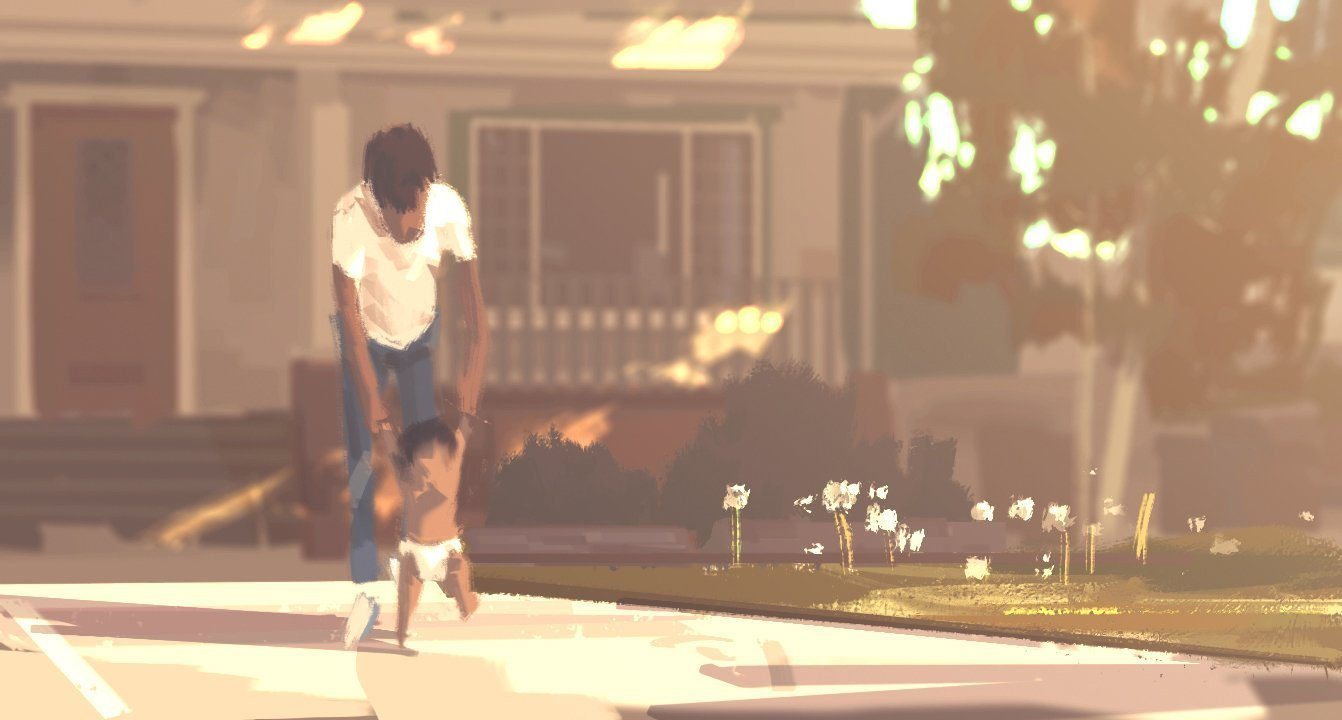
    Bobby Rubio, a Filipino-American artist from San Diego, holds the same opinion. The animator, who now works with Paramount Pictures, made his directorial debut in 2019 during his time at Pixar with SparkShorts’ Float. The short film follows the relationship between a Filipino father and his son, who carries unusual powers, a metaphor for his Autism. The film has garnered over 25 million views on YouTube after its wide release as a signal to the importance of representation.

    Image Courtesy of Bobby Rubio
    Image Courtesy of Bobby Rubio

    The success of Rubio’s Float diversifies Asian characters on screen. When he initially took the project, Rubio designed the main character as Caucasian because he thought it was what the market would want to see. Luckily, Jillian Liebert, the story manager of Float, questioned Rubio on his decision, saying, “How is your son going to feel when he looks up on the screen? And those characters are white?” He changed the characters to reflect his reality. Now, Rubio is keen on creating more Asian characters with his own series of Filipina comic leads in Neighborhood Legend, a superhero who uses the traditions of Eskrima to fight the native Filipino martial arts.

    The journey to becoming successful comic book artists didn’t come easy. For Bernard Chang, who has always been a comic book fan and loved drawing from a young age, went to Pratt Institute in New York but chose to study architecture. He initially had doubts about pursuing a career as an artist, partly due to his traditional parents, explaining, “My parents would understand architecture a little bit more than being an artist.” Rubio adds “Our parents wanted us to be engineers, doctors, lawyers, and nurses – the arts wasn’t what they were pushing for.”

    Nevertheless, Chang didn’t give up pursuing his dream and eventually flourished under New York’s dynamic network of creatives and comics, speaking to as many industry natives as possible from bars to school networks. Chang examples success after his breakthrough 1993 comic series debut with a lead Asian-American male character, in ​​The Second Life of Doctor Mirage. His character breaks the conventional image of Asian males as a “lover not a fighter” outside the kung-fu typecast.

    Image Courtesy of Bernard Chang
    Image Courtesy of Bernard Chang

    This is far from how careers in the arts are now positively perceived, their childhood in the 70s/80s held different taboos. Stemming from traditional Asian ideology, and a need for ‘stable careers’, there were not many famous Asian artists in Western media at that time to take inspiration from. Many Asian diaspora parents who came to the States were often looking for the “American Dream”, and so-called ‘artists’ weren’t the most promising occupation.

    On the lack of recognition for Asian-American talents instead, he met them designing behind the scene, after he “started looking into history.” He discovered, “one of Disney’s earliest animators was an Asian-American, an artist who designed a lot of the characters that we grew up watching in the movies. None of us knew that, right?” To bring more Asian representation into the creative industry, “A lot of times you have to be even better than everyone else by a couple of times to break in.” A drive for the creative doesn’t stop, as hopes for more Asian representation appear on-screen and behind the scenes continue with new releases like Pixar’s Turning Red, Michelle Yeoh in Everything Everywhere All at Once, and Academy Award-winning Parasite from Korea.


    This article is from our interview feature on Bernard Chang and Bobby Rubio available to read in print. Get your limited edition copy here.

  • Catching up with Jesse Aicher of Prelow

    Catching up with Jesse Aicher of Prelow

    One half of NYC-born band Prelow, Jesse Aicher speaks on his journey as an artist, sharing his proudest moments, musical inspirations and his thoughts on the growing independent music scene.


    Paradigm Haus: Can you tell us about yourself and how you got into music?

    Jesse Aicher: I started playing guitar when I was about nine, just as a little activity that my parents thought would be fun for me. Around the time I was 12 or 13 I started to realize I could learn songs that I like to listen to and write my own.

    PH: Who were your musical inspirations growing up?

    JA: My parents would always play the Beatles and U2 around the house, and my mom also was a tap dancer so there would be some degree of older folkier music being played. When I was old enough to choose my own music I went through a rock and pop/punk phase then a hip hop phase.

    PH: Could you tell us about Prelow and how it came to life?

    JA: Matt and I met in a class we were both taking at NYU in New York City. There was an assignment to group up and make a song and that’s actually how the first Prelow song was made.

    PH: What have been your proudest career moments to date and why?

    JA: All the touring we’ve been able to do is the most special to me. We’ve done three national tours now playing with other acts that I’d consider to be real friends. Those have been my favorite experiences.

    PH: Congrats on 20million on ‘Mistakes Like This’. The first song I came across from Prelow was actually ‘I Don’t Wanna End The Night’. Both beautiful songs. Could you tell us where you find inspiration for your songwriting?

    JA: Thank you! A lot of the time the inspiration comes from a musical idea or the beat. ‘Mistakes Like This’ was almost entirely produced before I wrote any lyrics or came up with any melodies. At that point, I try to just lose myself in the music and start piecing together melodies and words until it feels right.

    A person lounging in a red inflatable pool on green grass, wearing jeans and colourful sneakers, with a wooden fence and clear blue sky in the background.

    PH: How has the independent music scene evolved in NYC? Where are you based now?

    JA: I wish I could say. I’ve been fairly isolated since the start of the pandemic, between my apartment in Brooklyn and my parents’ places out of the city. I think NYC will always be a hub for independent music, there’s just too much going on here for it not to be.

    PH: What’s next for you and your musical career?

    JA: Currently I’m enjoying writing for other artists and working on a solo project!


    Listen to Jesse’s latest release BoutU featuring Westerns available on streaming platforms.