
Tag: Singapore

  • John Tung on curating SEA Focus and the artistic sentiments in the region now.

    John Tung on curating SEA Focus and the artistic sentiments in the region now.

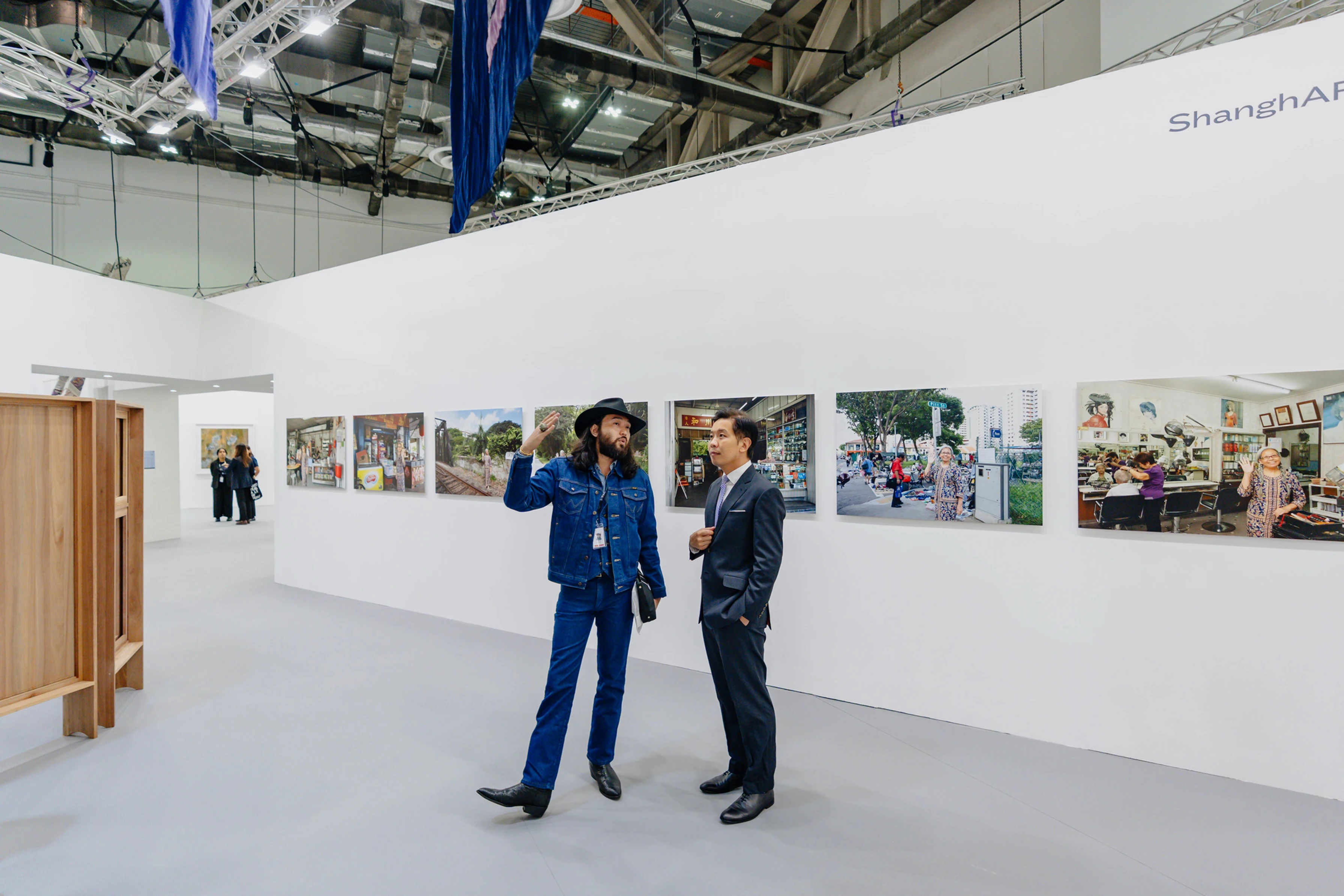
    When John Tung talks about curating, he begins with a toolbox, a literal one. Fresh from the close of the 2026 edition of SEA Focus at ART SG, Tung has a get your hands dirty attitude to exhibiting. “We had a really strong response,” he says. “[feedback was] very positive from most of the visitors… I’m very happy with how it turned out.” Behind the fair’s success lies a philosophy of exhibition-making that is far removed from the glamorous stereotype of the jet-setting curator.

    “People imagine stylish outfits and opening nights,” he jokes. “But I’m a hands-on curator. Behind me right now are toolboxes and scaffolding. My hands are beaten up and I am wearing workwear.” For Tung, the word “curate” returns to its Latin root, curare — to care. “Are you a parent? If you have never changed a diaper, I’ve said, is my approach to curating… There’s blood and sweat behind them — hopefully not tears.”

    Read on for our full interview Q+A covering SEA Focus, ART SG, curating, and cultural capital in the region, expectations, and more.

    On SEA Focus moving into ART SG

    Sarah: Previously SEA Focus was in a separate location, and now it’s inside the fair. How did that change the way you curated the show? SEA Focus has often been described as more of a museum-like experience than a typical fair booth.

    John Tung: That museum-like quality has really been part of SEA Focus’s identity for many years, especially since it moved to Tanjong Pagar District Park about five or six years ago. SEA Focus is a curated platform, so the experience is always closer to going to a museum than visiting a typical art fair booth.

    I’ve had the pleasure of creating three editions — two at Tanjong Pagar Distripark and this most recent one at ART SG. Each edition aims to create a very different visitor experience from the previous one.

    The approach stayed largely the same, but the venue made a difference. A convention hall is a tabula rasa — a blank slate. It gives you a lot of freedom to build walls exactly the way you want. In the previous venue, we had columns and architectural features we had to work around. Having a blank slate gives more opportunities to exercise creativity.

    For this edition, we centralised X-shaped walls, which became quite iconic, and in previous editions, we modelled the “islands” of the layout to resemble the archipelagos of Southeast Asia. A lot of effort goes into the selection of galleries and artists, considering geographic representation, gender representation, and where artists sit in terms of market presence. The experience is always carefully curated.

    Sarah: How do you think this curatorial platform helps bring in smaller galleries? 

    John: The galleries are actually a very diverse mix. They’re not necessarily all small galleries. Yes, you have new and emerging galleries, but you also have international powerhouses that have participated in numerous editions of SEA Focus as well.

    The unique thing about SEA Focus is that it’s an opportunity for artworks and artists to be contextualised among peers who are practicing in the region. Whether they’re established or emerging, they’re working within the same epoch. Their concerns are aligned; they’re living in the same zeitgeist.

    That’s the greatest value SEA Focus brings. Unlike a typical fair, where each gallery has its own objectives and commercial interests, here everything converges under a singular kind of territorial and conceptual banner. I think we’re starting to see that there is value in seeing connections and contextualising works, rather than just seeing them as individual commercial presentations.

    I thought it was really interesting that with the new Art Basel in Qatar [which opened from February 5–7, 2026], they’ve actually adopted a very similar approach — each booth is supposed to present one artist, they’re all thoroughly screened, and they’re expected to unite under that same singular banner. So this idea of having a curated experience — not purely a fair — we’re starting to see that there’s value in seeing the connections and contextualising the work as well.

    Installation view of SEA Focus at ART SG 2026, Marina Bay Sands Singapore

    What collectors bought at SEA Focus and ART SG 2026

    Sarah: What were some of the most popular themes or works with collectors? Or even some surprise sleeper hits?

    John: [He jokes] I’m a horrible person to ask because I have got such a close working relationship in the realisation of the show. So every work always stands out to me as really unique and really special. 

    There was strong support for many of the young artists. Inez Katamso, for example, did very, very well, which shows collectors are very interested in a younger generation of artists.

    A group of young artists presented by Mr Lim’s Shop of Visual Treasures also saw almost all the works picked up by collectors. But then again, on the other end of the spectrum, a new installation by Robert Zhao was one of the first works acquired during the preview days. So, collector interest remains very broad in Singapore. People are looking at works across a great variety of price points, and SEA Focus is able to provide that range, from recent graduates and newly emerging artists to very established historical figures.

    Cultural capital in Singapore, the region, and the artist sentiments behind it

    Sarah: Do you think Southeast Asian artists are under pressure to explain their region to the world?

    John: I wouldn’t put it as pressure, but there is definitely awareness of how the international art world wants to frame Southeast Asia, and sometimes there’s active resistance against that. [On the platform Something Curated] I wrote an article recently about this notion of Southeast Asia being “up-and-coming.” Up-and-coming benchmarked against what? Are we talking about sales, infrastructure? Western models are still predominant in those conversations.

    Art doesn’t operate like Keynesian economics. In that regard, I think Southeast Asia remains very, very true to themselves. It provides a supply for a demand that doesn’t exist yet. Southeast Asian artists remain very true to themselves. They respond to issues they’ve engaged with for a long time, drawing on distinct and hybridised histories. There’s still very strong cognisance of the postcolonial nature of Southeast Asia’s existence, and that manifests quite clearly in the work.

    Sarah: Singapore is positioning itself as a regional cultural capital — what does Singapore enable that other cities don’t, and why? 

    John: My academic background is not in curating — it’s in cultural policy. I wrote my master’s thesis on the evolution of Singapore’s cultural policy. The notion of being a cultural capital is not new, and Singapore’s model draws from quite a variety of global sources.Even the United States’ Cold War policies come to mind, with the CIA funding abstract expressionist exhibitions abroad as a means of soft power. Singapore isn’t at war with anyone, but there is definitely a desire to be seen as a gateway to Southeast Asia.

    SEA Focus allows people to see some of the best and most recent offerings from across the region in one destination, instead of flying to eleven different countries, to tease it out, to do the excavation, bit by bit. Singapore is leveraging on a lot of its strengths, its history of strong bilateral ties with our neighbours in the region, and the confidence that our neighbours have in Singapore to be able to accurately represent and reflect the variety of tastes, beliefs, and opinions of the different peoples of Southeast Asia.

    That being said, I think it’s also a really heavy burden to bear, the burden of representation, right? So I think, for Singapore, as a commissioner for many of these events, the best they can do is find individuals who take this sort of responsibility seriously. And I would like to think I take this responsibility seriously.

    The growth of private museums in Southeast Asia

    Sarah: Shifting to the art scenes more broadly. How do you think the art scenes in other major Southeast Asian cities are changing?

    John: Across Southeast Asia, particularly in the more developed cultural production centres like Jakarta, Bangkok, and Kuala Lumpur, we’re seeing a rise in private museums being opened. MAIIAM opened fairly recently in Bangkok, and there’s MACAN in Jakarta.

    In Singapore, that trend isn’t manifesting at quite the same scale as in the region. Such as The Private Museum by the Teo Family. There’s also an influx of collector-established art spaces. So I do think that across the region, patrons and benefactors of the arts are really putting their resources where their mouths are, creating infrastructure that runs parallel to state-funded spaces. That’s helping to build a more diverse and vibrant ecosystem overall.

    Sarah: What do you think about collectors opening private museums?

    John: I recall the establishment of MAIIAM in Thailand, which is the project of a really notable collector, Eric Bunnag Booth. His rationale for establishing MAIIAM was quite straightforward. At that point in time, there wasn’t a permanent collection-based institution or museum in Thailand showing Thai art. He very much wanted Thai people — young artists, young students — to have the opportunity to see iconic works of Thai art in Thailand itself.

    Singapore was the regional powerhouse in collecting at the time, but he wanted a place where local countrymen could encounter their own art history. I wholeheartedly believe in the purity of his intentions and vision in establishing MAIIAM, and I think MAIIAM has really been a beacon in the region for how a private museum can be established, run, and operated.

    The space I am currently associated with, Project Art Hunter, was established by another notable Singaporean collector, Yeap Lam Yang. It’s nowhere near the scale of MAIIAM — it’s a relatively small space, about 1,600 square feet. Over the next couple of years, he plans to present a series of rotating exhibitions drawn from his own collection. At the same time, he’s also a well-known patron of the National Gallery Singapore and the Singapore Art Museum, having donated more than 100 works to these institutions. 

    But we need to be cognisant that not all works in a private collection fit well into an institutional context. Collecting institutions have their own acquisition strategies. Just because a collector wants to donate a work doesn’t mean the museum will accept it, if it doesn’t align with their particular strategy. So that leaves many works residing in private collections with limited avenues for public presentation, unless collectors establish their own spaces.

    For a private collector, their strategy does not have to align with institutional goals. They don’t need to chronicle art history in a structured way. Ultimately, private collections reflect tastes and sensibilities. As much as we want to prioritise academic research and art historical frameworks, we shouldn’t forget that one of the biggest catalysts for the development of art over the last 600 years has been connoisseurship. That is what private collections represent. Being able to see and experience the works and collecting preferences of these individuals is valuable. Not just for people who can afford to collect, but also for those who haven’t started collecting or cannot afford to collect as well.

    Quick Fire: The reality of curating, how and why, and what’s next for John

    Sarah: What do you think is one of the most misunderstood things about curating — and the part that’s not glamorous at all?

    John: If you just Google “typical curator,” even myself, right, it’s someone in a funky outfit or a business suit, looking glamorous at an opening. But there are many different types of curators, and I’m very much a “get my hands dirty” kind of curator.

    I’m a strong believer that curatorship comes from the Latin word curare, which means “to care.” And care manifests in many ways. Are you a parent? If you have never changed a diaper, I’ve said, is my approach to curating. What doesn’t get captured in press photos — outside of the fancy outfits — is that there’s a lot of blood and sweat, hopefully not tears, that go into the execution of an exhibition. My hands are literally the most beat-up things in the world right now after Singapore Art Week. It’s going to take a while to recover. But it’s the dirty side of the job that I think makes me love it the most.

    John Tung at SEA Focus 2026

    Sarah: What do you want visitors to feel as they leave one of your shows? What questions do you hope they walk away with?

    John: I think sometimes curating today is seen as this very abstract, theoretical, almost sexy thing — exploring material sensibilities, territorial ideas, all these conceptual frameworks. But at the end of the day, I’m still quite old-fashioned in that sense.

    “With pretty much every exhibition I work on, I always ask myself: what is the moral of the story? What should a visitor be walking away feeling?”

    In its recent edition, SEA Focus, for example, looked at violence perpetrated against people, the ecological crisis, and displacement. I want people to think more deeply about how well we’ve been doing as stewards of this planet. And frankly, we’re doing horribly, as far as I’m concerned.

    So when people go into my exhibitions, I want them to think about the issues I’m raising, which I sometimes put quite explicitly in the curatorial statements. My approach to curating an exhibition is actually the delivery of policy, but in a democratic way. If we think of policy as a form of social engineering, the state might have legislation, schools might have rules, and you’re obliged to follow them. But with an exhibition, you can consider my propositions. You can decide whether you want to buy into that set of beliefs or not. To me, that’s a very democratic way of delivering policy.

    Sarah: And last question — what do you have coming up this year, and what are you most excited about?

    John: I am opening an exhibition tomorrow night called Homecoming. It’s the third edition of a suite of shows I do annually with a good artist friend of mine, Kim Whye Kee.

    For this upcoming edition, I am really excited because, beyond Kim himself, we have a collaborator who’s also presenting, Royston Tan, the acclaimed director of 881 and many prominent works in local cinema. For the first time in 14 years, he’ll be presenting a new video installation. It consists of documentary footage of 100 families in Singapore having dinner.

    So the exhibition is a rumination on home and the rituals of eating, families coming together at the dining table, and a deliberation on what the notion of home, or coming home, really means. That opens tomorrow night [7th February 2026]. 

    Follow curator John Tung and his upcoming exhibitions, including Homecoming and future projects with SEA Focus and Project Art Hunter, as he pushes conversations around Southeast Asian art, cultural policy, and exhibition-making across the region. 

    at johntung.com or @johnsavage.fromthewoods

    [All Images Courtesy of Sutton Communications]
  • South East Asia’s Best Wellness Sanctuaries

    South East Asia’s Best Wellness Sanctuaries

    Asia is the epicentre of wellness travel, home to some of the world’s most exclusive sanctuaries for mind, body, and soul. From jungle hideaways to tropical island retreats, each of these wellness havens hosts holistic healing, cutting-edge spa therapies, and serene design. Here are the top retreats across Asia where rejuvenation meets indulgence…

    Chiva-Som Hua Hin — Thailand

    Chiva-Som Hua Hin Rooms (Image Courtesy of Chiva-Som)
    Chiva-Som Hua Hin Rooms (Image Courtesy of Chiva-Som)

    A pioneer of wellness since the 1990s, Chiva-Som is a celebrity-favoured retreat set on a tranquil beach in Hua Hin. This “haven of life” (its name’s meaning) offers tailored programs for everything from detox and weight loss to stress management and mindfulness. Days here flow between sunrise yoga by the ocean, macrobiotic gourmet meals, and holistic treatments ranging from Thai herbal massages to high-tech physiotherapy. With Thai pavilions tucked amid lush gardens and a ratio of staff-to-guest that ensures utterly personalised service, Chiva-Som remains the gold standard of Asian wellness resorts. Insider tip: Don’t miss the seaside hydrotherapy pool and the cooking class to bring the holiday diet back home.

    Book your stay: chivasom.com/en/book Address: 73/4 Petchkasem Road, Hua Hin, Prachuap Khiri Khan 77110, Thailand Phone: +66 32 536 536 Email: reservations@chivasom.com Instagram: @ChivaSomResort Facebook: Chiva-Som

    COMO Shambhala Estate — Bali

    COMO Shambhala Estate (Image Courtesy of COMO Hotels)
    COMO Shambhala Estate (Image Courtesy of COMO Hotels)

    Tucked in Bali’s emerald jungle outside Ubud, COMO Shambhala Estate is a “retreat for change” offering immersive wellness in a resort setting. Guests stay in lavish villas and suites that come with personal assistants, infinity pools, and open-air terraces facing the Ayung River valley. The estate’s resident experts—yoga gurus, Ayurvedic doctors, nutritionists—curate multi-day programs for each guest. Mornings include yoga in a treetop pavilion or a guided rice-field trek, followed by an Ayurvedic massage in a riverside gazebo. The cuisine is famously hearty and healthful, think raw food workshops and local fare. With its combination of Balinese spirituality, contemporary design, and world-class spa facilities, COMO Shambhala is where one reconnects with nature in style. Insider tip: Ask for a water blessing at the estate’s sacred spring – a cleansing Balinese ritual few tourists get to experience.

    Book your stay: comohotels.com/bali/como-shambhala-estate Address: Banjar Begawan, Desa Melinggih Kelod, Payangan, Gianyar, Bali 80571, Indonesia Phone: +62 361 978 888 Email: shambhala@comoshambhala.com Instagram: @COMOHotels Facebook: COMO Shambhala Estate

    JOALI Being — Raa Atoll Maldives

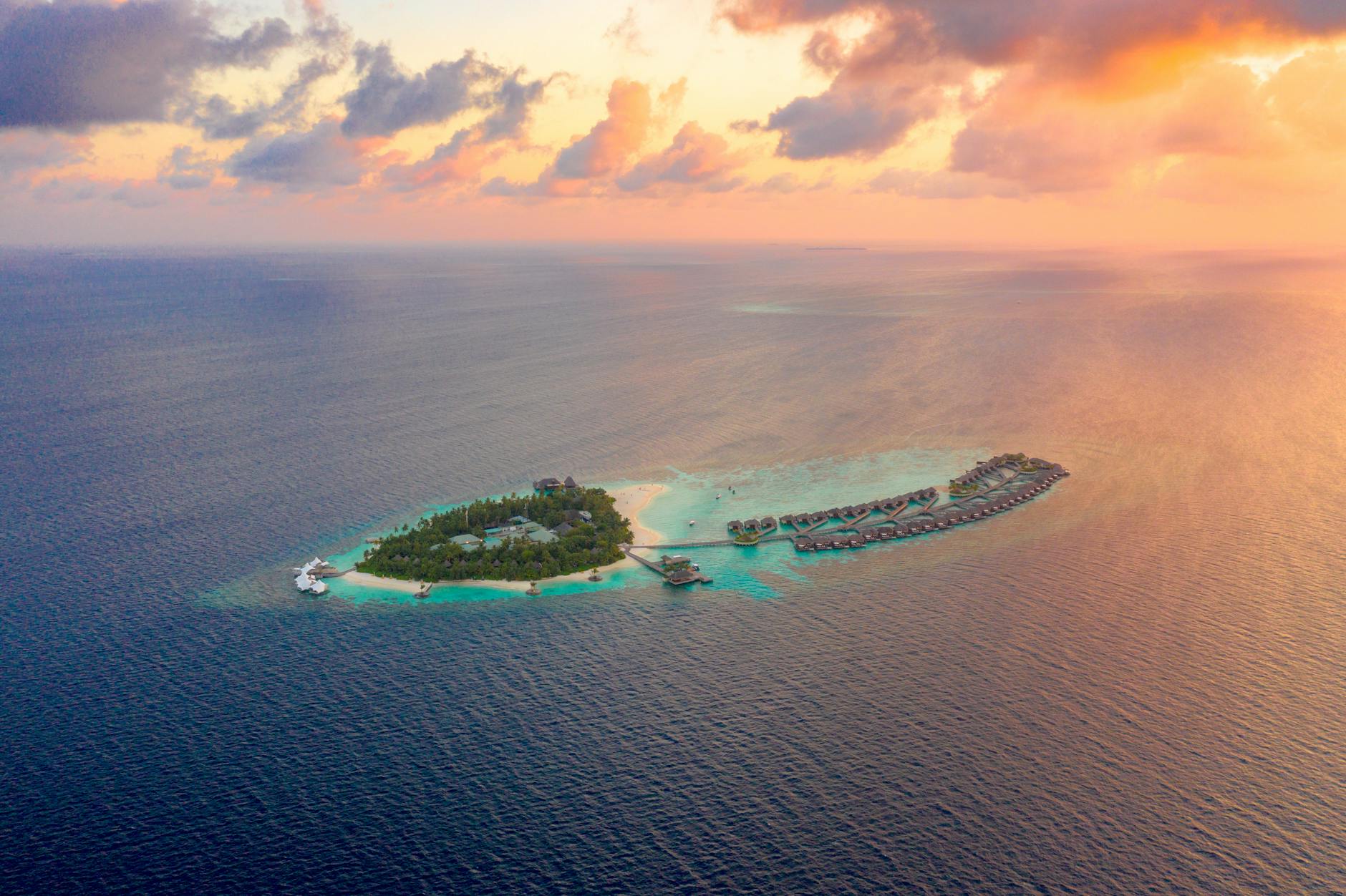
    Maldives beach (Image Courtesy of Unsplash)
    Maldives beach (Image Courtesy of Unsplash)

    For an ocean-side wellness escape, JOALI Being is a private island retreat pioneering wellness in the Maldives. With just 68 villas – all with private pools and airy design that blurs indoor-outdoor living – this sanctuary centers around the Four Pillars of JOALI Being: Mind, Skin, Microbiome, and Energy. Personalised programs include sound healing sessions in a botanical sound garden, marine fitness — like paddleboard yoga in crystal lagoons— and skin therapies using mineral-rich sea ingredients. The property’s design is breathtakingly biophilic: bamboo-clad overwater treatment villas, a hydrotherapy hall with a marble hammam and salt inhalation room, and architecture that mimics waves and shells. Despite the deep focus on wellbeing, guests talk about attaining a feeling of “weightlessness” here, luxury is never compromised – gourmet healthy dining, mood-boosting cocktails, and sunset cruises remind you that pleasure is a key part of wellness. Insider tip: Don’t leave without experiencing the Discovery Sound Path at dusk, where you walk through jungle clearing and play healing gongs and bells – a magical, soul-soothing finale to your stay.

    Book your stay: joali.com/joali-being Address: Bodufushi Island, Raa Atoll, Maldives Phone: +960 658 4400 Email: reservations@joali.com Instagram: @JOALIBeing

    Four Seasons — Singapore

    Four Seasons Singapore (Image Courtesy of Four Seasons)
    Four Seasons Singapore (Image Courtesy of Four Seasons)

    Nestled on Orchard Boulevard, Four Seasons Hotel Singapore is blending Asian-inspired elegance with cutting-edge rejuvenation. Its signature Chi Longevity experience draws from Traditional Chinese Medicine and modern holistic therapies, with in-house medical staff and clinicians on site. Guests have the option for bespoke treatments from herbal-infused massages to mindfulness rituals designed to nurture both body and spirit. With its serene ambience and commitment to well-being, Four Seasons Singapore redefines luxury travel for those seeking rejuvenation and serenity in the heart of the city.

    Book your stay: fourseasons.com/singapore Address: 190 Orchard Boulevard, Singapore 248646 Phone: +65 6734 1110 Email: reservations.singapore@fourseasons.com Instagram: @FSSingapore Facebook: Four Seasons Hotel Singapore

  • Singapore City Guide

    Singapore City Guide

    Handcrafted by a variety of cultural influences, Singapore marks its title as one of Asia’s top destinations and every tourist’s dream. From the cheap yet flavorsome feeds in Buffalo Road to the city’s most luxurious hotel in Marina Bay Sands, the Southeast Asian island city will not leave you disappointed.

    STAY

    MARINA BAY SANDS

    buildings near lake during night time
    Photo by Ravish Maqsood on Pexels.com

    Located in Downtown Core, Marina Bay Sands, better known as MBS sticks out like a sore thumb in the midst of all the surrounding high rise buildings. Look out for the giant boat-like structure at the very top of MBS where the world’s largest infinity pool sits, offering gorgeous views of Singapore from 57 storeys high. Marina Bay Sands makes the perfect staycation for couples and friends who are keen to bask in the luxury Singapore has to offer.

    Marina Bay Sands Singapore, 10 Bayfront Ave, Singapore 018956

    @marinabaysands

    DINE

    HAJI LANE

    people standing on sidewalk
    Photo by Van Ambruce Ligutom on Pexels.com

    Haji Lane is hard to miss with its fanciful boutique shops selling items from jewellery to clothing and striking colorful street arts, making it one of Singapore’s Insta-worthy locations. By night, the place is as lively as ever where you can enjoy eateries like Bergs if you are a sucker for classic burgers or Funq where you are free to drink up with a side of live tunes to set the vibe.

    21A Haji Lane Singapore 189214

    DRINK

    CLARKE QUAY

    vibrant evening at clarke quay singapore
    Photo by Khoi Pham on Pexels.com

    Singapore prides itself on their vibrant nightlife and Clarke Quay is no exception! Situated along the Singapore River, this place calls for an unforgettable nightlife experience with its array of clubs from Dreams and Playhouse to pubs like Octapas and Highlander. Not much of a party goer? Visitors are also encouraged to take a stroll along the river and indulge in some gelato and ice cream scattered across the quay.

    3 River Valley Rd, Singapore 179024

    @clarkequaysq

    VISIT

    JEWEL

    futuristic waterfall at jewel changi airport
    Photo by prasanti panda on Pexels.com

    The moment you land, you step foot into one of Singapore’s pride and joy, Jewel Changi Airport. Located in Changi Airport’s Terminal 1, the Jewel is home to one the world’s tallest indoor waterfalls, named the HSBC Rain Vortex, standing at 40 metres high. This place is packed with a range of engaging activities suited for everyone. If lucky, you may be able to experience the light show displayed at certain times of the night. The Jewel Experience does not stop there, visitors are free to explore a range of beautiful attractions like the Shisedo Forest Valley.

    60 Airport Blvd, No 048-049 Changi Airport Terminal 1 Singapore, 819643 Singapore

    @jewelchangiairport

    GARDENS BY THE BAY

    iconic supertree grove at gardens by the bay
    Photo by Renata Meneses on Pexels.com

    Gardens by the Bay offers visitors a scenic view of foreign horticulture with a vast range of flora and fauna from different climates. Spanning across 101 hectares, the attraction is filled with lush greenery and a beautiful waterfall, better viewed during the night, making it a great photography spot. Grab a bite at Satay by the Bay where you can also indulge in local Singaporean cuisine with its hawker centre-like restaurant layout.

    18 Marina Gardens Dr, Singapore 018953

    @gardensbythebay

  • Rainbow 6 Siege Professional Gamer on Utopia in Gaming

    Rainbow 6 Siege Professional Gamer on Utopia in Gaming

    We interviewed Singaporean professional gamer Lunarmetal, Glen Suryaspautra on the future of game concepts and what playing in a utopian world is like.

    The full feature on ‘Utopian Worlds in Gaming’ will be coming out this month in print.

    Interview by Faye Bradley and Sarah Wei


    Paradigm Haus: How did you get started in professional gaming and why?

    Glen: Like many others who are in esports, I’ve had a passion for games since I was really young. The advent of broadband opened my eyes to the world of online gaming where I found a place that breeds competition, forges friendships, and engages me like nothing else ever did.

    The allure of participating in esports for me has always been competition and glory. The feeling of representing your country or region in front of a crowd, facing off against the best in the world is indescribable. While I spent a large portion of my youth closely following and watching Dota 2 players chase their dreams, I was never ‘actively’ pursuing a career in esports because I never thought I’d ever been good enough to be competing at such a high level. I fantasized about playing on stage many times but it had always felt more like a ‘dream’ than an actual ‘goal’. Of course, the world works in mysterious ways and so when I was presented with the opportunity to go pro with Rainbow 6 Siege in 2017, I grabbed on tight and haven’t let go since.

    PH: What does ‘utopia’ mean to you?

    G: To me, a utopia would be a place where my values and ideals can be reflected, accepted and shared by everyone inside. A dystopia would be just the reverse.

    As pleasant as it sounds, I also think ‘utopia’ always carries with it a somewhat negative connotation because the ideals it envisions is juxtaposed with our reality, and it often feels very far-off and impractical. I am also of the mindset that a utopia for one can be a dystopia for another and as long as individuality exists between people, a utopia will always remain in the realm of the unachievable because we can never have one world that is perfect for everyone.

    PH: How is the concept of Utopia embedded in gaming, now and historically?

    G: Both art and gaming are similar in that it is a depiction of a creator’s world. Just like how different artists illustrate different themes in their art, games have different genres and settings that are distinguished by their creators. Where art can be a form of expression which allows an artist to share their vision of a utopia, games can deliver a more immersive experience allowing gamers to virtually live in a world envisioned by its creator.

    PH: Why is it important to get lost in these games?

    G: Until we develop the ability to traverse different dimensions, games might be the closest thing which allows us to ‘live’ in a different reality away from our own.

    A team of five esports players posing for a photo in a studio setting. They are wearing matching red jerseys with Vodafone branding. The seated player is wearing sunglasses and a jacket, while the others stand around him. The backdrop is blue with studio lights illuminating the scene.

    PH: What do they do to help people?

    G: I think that at the root of everything, gaming today exists first as an escape from reality. Whether you’re playing through a single-player story-based game in an RPG (Role-playing game) or squading up with friends in an FPS (first-person shooter), there are many different types of games to choose from that I’m sure you can find anything you’re in the mood for.

    Not to mention that there are also other tangible benefits to gaming! Several studies have shown that playing games improves cognitive function, reaction times and helps to develop better social skills too.

    PH: How can we learn from these worlds?

    G: Just… play the game really. Game developers put in a lot of effort so experience their world in the way they would want you to! Engage with the community, make new friends and just keep an open-mind.

    PH: Where do you see the future of gaming going? (In Concepts and Technology)

    G: I think that game developers will continue to innovate and explore new genres that will keep people engaged in ways they wouldn’t think about today. As for technology, I’m always really excited for anything VR (virtual reality) that comes out. As time passes we look for ways to immerse ourselves more and more so VR just seems like the next step for a truly immersive experience. Who knows, in the future we might even be engaged through our other senses outside of just visual or auditory. I can’t wait to be able to taste food virtually.

    A stage at an esports event featuring five gamers standing in team jerseys and a presenter in a traditional kimono, speaking into a microphone.

    PH: Are we living in a dystopian or utopian society now, or are we heading in that direction?

    G: I think that humans are very progressive creatures. Albeit slowly at times, we strive to improve civilization while tackling challenges presented to us and so I’d like to think that we are progressing towards a utopian society. But then again, the world changes so quickly that even as we progress our definition of a utopia will inevitably change. The existence of a smartphone or a satellite would be unexplainable just 150 years ago, yet I’m sure in 150 years time we’d have solved problems that we didn’t think we could today. In short, I guess we are headed in the direction of a utopian society but I doubt we’ll ever reach it.


    Follow Glen on Instagram @glensuperpapaya

    Glens ‘Rapid Fire’ Series:Rainbow 6 Siege Pro Gamer, Lunarmetal’s Top 5 Songs and Games to Look Out for

    All Photographs Courtesy of Glen Suryaspaultra

  • Eco-Friendly Travel: 6 Sustainable Hotels To Add To Your Bucket List

    Eco-Friendly Travel: 6 Sustainable Hotels To Add To Your Bucket List

    Sustainable hotels are crucial in the future of conscious, eco-friendly travel. Sustainable hotels reduce the environmental impacts through green practices by mitigating waste and saving energy wherever possible. We’ve picked six hotels from Sydney, Bali, Fiji to Singapore and more that are doing their part to stay plastic-free. They also collaborate with local businesses and providers to support their food and beverage services. Without further ado…

    A modern bedroom and living space featuring large windows, a comfortable bed with neutral linens, and a small table with a chair. The room has greenery visible outside and stylish decor elements including a round mirror, soft lighting, and wooden accents.
    Paramount House Hotel Room

    Paramount House Hotel, Sydney

    @paramounthouse

    The heritage building of Paramount Picture Studios in Sydney was recently rebuilt and redesigned to Paramount House Hotel by Breathe Architecture. The hotel is located in the suburb of Surry Hills. The exciting neighborhood is full of good restaurants, boutiques, and cultural events, which provides more fun for the guests. The paramount coffee project offers great coffee and breakfast every day.

    Address: 80 Commonwealth St, Surry Hills NSW 2010, Australia

    Find out more here.

    A collage of three innovative eco-friendly houses set in a lush green landscape, featuring bamboo and wood materials, with large windows blending outdoor scenery.
    Riverbend House at Bambu Indah, Bali

    Bambu Indah, Bali

    @bamduindah

    In one of the world’s most popular destination, Bali, Bambu Indah is an eco-friendly luxe hotel curated by John and Cynthia Hardy. The hotel embraces its natural environment and is surrounded by the serene untouched lands. Guests can enjoy the vibe of the tropical island and the fresh air created by the jungle.

    Address: Jl. Baung, Sayan, Kecamatan Ubud, Kabupaten Gianyar, Bali 80571, Indonesia

    Book here.

    Aerial view of a secluded island surrounded by turquoise waters and green hills, featuring sandy beaches and rocky shorelines.
    Laucala Island, Fiji

    Laucala Island, Fiji

    @laucalaisland

    Laucala Island is a private island in Fiji running a self-sustained hotel. The island spans around 12 square kilometers and owns 25 villas and farmland. The hotel has homegrown fruits and vegetables onsite. The food offered in the hotel is mainly from its own farmland. The materials used to build the hotel are sourced from local rain trees. With high self-sustainability, Laucala Island provides a perfect choice for green travel.

    Address: Laucala Island, Fiji

    Find out more here.

    Cozy bedroom featuring a cork wall, a bed with white linens and decorative pillows, a wooden stool, and a warm, vintage-style wall lamp.
    Sherwood Queenstown Room View, New Zealand

    Sherwood Queenstown, New Zealand

    @sherwood_queenstown

    The Sherwood Queenstown is located next to Lake Wakatipu. The hotel business is strongly based on the local natural environment and its wonderful landscape. With the zero-waste principle, more than 60% of wine bottles and 100% kitchen organic waste are composted and returned to their own hotel garden. Most of the food is sourced from its own onsite garden. The hotel also owns the largest solar energy install to produce power supply for the business.

    Address: 554 Frankton Road, Queenstown 9300, New Zealand

    Check out more here.

    Two hornbills perched on a branch surrounded by green foliage.
    Siloso Beach Resort Bird View

    Siloso Beach Resort, Singapore

    @silsobeachresort

    Siloso Beach Resort is a sustainable luxury hotel on the island of Sentosa in Singapore. The hotel’s environment is fully surrounded by trees. During the construction, more than 200 locally grown trees were protected. Also, over 1000 fruit trees, flowering plants, and herbs were carefully planted around the hotel, which helps to build a green environment and community.

    Address: 51 Imbiah Walk, Singapore

    Book here.

    A scenic winter landscape featuring snow-covered hills and geodesic domes surrounded by pine trees, overlooking a valley with mountains in the background under a clear blue sky.

    Whitepod, Switzerland

    @whitepodhotel

    As an eco-luxury hotel, Whitepod focuses on minimalism, trying its best to reduce the impact of the hotel on the environment. Guests stay in the designated pods that are designed in a unique construction to minimize the usage of materials. The LED bulbs and the wooden stoves of each pod minimize the impacts of lighting and heating system. Guests can also enjoy the local spring water sourced from the Swiss mountains.

    Address: Les Giettes, Des Cerniers, 1871 Monthey, Switzerland

    Book here.


    All images courtesy of the featured hotels.