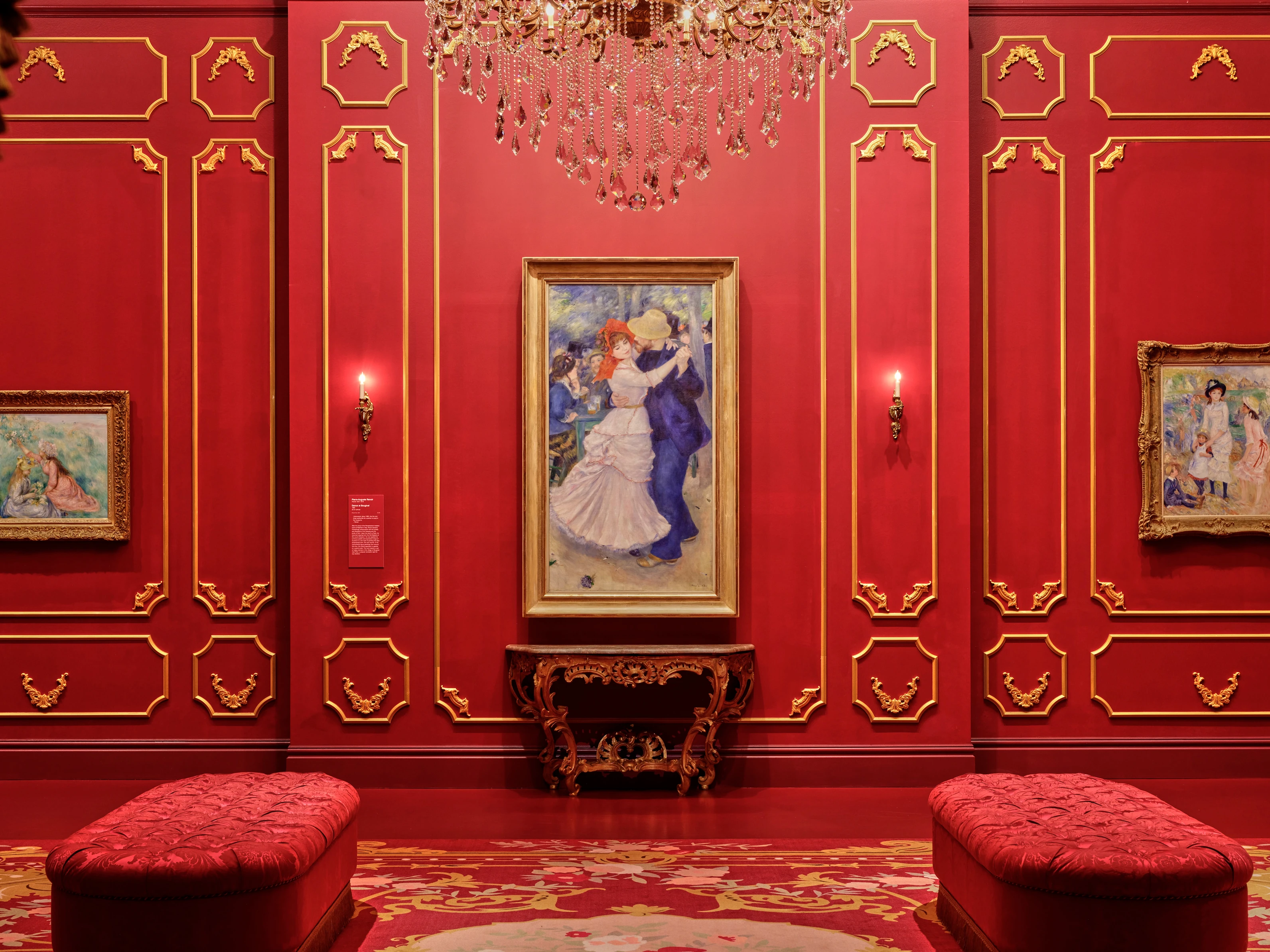
The National Gallery of Victoria’s restaging of French Impressionism from the Museum of Fine Arts, Boston arrives with a sense of both elegance and excitement (6 Jun – 5 Oct 2025). Drawn from Boston’s renowned holdings, more than 100 paintings by Monet, Renoir, Degas, Pissarro, Manet, Cassatt, Morisot, Signac and Sisley bring to Melbourne audiences a movement whose radical brushwork, saturated colour and novel viewpoints changed the course of art.
The 2025 presentation makes up for the pandemic‑curtailed 2021 run and also marks the 150th anniversary of the first Impressionist exhibition. It is part of the Melbourne Winter Masterpieces series—an annually anticipated blockbuster—but the curators have emphasised letters and journals to foreground the artists’ voices, hinting at a deeper engagement beyond spectacle.
Immersive Design and Staging
Visitors enter through a long corridor dressed like a Bostonian drawing room, complete with parquet floors, columns and padded furniture; only two works—Renoir’s Woman with a Parasol and Small Child on a Sunlit Hillside and Monet’s Meadow with Poplars—hang on the walls. The scenography, inspired by East‑Coast collector mansions, situates the paintings within the period’s domestic elegance and hints at the American collectors whose taste shaped the MFA Boston’s holdings. Throughout the show, rooms shift mood: dark green damask for the Barbizon predecessors, duck‑egg stripes and lattice trim for watery gardens, embossed wallpaper and faux gaslight for urban realism, and opulent red‑and‑gold salons for Renoir’s experiments. It is a theatrical approach that immerses visitors in fin‑de‑siècle atmospheres while blurring the boundary between gallery and set.
Rhythm of Galleries and Highlights
After the opening, more traditional hangs return, with thematic rooms dedicated to precursors, still life, urban scenes, and printmaking. A suite of Henri Fantin‑Latour’s roses, Cézanne’s fruit, and Berthe Morisot’s delicate needlework invites quiet contemplation, the next gallery dives into gritty cityscapes and Pissarro’s mentor‑and‑mentee relationships. The crescendo comes in a lilac‑white space filled with sixteen canvases by Claude Monet, including Water Lilies (1905) and Grainstack (Snow Effect) (1891), which demonstrate his obsession with changing light over decades. A final corridor of black‑and‑white photographic portraits of the artists and a projected film of Monet in his garden creates an intimate epilogue.
Highlights and Surprises
Self‑portrait by Victorine Meurent — A revelation in the exhibition, Meurent’s inclusion acknowledges her as an artist, not just Manet’s model. Her self‑portrait, with butter‑yellow silk and violet bow, asserts a confident painterly gaze and adds a feminist thread to the narrative.
Jean‑François Raffaëlli’s The Garlic Seller – This realist canvas of Paris’s outskirts brings working‑class grit into the show, reminding visitors that Impressionism intersected with social realism.
Degas’s Degas’s Father Listening to Lorenzo Pagans Playing the Guitar – Recently conserved, this double portrait emphasises domestic intimacy and sound, contrasting with Degas’s more familiar ballerinas.
Asia is the epicentre of wellness travel, home to some of the world’s most exclusive sanctuaries for mind, body, and soul. From jungle hideaways to tropical island retreats, each of these wellness havens hosts holistic healing, cutting-edge spa therapies, and serene design. Here are the top retreats across Asia where rejuvenation meets indulgence…
Chiva-Som Hua Hin — Thailand
Chiva-Som Hua Hin Rooms (Image Courtesy of Chiva-Som)
A pioneer of wellness since the 1990s, Chiva-Som is a celebrity-favoured retreat set on a tranquil beach in Hua Hin. This “haven of life” (its name’s meaning) offers tailored programs for everything from detox and weight loss to stress management and mindfulness. Days here flow between sunrise yoga by the ocean, macrobiotic gourmet meals, and holistic treatments ranging from Thai herbal massages to high-tech physiotherapy. With Thai pavilions tucked amid lush gardens and a ratio of staff-to-guest that ensures utterly personalised service, Chiva-Som remains the gold standard of Asian wellness resorts. Insider tip: Don’t miss the seaside hydrotherapy pool and the cooking class to bring the holiday diet back home.
COMO Shambhala Estate (Image Courtesy of COMO Hotels)
Tucked in Bali’s emerald jungle outside Ubud, COMO Shambhala Estate is a “retreat for change” offering immersive wellness in a resort setting. Guests stay in lavish villas and suites that come with personal assistants, infinity pools, and open-air terraces facing the Ayung River valley. The estate’s resident experts—yoga gurus, Ayurvedic doctors, nutritionists—curate multi-day programs for each guest. Mornings include yoga in a treetop pavilion or a guided rice-field trek, followed by an Ayurvedic massage in a riverside gazebo. The cuisine is famously hearty and healthful, think raw food workshops and local fare. With its combination of Balinese spirituality, contemporary design, and world-class spa facilities, COMO Shambhala is where one reconnects with nature in style. Insider tip: Ask for a water blessing at the estate’s sacred spring – a cleansing Balinese ritual few tourists get to experience.
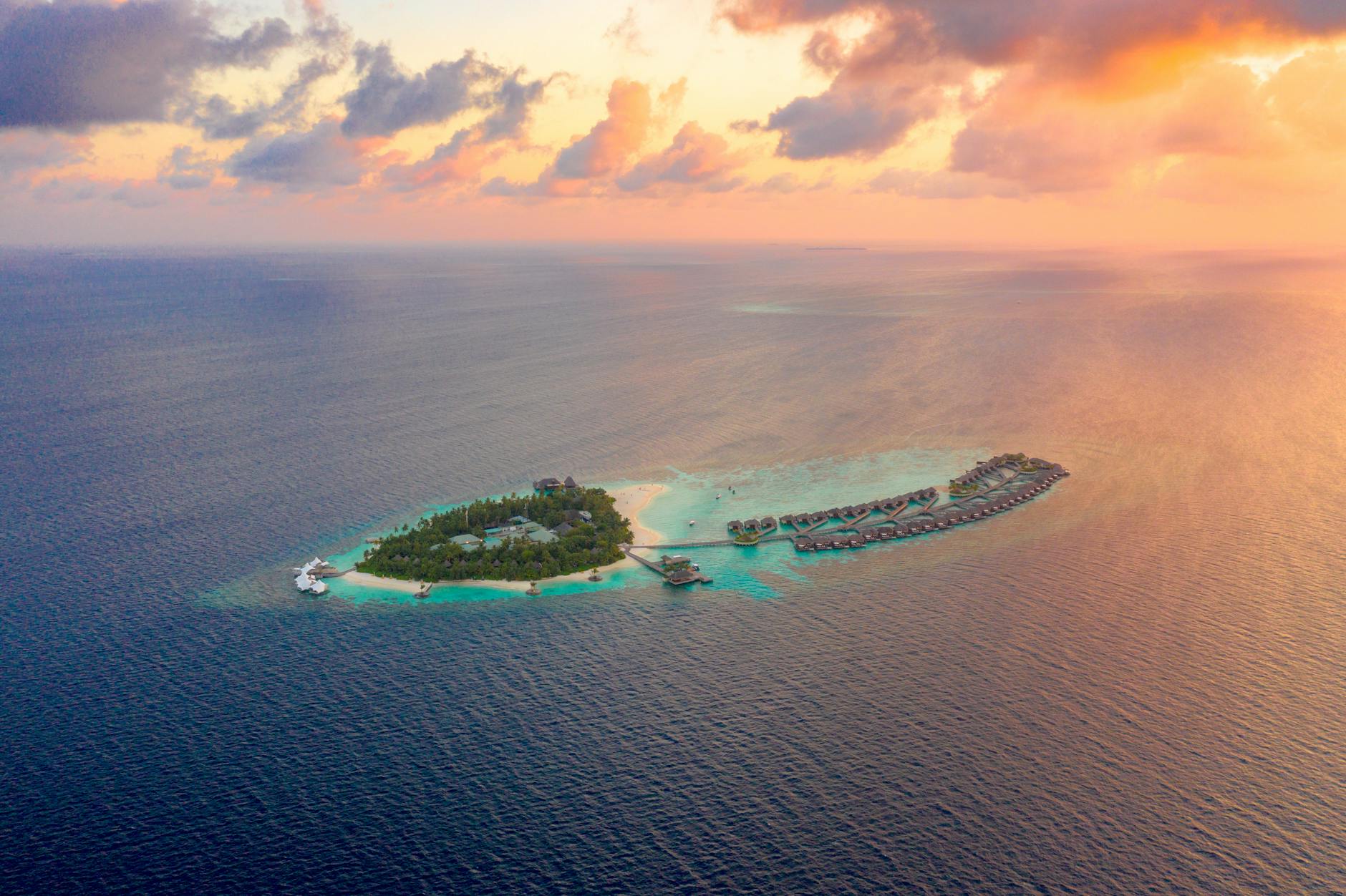
For an ocean-side wellness escape, JOALI Being is a private island retreat pioneering wellness in the Maldives. With just 68 villas – all with private pools and airy design that blurs indoor-outdoor living – this sanctuary centers around the Four Pillars of JOALI Being: Mind, Skin, Microbiome, and Energy. Personalised programs include sound healing sessions in a botanical sound garden, marine fitness — like paddleboard yoga in crystal lagoons— and skin therapies using mineral-rich sea ingredients. The property’s design is breathtakingly biophilic: bamboo-clad overwater treatment villas, a hydrotherapy hall with a marble hammam and salt inhalation room, and architecture that mimics waves and shells. Despite the deep focus on wellbeing, guests talk about attaining a feeling of “weightlessness” here, luxury is never compromised – gourmet healthy dining, mood-boosting cocktails, and sunset cruises remind you that pleasure is a key part of wellness. Insider tip: Don’t leave without experiencing the Discovery Sound Path at dusk, where you walk through jungle clearing and play healing gongs and bells – a magical, soul-soothing finale to your stay.
Four Seasons Singapore (Image Courtesy of Four Seasons)
Nestled on Orchard Boulevard, Four Seasons Hotel Singapore is blending Asian-inspired elegance with cutting-edge rejuvenation. Its signature Chi Longevity experience draws from Traditional Chinese Medicine and modern holistic therapies, with in-house medical staff and clinicians on site. Guests have the option for bespoke treatments from herbal-infused massages to mindfulness rituals designed to nurture both body and spirit. With its serene ambience and commitment to well-being, Four Seasons Singapore redefines luxury travel for those seeking rejuvenation and serenity in the heart of the city.
Long celebrated for its gilded temples and vibrant street life, Bangkok is now wooing design-conscious, high-net-worth travellers with a refined blend of opulence and authenticity. Modern art spaces, cutting-edge hotels, and wellness havens are elevating the city’s profile. The result is a vibrant metropolis, offering new places to play, stay, and spa in style.
Where to Play & Stay
Luxury Hotels on the Rise:
The Ritz-Carlton, Bangkok – the brand’s first foray into the capital – recently opened its doors in the new One Bangkok development. Overlooking the leafy expanse of Lumphini Park, this sanctuary blends cutting-edge design with classic Ritz-Carlton service. Not far away, in Bangkok’s tallest skyscraper, The Standard, Bangkok Mahanakhon is making a splash with its eclectic style and social buzz. Swapping marble-clad formality for vibrant hues and a high-voltage scene, The Standard draws the city’s creative in crowd– and boasts one of Thailand’s highest rooftop bars. By the Chao Phraya River, Capella Bangkok offers a more tranquil brand of indulgence with a two-Michelin-starred restaurant by chef Mauro Colagreco. Even more casual newcomers signal Bangkok’s boom: Marriott’s Four Points by Sheraton Sukhumvit 22 debuted in early 2025, a comfortable urban oasis that underscores the city’s hotel boom.
Beyond the plush pillows, Bangkok’s cultural and dining scenes are flourishing. The Museum of Contemporary Art (MOCA) stands as a testament to the city’s artistic rise – one of the largest contemporary art museums in Asia, showcasing an expansive collection of Thai modern art. Design-forward eateries like Sarnies, a chic café set in a renovated 150-year-old boatyard, fuses Thai ingredients with Aussie café culture. Across town on the river, Sala Rattanakosin offers dinner with a view – a minimalist dining room and rooftop bar gazing at the lit spires of Wat Arun as an unforgettable backdrop. For retail therapy, the newly unveiled EmSphere mall is a “sleepless metropolis” of luxury boutiques drawing a mixed bag of shoppers looking for anything, and nothing at the same time.
Where to Spa
At the legendary Oriental Spa, set in a century-old riverside teak villa at the Mandarin Oriental, Bangkok’s first hotel spa remains among the world’s most acclaimed – a haven of timeless Thai massage and gracious five-star service. For a uniquely local twist on well-being, Yunomori Onsen & Spa transports visitors to Japan without leaving Bangkok. Touted as Thailand’s first authentic Japanese onsen, Yunomori marries communal hot-spring bathing with the country’s infamous massage therapy. In this zen-like sanctuary, guests soak in mineral-rich baths and then surrender to a traditional Thai massage – a blissful Eastern ritual epitomising Bangkok’s inventive spa scene.
From MONA, Night Mass, Altar to the Odeon Theatre, find out where to go and what to see.
Dark Mofo is synonymous with artistic exploration, immersive experiences, and provocative displays, a winter festival for arts, culture and music in the heart of Hobart. This year, the two-week-long festival brought in the likes of Black Flag, Eartheater, Tianzhuo Chen, Laurel Halo, Dean Hurley, Max Richter, Ryoji Ikeda, Berlin Atonal, and ¥ØU$UK€ ¥UK1MAT$U. Alongside a new vanguard of Australian artists from GLVES, Tasman Keith, V, Arcana, Kaylani, Kinder and OKENYO.
Then across the waters is MONA — Museum of Old and New Art — founded by David Walsh and accessible via a 25-minute ferry ride from the city in an art-deco bar boat. On show now is Oceans of Air (17 December 2022—24 July 2023), a solo exhibition of Tomás Saraceno that approaches the Argentinian artist from a native lens. Paintings, sculptures and interactive works are on view to reflect our relationship with nature, society and spiders.
AT MONA
Oceans of Air, curated by the in-house team Emma Pike and Olivier Varenne, separate the exhibition into over eleven rooms of dark-walled encounters with nature. Within the subterranean galleries, a serenity follows as you walk through the maze of literal spider webs in Webs of At-tent (s)ion. Then there are declarations of ‘Invertebrate Rights’ and sound installations that make up a wire-strung symphony.
The 4pm orchestra show is a project by Tasmanian musician Dean Stevenson, who writes a new piece of music every day from scratch and performs it at 4pm with a different ensemble of musicians. Grab a drink and sit in the open lounge, or for something more private behind closed green curtains The Lady’s Lounge for high tea. Then there is Event Horizon by James Turrell, an immersive experience of the Ganzfeld Effect, leaving you feeling lost between the beginning and end.
Newly opened inside the MONA Library is a recording studio open to public bookings with a viewing glass to studio sessions by The Frying Pan Studio. Inside is original equipment from The Beatles Abbey Road Album, Pink Floyd and The White Stripes. Be part of history.
Western Flag, John Gerrard, Dark Mofo 2023. Photo credit: Andy Hatton, 2023.
DARK MOFO
A two-week-long winter festival for arts, culture and music that takes over the city of Hobart at night.
NIGHT MASS
Unveiling Hobart’s Underground from Altar, The Grand Poobah, The Alleway and an Underground Cinema.
In Altar, graffiti-clad walls set the scene as international DJs deliver melodic techno, bass, and trance on the upper floors. Downstairs, immerse yourself in hardcore metal, rap, and raunchy drag shows that defy convention. With every hour, new performers take the stage until dawn.
Seek solace in Poobar’s back room, where tarot card readings intertwine with string melodies and theatre performances of the oracle predictions. As you venture further into the labyrinthine depths of Nightmass, stumble upon the underground cinema nestled by the Alleyway entrance. The Alleyway hosts loft DJs surrounded by outdoor campfires, where the underground cinema offers satirical theatre and drag bingo.
And if you’re lucky enough to enter the coveted Red Room in the Odeon Theatre, prepare to be enchanted by boundary-breaking performances. Be quick, though, as space fills up swiftly once a show concludes, or you’ll be lining up for hours. Night Mass is an immersive journey into Hobart’s underground scene.
TRANCE Photo credit: Rosie Hastie, 2023.
But the stand out performance showcasing underground sub-cultures was TRANCE by Tianzhuo Chen (Thu 8 – Sat 10 June). The ‘3 day rave’ put on three 12-hour long performances in an immersive nature-scape with art installations, interpretive characters, bass DJs and music performances. Artists from around the globe flew in to participate including Dis Fig, City, KIM KHAN, Lavinia Vago, OMI, and ¥ØU$UK€ ¥UK1MAT$U.
ODEON THEATRE AND IN THE HANGING GARDEN
Two music venues for international and local acts in a historic theatre and open-air stage.
The opening night show In The Hanging Garden tilted The Gathering — saw powerful verses of BARKAA, the alluring flow of Tasman Keith, and the soulful dameeela. These remarkable First Nation artists forge a profound connection with the audience and land, setting the tone for the rest of the festival. Amidst this symphony of sounds, In The Hanging Garden is a multi-level outdoor venue adorned with cathedral-like light installations serving local wine or food from wild wallaby, pepperberry and more.
Then at the Odeon Theatre, its architecture is reminiscent of a bygone era. The ornate details, from the intricately carved pillars to the rich tapestries adorning the walls, create an atmosphere of musical grandeur. PS. It’s the location of The Red Room, but only expect a seat if you arrive by midnight when doors open.
As for the shows, the first weekend saw Black Flag’s unapologetic energy and Thundercat’s instrumental jazz, while Ethel Cain’s haunting melodies closed out the weekend.
Enter the ethereal realm of Borderlands I, where Dean Hurley and Laurel Halo, two electronic composers from the United States, created soundscapes of tension and cinema to sit back and relax too. The second weekend for Borderlands IV will host Tujiko Noriko, Hiro Kone, KMRUKEN and Hüma Utku for their rendition of the electronic music concept.
Crosses, Dark Mofo 2023 Photo credit: Rosie Hastie, 2023.
WINTERFEST AND DARK PARK
Feed the body at Winterfest and the soul at Dark Park this winter solstice at Dark Mofo.
As the frosty air wraps the city in its embrace, the people come out to play at night. Winter Feast beckons, a nightly feast where local and international cuisines intertwine over communal tables, fire pits and live music. From spit roasts, seafood, local wines and craft beers, the indoor-outdoor halls lit from neon red crucifixes and hourly fireworks have their own rugged charm.
Spectra, Ryoji Ikeda, Dark Park, Dark Mofo, 2023 Photo credit: Remi Chauvin, 2023.
Dark Park, nestled within the former industrial site of Macquarie Point, blends raw and weathered elements with contemporary design. As you traverse the landscape, Spectra commands attention with its towering presence. A monumental beam of light crafted by Japanese artist Ryoji Ikeda can be seen throughout Hobart. But the ancient ritual of Ogoh-Ogoh genuinely captures the spirit of Dark Park. The pinnacle event is on the festival’s final night, as the Ogoh-Ogoh is set ablaze. In this ritual, the audience is invited to write their hopes, dreams, and wishes on paper, which they then cast into the bonfire. A practice of catharsis and release to end the two-week-long festival of art, culture and debauchery.
Winterfest and Dark Park become the epicentre of Dark Mofo’s enchantment as the winter solstice casts its spell.
In the heart of Taiwan, Taipei shines as a modern city reflecting a rich culture and history dating back centuries. The vibrant night markets, old Buddhist temples, and world class exhibitions and bars present a contemporary city where hints of tradition shine through. Read on for our guide to a hidden gem in the East…
This temple-styled palace building is a mix of tradition and contemporary touches with rooms made up by red columns and gilded tiles. The sublime view of the Keelung River and Yangming Mountain ahead makes the atmosphere even more delightful. Comforts that are friendly family comes suit with this cultural gem.
Grand Hotel, No.1, Section 4, Zhongshan North Road, Zhongshan District Taipei City, 104427
Humble House is conveniently located within Taipei’s central business district of Xinyi District. Atop a shopping mall, the hotel also offers a view of the renowned Taipei 101 skyscraper. Find peace within their minimalistic style, alongside installations that merge art with living. Comfort and curiosity collide.
Dine at a local favorite devoted to creating dishes from natural, locally sourced ingredients. This Japanese fine diner is easy two or family, pick from an extensive ala carte menu from Wagyu to fresh seafood platters, sushi, to Nigiri Omakase sets. On a long night out, don’t forget to complement your meal with sake or their curated list of Australian and European import wines.
After stopping at Taipei 101 swing by this East-West fusion haunt serving delectable house-made pastries, pastas, and pizzas. Sit down and unwind with a drink from a rich menu of local teas, beers, and cocktails.
Salt and Stone, 4F., No. 45, City Hall Road, Xinyi District, Taipei City, Taiwan 110
A European-inspired bar true to its name. Indulgence, decadence and debauchery for the night owls that flock. Chester-field style leather couches in demure surrounds with crystal-studded light fixtures, and awe-inspiring drinks adapted from Taiwan’s local tea traditions. Bottoms up.
INDULGE Bistro, No. 11, Lane 219, Section 1, Fuxing S Rd, Da’an District, Taipei City, Taiwan 106
Taipei Fine Arts Museum pushes contemporary art exhibitions alongside local Taiwanese artists and international curators sharing their cultural perceptions in art and design. Most recently, TFAM hosted the 12th Taipei Biennial, which showcased the museum as a “planetarium” to examine people’s diverse perspectives on geopolitical affairs and the ecological crisis.
Taipei Fine Arts Museum, No. 181, Section 3, Zhongshan N Rd, Zhongshan District, Taipei City, Taiwan 10491
The 300-year-old temple in Taipei’s Wanhua District will take you on a spiritual journey to visit the Buddhist deity, “Guanyin” known as the “Goddess of Mercy.” Being one of the ‘big three’ temples of Taipei, Longshan is a venerable cultural relic for people in Taiwan. After several reconstructions, it remains an embodiment of traditional folk art with halls and altars cast in bronze, and fine stone and wood carvings.
For both locals and tourists alike, night markets in Taiwan are an exciting culinary experience for all. Filled with bright lights and tantalizing food aromas, Taipei’s Shilin Night Market offers an euphoric eating experience in a central marketplace, with food vendors, amusement arcades, souvenirs, and boutiques. Come for the buzz of a crowd that goes ‘til late
Shilin Night Market, No. 101, Jihe Rd, Shilin District, Taipei City, Taiwan 111
From alpine mountains in Lake Como, Tuscan towns, historical haunts in Venice to fashion capital Milan, there is a lot to be envied. With a culture dating back thousands of years, the country strikes a balance between tradition and contemporary living. With everything to offer, read on for our top boutique and luxury stays.
STAY
Agriturismo Le Radici, Lake Como (Image Courtesy of Sarah Wei)
Agriturismo Le Radici, Lake Como
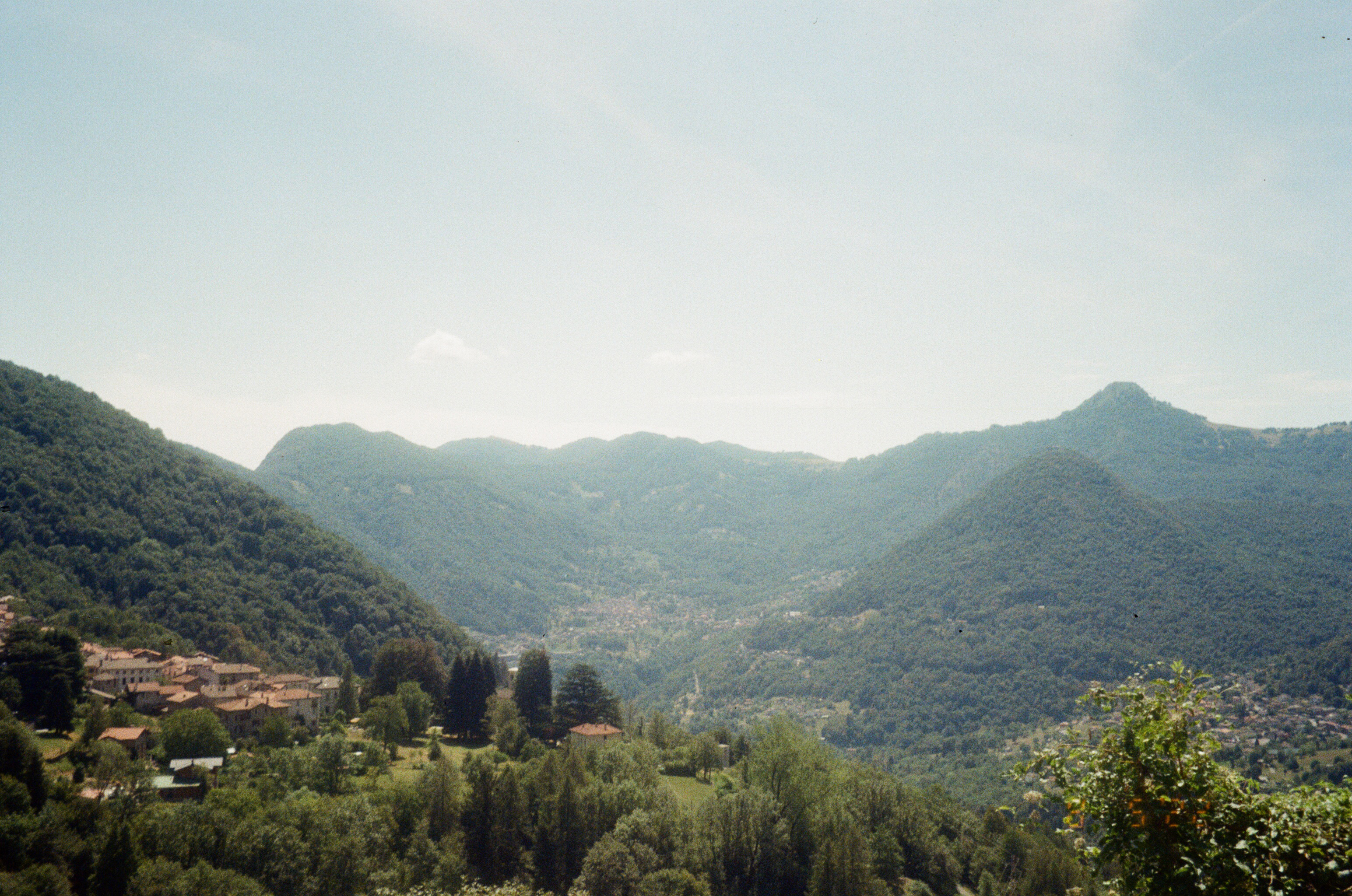
A secluded farmhouse behind Lake Como, is a must stay for locally owned and operated artisanal adventures just a short ride from the buzz of Milan. The countryside abode sits among the mountains, with access to the property only via Jeep pick up from the team or a thirty minute hike from the town of San Fedele Intelvi. The farm produces nearly one hundred percent of its own produce from vino, cheese, pasta to polenta, honey and fruit. The cured meats are hunted from the wild boar native to the area, as for the other wildlife you’ll find them walking freely across the grasslands from llamas, sheep, cows to horses imported from the owners hometown in Sardinia. Run by a humble couple, one from the local area of Como and the other Sardinia are conscious about the environment and continually looking for sustainable ways to run their small-scale operation. While adding their own taste of fusion to each dish — music bread or ravioli — pulling from a seasonal menu. With snow capped mountains in the Winter or lush Summer gardens this place is a fairy tale in nature.
Agriturismo Le Radici / Alpe di Blessagno, 22028 Blessagno – Valle Intelvi, Como, Italy / +39 347 7403132 / info@leradiciagriturismo.it / leradiciagriturismo.it
Locanda al Colle, Tuscany
Soaking up Italy’s finest wines, while enjoying the Tuscan beachside, Locanada al colle is a panoramic guest house in the hills of Versilia. Situated an hour’s drive from Pisa, and less to Lucca, you can even take a trip to the ancient Estruscian city of Volterra. Hugging beach and vineyards, the twelve room stay is pet friendly and includes three suites, a salt water pool and jacuzzi. Plus access to a private beach club, Bagno Chimera in Marina di Pietrasanta. With vintage art deco and marble sculptures, each room feels dusted in warm, olive and creme colors that reflect the natural surroundings it sits in. While a private chef serves up local produce from breakfast to dinner, or pop into a cooking class to get a taste of the region’s hearty cuisine. The gorgeous family run business is the romantic vision of Tuscany you’ve been looking for.
Locanda al Colle / Via la Stretta, 231, loc. Capezzano Pianore, 55041 Camaiore, LU, Italy / +39 0584 915 195 / info@locandaalcolle.it / locandaalcolle.com
Aman, Venice
Go back in time to the palatial settings of the 16th-century Palazzo Papadopoli at Aman in Venice. The 24 room hotel is replete with spa, gym, library, private jetty and gardens, with suites offering views of the Grand Canal. A hidden gem in the historic building is their intimate spa that is a must for scrubs or massages that will bring you to Asia with fragrant scents, a soaking tub and treatments. Adorned with painted ceilings from 18th-century painter Tiepolo, silk walls and chandeliers from the lobby to the rooms, Rococo artworks are paired beautifully with the compteroary stylings of Jean-Michel Gathy. Rising from the sea this ancient city is a world not far from fantasy whether for its grand canals, Basilica, biennials, glassmaking or cicchetti.
Aman / Palazzo Papadopoli, Calle Tiepolo 1364, 30125 VE, Italy / +39 041 2707333 / amanvenice.res@aman.com / aman.com/hotels/aman-venice
Four Seasons, Milan
19th Century, Vaulted Ceilings Arch Over Heated Pool in Four Seasons Milan (Image Courtesy of Four Seasons Milan)
With an underground spa and pool in the heart of Milano’s designer fashion district, the former 15th Century Convent has style from heel to Murano chandelier. Spread across three interconnected buildings the 118 room hotel surrounds a central courtyard garden. Suites laced in marble, terracotta and earth tones balance well with the neighboring architecture and history, while contemporary touches bring a sense of peace next to Via Gesù. It’s the modern vision of Italy, from the Duomo, Galleria to Fashion Week.
Four Seasons Hotel Milano / Via Gesù, 6-8, 20121 Milano MI, Italy / +39 02 77088 / fourseasons.com/milan
A SMALL JEWEL
Porto di Portoferraio, Isola d’Elba (Image Courtesy of Bjorn Agerbeek Unsplash)
Isola d’Elba, Tuscany
With Tuscany’s manicured gardens, rustic vineyards and rolling hillsides, visions of Elba Island are for seaside lovers instead. Sun-soaked from coast to coast, Napoleon’s getaway is an hour ferry ride from the mainland, and is full of pebble-stoned beaches, yachts, boats and seafood luxury. Spiaggia di Pomonte and Relitto di Pomonte are for the snorkelers out there where a sunken ship just of the beach dwells beneath the surface, then the town of Capoliveri is a fortress of history that sits at the height of the eastside with views onto the sea.
I’ve never been a morning person and I couldn’t tell you the last time I purposefully woke up to catch a sunrise. But one frosty morning in Vienna at 05:30, I was awoken by an impalpable energy coursing within me that I could only interpret as the siren call of the Viennese city below me. Its cultivated cityscape awash in staggering shades of crimson coloured Morgenrot set fire to my soul, famished for culture and immediately did Karl Kraus’ quote spring to mind, “The streets of Vienna are paved with culture, the streets of other cities with Asphalt.” At once my eyes were drawn to the Hofburg Imperial Palace with its enchanting palatial domes of turquoise and tiffany-blue, reminiscent of its former Habsburgs Empire who ruled first over the Austrian patrimonial lands from the days of the Holy Roman Empire until its final days of reign over the Austro-Hungarian Empire at the end of the first world war. Just a kilometer away stands Vienna’s historical jewel St Stephen’s Cathedral, an illustrious incomplete monument which exhibits the city’s fascinating and ever-shifting historical landscape in all its non-traditional gothic, Romanesque and zigzag-tiled roof architectural amalgamated glory. As ruby hues gave gradual way to a florid orange glow and morning light swept through the rousing downtown, illuminating the distant landmark giant wheel of the Wiener Prater just across the water in Leopoldstadt and even further back, sleek and modern skyscrapers emerged into visibility. Like every other aspect of this carefully curated city of blended cultures, the contrast between New vs Old Vienna somehow fuses together tastefully with the impressive DC Tower I soaring above simplistically elegant rows of Biedermeier neoclassical townhouses, reflecting dazzling strokes of golden light onto the legendary Danube River. It inspired me to reflect upon the insurmountable centuries of change, of paradigm shifts, of revolution, restoration and reconstruction – and how these cities and the stories left behind will outlast us all, as they did the Romans, their Imperial Reich, the logical empiricists of the Vienna Circle and the occupation of the National Socialists.
These curious little existentialist whispers remained with me throughout the rest of my visit in Vienna, because nothing makes the passing of time feel quite as surreal as this timeless historic city with its immaculate paths and pristine façades maintained to appear as if it, miraculously, simply stood the test of time. As I ambled along storybook cobblestone alleys and passed by the stately traditional Wiener coffeehouses of the historic Ringstraße’s innere Stadt, I quietly observed the elegantly understated aura of the Viennese folk around town. I have always somewhat considered imitation to be the highest form of flattery and so I thought to myself, “When in Wien, do as the Viennese do”. I popped on Johann Strauss’ 10-minute waltz ‘An der schönen blauen Donau ‘, straightened out my posture and donned the uniform demeanour of Austrian aloof affability as one so naturally does on their morning stroll down the Canal; Semmel bread roll in one hand, coffee in the other. I even tipped my head ever so slightly and greeted passers-by with a lilting “Grüß Gott!”, deliberately letting my roll ever so delicately, doing right by the famously melodic Austrian German dialect.
By afternoon, I was hopelessly besotted with the city after having fallen into an artistic trance at the Kunsthistoriches Museum from gazing up at the lavishly painted arches and columns of Gustav Klimt. I walked back out onto the large sprawling main streets lined with their sumptuous mix of baroque, gothic, neo-renaissance and classical buildings and headed straight for the Burggarten where I found myself at the foot of Mozart’s monument. For a few minutes, I simply looked up at the composer’s stone visage and basked in my admiration and gratitude for his arias and sonatas which were musical comforts throughout my childhood. “Danke schön” I whispered in thanks to Mozart, to Vienna, to no one in particular really, but to the unparalleled experience of learning and discovering such abundant beauty and culture that it seizes you with inspiration and reignites our inner artist, our musician and our creator who lives within each and every one of us.
Image Courtesy of Maxime Evangelista
This article is from our Vienna diary feature available to read in print. Get your limited edition copy here.
Handcrafted by a variety of cultural influences, Singapore marks its title as one of Asia’s top destinations and every tourist’s dream. From the cheap yet flavorsome feeds in Buffalo Road to the city’s most luxurious hotel in Marina Bay Sands, the Southeast Asian island city will not leave you disappointed.
Located in Downtown Core, Marina Bay Sands, better known as MBS sticks out like a sore thumb in the midst of all the surrounding high rise buildings. Look out for the giant boat-like structure at the very top of MBS where the world’s largest infinity pool sits, offering gorgeous views of Singapore from 57 storeys high. Marina Bay Sands makes the perfect staycation for couples and friends who are keen to bask in the luxury Singapore has to offer.
Marina Bay Sands Singapore, 10 Bayfront Ave, Singapore 018956
Haji Lane is hard to miss with its fanciful boutique shops selling items from jewellery to clothing and striking colorful street arts, making it one of Singapore’s Insta-worthy locations. By night, the place is as lively as ever where you can enjoy eateries like Bergs if you are a sucker for classic burgers or Funq where you are free to drink up with a side of live tunes to set the vibe.
Singapore prides itself on their vibrant nightlife and Clarke Quay is no exception! Situated along the Singapore River, this place calls for an unforgettable nightlife experience with its array of clubs from Dreams and Playhouse to pubs like Octapas and Highlander. Not much of a party goer? Visitors are also encouraged to take a stroll along the river and indulge in some gelato and ice cream scattered across the quay.
The moment you land, you step foot into one of Singapore’s pride and joy, Jewel Changi Airport. Located in Changi Airport’s Terminal 1, the Jewel is home to one the world’s tallest indoor waterfalls, named the HSBC Rain Vortex, standing at 40 metres high. This place is packed with a range of engaging activities suited for everyone. If lucky, you may be able to experience the light show displayed at certain times of the night. The Jewel Experience does not stop there, visitors are free to explore a range of beautiful attractions like the Shisedo Forest Valley.
Gardens by the Bay offers visitors a scenic view of foreign horticulture with a vast range of flora and fauna from different climates. Spanning across 101 hectares, the attraction is filled with lush greenery and a beautiful waterfall, better viewed during the night, making it a great photography spot. Grab a bite at Satay by the Bay where you can also indulge in local Singaporean cuisine with its hawker centre-like restaurant layout.
Sustainable hotels are crucial in the future of conscious, eco-friendly travel. Sustainable hotels reduce the environmental impacts through green practices by mitigating waste and saving energy wherever possible. We’ve picked six hotels from Sydney, Bali, Fiji to Singapore and more that are doing their part to stay plastic-free. They also collaborate with local businesses and providers to support their food and beverage services. Without further ado…
The heritage building of Paramount Picture Studios in Sydney was recently rebuilt and redesigned to Paramount House Hotel by Breathe Architecture. The hotel is located in the suburb of Surry Hills. The exciting neighborhood is full of good restaurants, boutiques, and cultural events, which provides more fun for the guests. The paramount coffee project offers great coffee and breakfast every day.
Address: 80 Commonwealth St, Surry Hills NSW 2010, Australia
In one of the world’s most popular destination, Bali, Bambu Indah is an eco-friendly luxe hotel curated by John and Cynthia Hardy. The hotel embraces its natural environment and is surrounded by the serene untouched lands. Guests can enjoy the vibe of the tropical island and the fresh air created by the jungle.
Address: Jl. Baung, Sayan, Kecamatan Ubud, Kabupaten Gianyar, Bali 80571, Indonesia
Laucala Island is a private island in Fiji running a self-sustained hotel. The island spans around 12 square kilometers and owns 25 villas and farmland. The hotel has homegrown fruits and vegetables onsite. The food offered in the hotel is mainly from its own farmland. The materials used to build the hotel are sourced from local rain trees. With high self-sustainability, Laucala Island provides a perfect choice for green travel.
The Sherwood Queenstown is located next to Lake Wakatipu. The hotel business is strongly based on the local natural environment and its wonderful landscape. With the zero-waste principle, more than 60% of wine bottles and 100% kitchen organic waste are composted and returned to their own hotel garden. Most of the food is sourced from its own onsite garden. The hotel also owns the largest solar energy install to produce power supply for the business.
Address: 554 Frankton Road, Queenstown 9300, New Zealand
Siloso Beach Resort is a sustainable luxury hotel on the island of Sentosa in Singapore. The hotel’s environment is fully surrounded by trees. During the construction, more than 200 locally grown trees were protected. Also, over 1000 fruit trees, flowering plants, and herbs were carefully planted around the hotel, which helps to build a green environment and community.
As an eco-luxury hotel, Whitepod focuses on minimalism, trying its best to reduce the impact of the hotel on the environment. Guests stay in the designated pods that are designed in a unique construction to minimize the usage of materials. The LED bulbs and the wooden stoves of each pod minimize the impacts of lighting and heating system. Guests can also enjoy the local spring water sourced from the Swiss mountains.
Address: Les Giettes, Des Cerniers, 1871 Monthey, Switzerland