Tag: art

  • Juan Gabarron’s Top Artists & Music for When in Spain.

    Juan Gabarron’s Top Artists & Music for When in Spain.

    We asked the CEO of The Gabarron Foundation, Juan Gabarron for his top artists and the tracks for when in Spain.

    This is part of our ‘Rapid Fire’ Series from our interview with Juan Gabarron. Read the full interview here.

    Interview by Paradigm Haus


    Juan Gabarron’s Top 5 Contemporary Artists

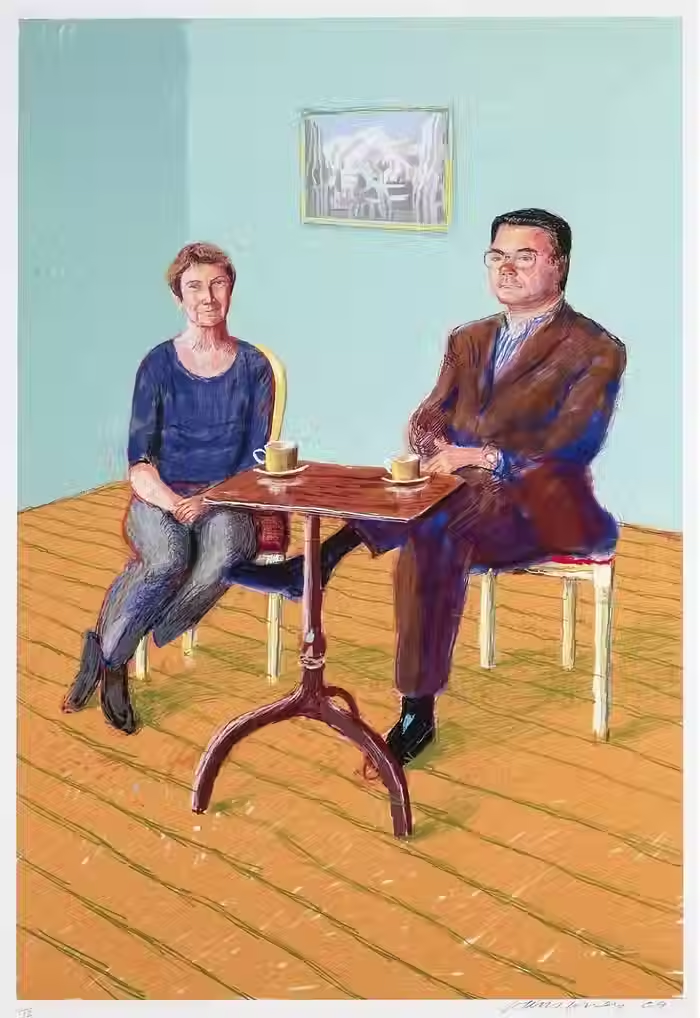
    David Hockney

    Michelle and John Spike, inkjet printed computer drawing on paper, 49 X 33.5 inch, 2009, David Hockney
    Michelle and John Spike, inkjet printed computer drawing on paper, 49 X 33.5 inch, 2009, David Hockney

    Juan Gabarron: Beyond his age. He mastered many different media, like his impressive digital artworks.

    Christo and Jean-Claude

    L'Arc de Triomphe, Site Specific Wrap, Paris 1961-2001, Christo and Jean-Claude
    L’Arc de Triomphe, Site Specific Wrap, Paris 1961-2001, Christo and Jean-Claude

    JG: A unique couple creating a new concept of public art, with monumental installations, wrapping buildings, lakes installation, or land art in the mountains. On September 18th, wrapping the Arch of Triumph in Paris!

    Louise Bourgeois

    Spiders, bronze and granite, 2003, Louise Bourgeois
    Spiders, bronze and granite, 2003, Louise Bourgeois

    JG: Painter, sculptor, and printmaker. She was among the very few female artists with late-career success and recognition. she obsessively relived through her art the traumas of her childhood.

    Picasso

    Bust of a Woman, oil on canvas, 810 x 650 mm, 1955, Pablo Picasso
    Bust of a Woman, oil on canvas, 810 x 650 mm, 1955, Pablo Picasso

    JG: A controversial artist who explored new art expressions and transformed modern art history.

    Cristóbal Gabarrón

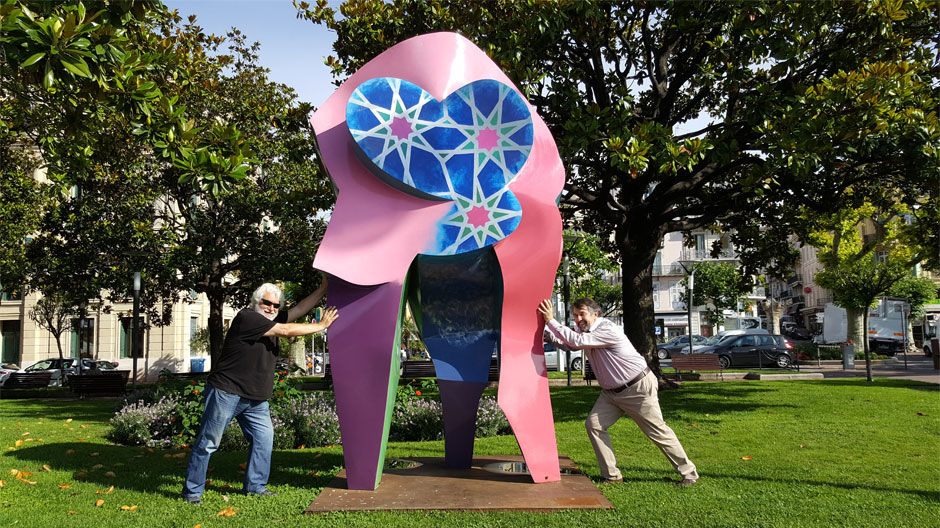
    Gabarrón y Frédéric Ballest
    Gabarrón y Frédéric Ballest

    JG: Beyond his colorful artworks, he has a unique way of understanding the impact of public art and culture in our society. He is, among the very few artists, to create a foundation for the arts at his young age to contribute in their arts.

    Juan Gabarron’s ‘When in Spain’ Playlist.

    The Beatles “Here Comes The Sun”

    Enrique Iglesias “Bailando”

    Icona Pop “I Love It”

    Carlos Baute and Marta Sánchez “Colgando en tus manos”

    Billie The Vision & The Dancers “Summercat”


    Listen to Juan’s playlist now on Spotify: Juan Gabarron’s When in Spain Playlist

    Follow Juan Gabbarron on Instagram @juanmagab.

    View The Gabarron Foundation’s work here.

    For more from Juan Gabarron read the full interview: Juan Gabarron and Art-Tech Intersections in Asia.

  • Juan Gabarron and Art-Tech Intersections in Asia

    Juan Gabarron and Art-Tech Intersections in Asia

    Juan Gabarron is the CEO of the Gabarron Foundation Asia, a non-profit art foundation that is pushing the avenues of art-tech and education for children and adults alike.

    Interview by Paradigm Haus


    Paradigm Haus: Please give us a quick rundown of your background, where you are based and what you hope to achieve in your field.

    Juan Gabarron: I studied Sciences as technology is another of my passions. Later, I studied my MBA as I’m passionate about the business world and how it can improve society through better service and better companies. I’ve been working in arts for most of my career; today I serve as director of the Gabarron Foundation Asia. In 2005 I moved to New York to develop the Gabarron Foundation in USA and in 2017 I moved to Hong Kong to develop our family foundation vision into Asia.

    2022 will make the 30th anniversary of our first foundation in Spain, today our mission remains the same, to create awareness through the arts and education. We have three main goals: 1) we aim to foster the humanities into people’s life; today more than ever we need to leverage the current technology overexposure. 2) Art and culture is a powerful communication language, capable of connecting people regardless of their language or culture. We want to create bridges through arts to connect people across cultures and continents. 3) Children’s education is the key to the future, art is natural for all of us. Since the cave era, we can draw figures and show concepts, before we can even speak, but somehow we lose this natural tool when we get into school growing up. We want kids to continue art education from elementary to their higher education to unlock the full potential of art education as another fundamental skills of humankind, not to create more artists but to deliver more creative people into our future world.

    PH: Where does your drive for the art and culture sector come from?

    JG: I grew up surrounded by artists and art in Valladolid, Spain. My father is an artist and this cultural environment has been around me always as a natural atmosphere. Seeing the big gaps in the society and believing in the capacity of art to fill those gaps and create better society is the drive that keeps me going forward through the years.

    PH: You mentioned being involved in a 360-VR exhibition/experience, how did this come about and what was the response?

    JG: The COVID-19 pandemic has impacted the capacity of people to travel and, of course, visiting museums, art exhibitions, etc. We had a very important program coming up, the commemoration of the 75th Anniversary of the United Nations, with a monumental outdoor installation and museum exhibition about different UN pillars in dialogue through the art.

    As COVID limited the museum capacity as well as all national and international travels, we found on 360-VR the best tool to overcome these limitations. At the same time, we untapped another hidden gap, people cannot use technology the same way, so we deliver three main experiences, to cover most of the visitor’s technological backgrounds, so they can have a more natural visit (it’s not the same the technology understanding of a 10-year-old, than a 60-year-old visitor). You can visit 360.gabarron.org.

    This technology is simple (fast delivery, no apps to download) yet powerful (can deliver the immersive experience with a laptop, a smartphone, and the VR-Headset with the same web browser. It integrates interaction with visitors, not just moving around the 360 but also visitors could create their own images by changing the field of view, distance, etc generating infinite compositions, up to their own little planets.

    The holistic approach was not just using VR on a basic level but we did the most out of it. We shot more than a thousand 360-immersive panoramas, we used drone shooting, as well as 360-video to have an immersive experience with the curator’s tours through the different museum galleries. We had Gigabyte resolution, to embed a 24 meters wide by 4 meters high mural, into a seamless zoom up to centimeter resolution. The panoramas also integrated into Google Maps, so we added new channels, besides our own website.

    The result is triple: 1) the visitors can have a new way to enjoy the art that was not possible before, and they don’t need to have a VR-headset, it can be enjoyed from any device. 2) the fast content delivery and the three levels of 360 experiences, made the engagement really high, integrating arts and technologies for a centered-human experience. 3) Beyond the physical time limits of any exhibition in the real world, the exhibition now is timeless, accessible not just during the dates of the exhibition but will exists for the years to come in the digital world.

    Shanghai Art Museum Colon y kronos
    Shanghai Art Museum Colon y kronos

    PH: Tell us more about your think-tank and how it got started.

    JG: As I briefly stated before we are very concerned of the imbalance of the technology with all the humanities, and with our ORG think tank we aim to leverage a bit that. With all the IT, AI, ML… we need to make equally stronger our humanities, to develop our society balanced. We should always target in our societies to the natural equilibrium of sciences and humanities, but nowadays the nature of the technology demands intrinsically a reborn of humanities. Technology is replacing human labor, hence, in order to make humans more capable of being ahead of the machines, we need to make humans with new strengths so people can be more creative in ways that machine cannot compete. This mostly involve core humanities, this is the focus of our ORG…the most relevant example that I can think of is Steve Jobs back in 1972, after dropped out of the main university curriculum, before he was able to build his revolutionary technology company Apple, he took courses of calligraphy, dance, and Shakespeare at Reed university; later on himself acknowledged those courses were key in the concept and development of Apple, without even knowing when he took them.

    PH: How are art and tech intersecting now, and what does this mean for artists and the NGO sector?

    JG: It’s a complex subject that would require many hours so I would just summarize that art and tech have always been intersecting in different ways, the difference today is that the technology revolution and the art market speculation produced a bubble with NFT that is making many artists to explore digital art as this is a new trend for the market. In this case is very complex as the NFTs are linked to the value of the Crypto currencies which make it very volatile and speculative. Time will tell us if this will really reinvent digital-art world and the market or if will turn into a historical attempt to change the art world.

    To me the NGOs, as many other companies, have way more potential with the development of the blockchain applications, the key of its success rely on the easiness to use it, its sustainability as most blockchain technologies requires a lot of energy consumption, and the size of market they serve, if it is not big enough to make it on the mainstream it would be doomed.

    On the other hand, besides NFTs hype, as young artists are more naturally using technology in their lives, it is normal that they create art with these new technology tools. Also young collectors growing up in the same natural technology ecosystem, they will be buying more digital art as is more natural to them, this is for sure a trend that will keep getting stronger and stronger. Another important change is the traditional museums and galleries, will coexist with digital museums and galleries, a parallel art world to contemplate the art in the traditional and the new digital ways.

    PH: What changes have you seen throughout the art and culture industry?

    JG: With the years we see a more global art-world, the auction houses sell art across the regions where they could find more demand. The art fairs become a game changer for this global art-world, and the collectors rise to stardom equally as the artists. The market gap between expensive and affordable art keeps growing which makes most artists struggling more than ever.

    PH: What do you love about art’s impact on the world?

    JG: Art acts like a magic mirror; the more people look at it the more they find interesting thoughts about their selves. The most remarkable function of art is its capacity of healing. Art makes people to be more relaxed in general; art is the expression of a human need, once the basic needs are covered (food, shelter, education, work…) we human look at the art as the satisfaction of our intellect need. Additionally, art therapy can heal people with many problems; It’s used in schools, hospitals, and many other applications.


    Visit The Gabarron Foundation VR experience here.

    All Images Courtesy of Juan Gabarron.

  • Oi Ling Fine Chinese Antiques Shaping Contemporary Ink Painting

    Oi Ling Fine Chinese Antiques Shaping Contemporary Ink Painting

    The Flow of Ink: New Dimensions in Chinese Ink Painting (26 Jul – 26 Aug 2021) is a new exhibition at Oi Ling Chinese Antiques in Hong Kong that is an expression of contemporary Chinese Ink Painting today. We talked with Oi Ling to uncover the hidden traditions.

    HONG KONG. In collaboration with the Chinese Cultural Studies Center and The Hong Kong Academy of Chinese Art Studies, this exhibition of nine artists attracts the best of the traditions in literati painting.

    Each landscape and contemporary take on the genre derives from a feeling of spirituality, where symbolism is used as one of their strongest technical tools. Including works from Lam Tian Xing, Liu Wei, Fan Hong Bin, Tian Yan Hua, Ma Lin, and fashion designer William Tang.

    When we look at the ink on silk painting Yearning for Home 戀舊林 (2020) by Lui Jia, combining nature and geometric elements: a sparrow, mountainscape, clouds, and glass box in pastel shades. The piece exemplifies delicate lines of Gongbi painting techniques paired with a contemporary narrative.

    For 馬麟 Ma Lin in 幽谷知音 A Kindred Spirit in the Deep Valley (2021), two gentlemen, representing a scholar and his discipline carrying a traditional Guqin, walk a mountain plain shrouded by pine trees in a monochrome ink-washed painting. There is an echo of poetic history, spirit, and appreciation of nature.

    While, 黑色的聚會 Black Rally (2014) by Wong Hau Keri takes contemporary photography composition to depict a black, white and red rally of people on the street. The piece talks to modern social uprisings and brings them into focus using traditional ink on paper techniques. The artist is able to challenge the contextual and cultural nuances of Eastern society — in form and topic.

    Overall, the exhibition is able to showcase simple themes and concepts of Tao (道), as each artist in their own process discovers a truth in the natural order of the universe. As a viewer, we are brought the philosophies of the East, Buddhism, and religion together with an intersection of traditional techniques and contemporary stories. Linking both ancient and modern sensibilities of China.

    For Oi Ling, the owner and founder of Oi Ling Fine Chinese Antiques she entered the arts business in the early 1990s, when Hollywood Road, where her store is located, was once the mecca for antique wares and jewelry retailers left behind from colonial Britain. Now, from Lynhurst Terrace to Cat Street Galleries, we see the past peeking through the facades, cobblestoned stairwells, and mumbled clock radios spinning Cantonese melodies and foreign languages in the background.

    When we consider the physical landscape and works on the show we are able to see the contextual importance of Chinese studies of art as a bridge to understanding the past.

    Interview with Oi Ling by Sarah Wei.


    Paradigm Haus: Could you start by giving us a brief outline of your background and how you got into the antique business?

    Oi Ling: The reason I chose to enter the antique business and set up a retail shop on Hollywood Road is quite simple. When I look back, I would say that it is all destiny.

    In the early 90s of the last century, a distant relative had a workshop in Macau restoring antique furniture and he was thinking to retire and close the workshop. Since I was thinking to change fields I approached him to take over the business.

    After I took over the workshop, I opened a retail shop in Central [Hong Kong] on Lyndhurst Terrace with a focus on Chinese antique furniture. I did well from the beginning and very soon built up a reputation. Different collectors started approaching me with their collections and that is how I branched out later to different types of antiques but my heart remains with wood – that is anything wooden – furniture pieces and small wooden objects.

    PH: How has the reputation of Hollywood road changed, from old antiques and merchants to the international retail avenue it is now?

    OL: In the 1990s, Hollywood Road was famed for its many quaint little antique shops and old-style tuck shops. Slowly when the property market began to take off and hit Hollywood Road many small businesses were being pushed to Sheung Wan and the Western District.

    New and posh western-style restaurants slowly replaced the old tuck shops and antique shops. In the past 10 years, the road sees fashion brands and lifestyle shops nesting there.

    PH: Is there a memorable or standout story from your life in antiques and fine art that stands out to you?

    OL: The most memorable one is when I was in my one-month confinement right after I gave birth to my daughter, my colleague called and said that she received a phone call from a five-star hotel telling her that a very important guest of the hotel would like to come to see me so the hotel called to make sure that I would be in the shop. They didn’t tell us who the guest was.

    It turned out that it was Glenn Frey from the band Eagle. He was recommended by a friend to us. So I rushed to the shop with my baby daughter. He gave us VIP tickets to the concert and bought furniture pieces from us. He even asked to hold my baby in his arms and we took a photo together.

    Another memorable story is also related to a five star hotel. The general manager himself called to tell us another VIP would be stopping by. This guest loved Chinese art and antiques, they heard from other sources that I was good with interiors especially with artwork placement. So I was invited to the hotel to redecorate their suit. It turned out to be Jacques Chirac.

    PH: Speaking on your current exhibition, what themes and elements are you presenting in the story?

    OL: The focus of this exhibition is to highlight the spirit of Chinese scholar tradition – to be sincere and without hypocrisy in intellectual pursuits and expressions. In the exhibition, the paraphernalia such as handmade Xuan paper, brushes, ink-stone, ink-stick, seals, and seal paste is on display at the same time. The intention is to give a full picture of tradition and its associated material culture. Through such a combined display of artwork and material culture, we hope to cultivate an understanding of tradition and its evolution through changes of time and history.

    PH: Could you take us through the practices and techniques of the ink artists?

    OL: The appreciation of a piece of Chinese ink painting differs from the appreciation of a piece of western-style painting in that it requires the understanding of calligraphy, poetry, and the art of seal engraving as well.

    For an artist to be considered good in Chinese ink, he or she must be good in all the four genres – poetry writing, calligraphy, painting, and the art of seal, additionally to having the good taste in balancing the four elements in a piece of painting.

    PH: Which elements are essential to the process?

    OL: The essential thing in the process, apart from fine tuning the skill, is an understanding of the spirit and value of the Chinese scholar traditions and the philosophy behind this tradition.

    PH: How have traditional ink practices changed?

    OL: One of the main changes in practice is contemporary ink is more experiential with the infusion of modern elements and ideas.

    PH: Leading from the last question, is there a modernization that has occurred?

    OL: If the word modernization means the infusion of western ideas and compositional style as well as the modernization of materials, the answer is yes.

    An example to illustrate my point is the use of ready made ink that comes in a bottle rather than using ink stick to grind ink.

    PH: Which artists are your favorites and exemplify innovative style and practice?

    OL: All of them are innovative in different ways.

    Fan Hongbin is an artist with multiple talents — his brush and ink techniques are traditional and, separately, developed a color palette that is completely modern. The artist enjoys creating scenes and landscapes which convey beauty and tranquility but can also be bold and provocative with his use of vibrant pinks, blues, and green color choices.

    Tian Yanhua takes modernity to a new level with use of traditional brush strokes and ink techniques to narrate a personal utopia without any traces of the old lyrical style.

    Lam Tian Xing’s contemporary look is achieved through a composition of void space by way of covering the entire canvas with heavy layers of ink. An absolutely innovative technique.

    Liu Jia invigorates the old art form with a modern sense of humor and talking to topical social issues.

    Wong Hau Kwei did away with old styles of panoramic view composition in their landscapes by replacing them with modern photographic angles compositions.

    PH: What do you hope this exhibition achieves for Chinese ink painting and the culture?

    OL: Chinese ink painting is an art form that includes the following: the art of seal engraving, the art of calligraphy, the art of paper making, the art of making ink stone and ink stick, the art of seal paste making, and the art of brush making.

    The technique and craftsmanship involved in the making of all these art forms are now items of intangible cultural heritage. To successfully pass on the technique and craftsmanship of all these elements to future generations requires not only understanding but the development of a viable system that is sustainable and where proper conservation and protection can be implemented.


    Find out more about Oi Ling Chinese Antiques on their website and follow them on Instagram at @oilingantiques.

    For those looking to collect contact Oi Ling via email at oiling@oilingantiques.com.

    All images courtesy of Oi Ling Antiques.
  • Doris Poon and Tiffany Law Asia Society Hong Kong Curators on Contemporary Artists to Watch Now

    Doris Poon and Tiffany Law Asia Society Hong Kong Curators on Contemporary Artists to Watch Now

    Doris Poon and Tiffany Law from Asia Society Hong Kong shares with us five contemporary artists to follow for inspiration from Sweden to Hong Kong.

    The lead curators for Asia Society Hong Kong, Tiffany Law started as a practicing artist before moving to curation to explore the relationship between exhibition and society, while Doris Poon focuses on ideology and artistic expression. We asked Tiffany and Doris about their favorite contemporary artists now.

    This excerpt is part of our ‘Rapid Fire’ series from our interview with Doris Poon and Tiffany Law. Find the full interview here.


    An artistic scene featuring a red table with a white figurine, a blue statuette, and a pair of scissors, with faint outlined figures in the background engaged in various poses.
    Image Courtesy of Galleri Magnus Karlsson

    Mamma Andersson, Sweden

    #mammaandersson

    Mamma Andersson’s paintings are captivating in the sense that the cinematic landscape paintings project a complicated composition, juxtaposing the interior and exterior settings with textured brushwork, loose washes, and evocative colors. The pictorial spaces often evoke a hint of suspense, mainly because Mamma draws inspiration from a wide range of archival photographic source materials, cinematic imagery, theater sets, and the mountainscapes in northern Sweden. It is like that specific scene does not belong to here nor there, the past nor present.

    A bright, glowing sun against a blue background, creating a radiant effect.
    Crippling light, #3 2020
    Image Courtesy of De Sarthe Gallery

    Mark Chung, Hong Kong

    #markchung

    Mark Chung is a young media artist known for his immersive installations which often offers an intimacy to the viewer’s personal experience. The audience recalls a similar feeling that relates to your daily encounter with the urbanscape. In Mark’s most recent solo exhibition’s work, “Wheezing”, recordings of the light show at Victoria Harbour ‘A Symphony of Lights’ were projected onto a wall of shattered glass and casting the shadows and light beams onto the viewer’s body. That installation was visually intriguing and held metaphoric meaning about feelings of inescapability from a candy-coated utopian world.

    An abstract illustration featuring various houseplants in pots, two dogs exploring their surroundings, and a playful arrangement of organic and geometric shapes.
    MuiMui, Doodood and Balltsz 2018
    Image courtesy of Chris Huen Sin-Kan

    Chris Huen Sin-Kan, Hong Kong and London

    @chrishuensinkan

    Chris Huen explores the moments and exquisite experiences of everyday daily life. Chris’ subject matters always appear to be his dogs, sons, and wife, yet each interior scene is delicately painted, capturing a frozen moment. One can sense his intuition in the works, where brushwork is used to depict the “aura” and the air of each setting is fantastic. Sometimes it looks like there are different time zones in one scene.

    An interactive exhibition space featuring a digital golf game, with a large screen displaying a golf ball, surrounded by a grassy area with playful elements.
    Wong Ping, Debts in the wind, 2025
    Installation view, “Sigg Prize 2025”, M+, Hong Kong, 2025. Photo by South Ho.
    Image courtesy of Kiang Malingue

    Wong Ping, Hong Kong

    @wongping

    Wong Ping is famous for his video works, capturing the hidden obsession and secret compulsions in our everyday life and address them in the metropolis setting.

    A water tower standing tall against a blue sky, flanked by buildings and streetlights.
    Image courtesy of Sarah Lai Cheuk Wah

    Sarah Lai, Hong Kong

    @laicheukwah

    Sarah Lai is a local Hong Kong artist who is keen on using the pale palette to depict objects from daily life. The way Sarah places her paintings in a gallery space and the presentation with real everyday objects would offer new perspectives to view your daily surroundings.


    Find out more about the exhibition and events at Asia Society Hong Kong website and follow them on Instagram at @asiasocietyhk.